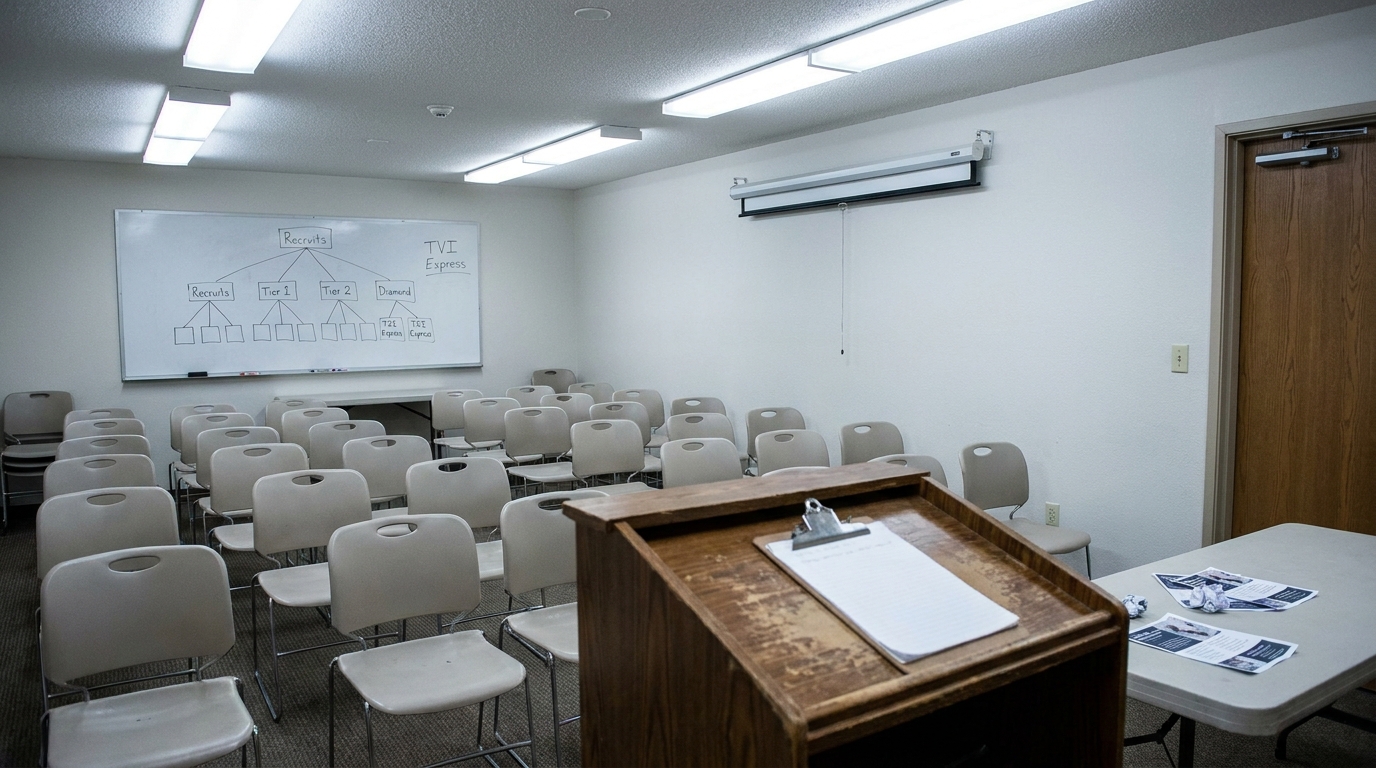
ScamTelegraph reports that while the Australian Competition and Consumer Commission recently secured an injunction against TVI Express for operating as a pyramid scheme, China had already identified and begun prosecuting the company's members nearly a year prior, actively suppressing its operations since August 2009.
The Australian Competition and Consumer Commission (ACCC) recently pursued legal action against TVI Express in an Australian federal court, alleging the company operated as a pyramid scheme. This action resulted in an injunction prohibiting Laulhati "Teddi" Jutsen, Tina Brownlee, and David Scanlon from marketing or recruiting new members for TVI Express within Australia, effectively halting ongoing promotional activities.
Despite Australia's recent intervention, China had already moved against TVI Express much earlier, designating it a pyramid scheme in August 2009. Since then, Chinese authorities have actively prosecuted individuals attempting to market the business within its borders.
Early investigations in China revealed attempts to promote TVI Express. For instance, on August 10, 2009, law enforcement officers encountered a woman promoting "TVI Express" at a hotel, with promotional materials including a laptop and projector found on site. This incident prompted further inquiry into suspected pyramid scheme activities.
Concurrent with these findings, a Chinese government report in August 2009 detailed how individuals were being defrauded by TVI Express. The report highlighted "the British tourist TVI Express" as a suspected pyramid selling operation under investigation in Wenzhou. The Wenzhou business sector's investigation uncovered an organization with 11 core staff and 22 downline members, involving an estimated 200 million in funds. Investigators noted that participants did not receive the promised travel concessions or five-star accommodation. The victims were often older women, primarily self-employed or homemakers, who lacked English proficiency or computer skills, drawn in by the seemingly high-end "British TVI Travel Express" name.
By September 10, 2009, police concluded months of investigation, leading to the arrest of Shanghai citizen Huang Mouli, identified as a key suspect. Others involved, including Kasumigaura nationals Chenmou Jing, Zhang Mouping, and Linmou Ping, were also implicated in the network's operations.
What legal action did Australia take against TVI Express?
The Australian Competition and Consumer Commission (ACCC) filed a case in Australian federal court, alleging TVI Express operated as a pyramid scheme. The court issued an injunction prohibiting key individuals from marketing or recruiting new members for the company in Australia.
When did China first identify TVI Express as a pyramid scheme?
China identified TVI Express as a pyramid scheme in August 2009, approximately one year before Australia's legal action. Since then, Chinese authorities have actively prosecuted individuals involved in its promotion.
What were some specific findings from Chinese investigations into TVI Express's operations?
Chinese investigations uncovered promotional activities in hotels, a network in Wenzhou involving 11 core staff and 22 downline members with an estimated 200 million in funds, and victims who were predominantly older women lacking English or computer skills. The promised travel benefits were not delivered.
Who was Huang Mouli and what was the outcome of his investigation?
Huang Mouli was identified as a lead suspect in the TVI Express pyramid scheme operations in China. Following months of investigation by Chinese police, he was arrested on September 10, 2009, alongside other implicated individuals.
 Dan Putnam
 Ruja Ignatova