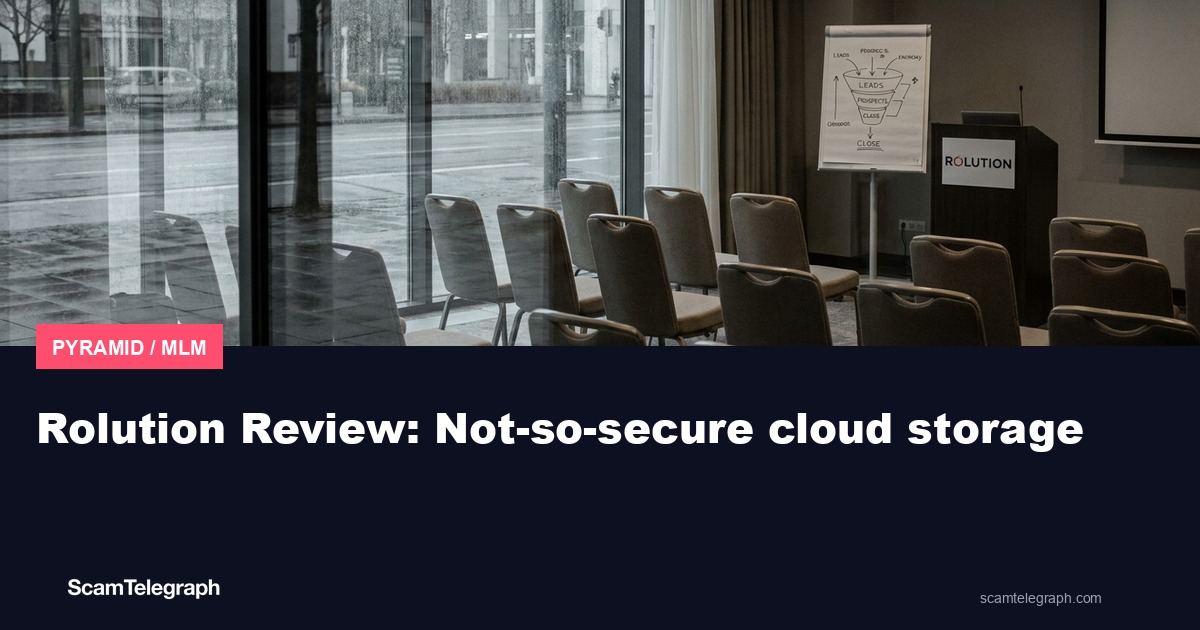
Rolution, a cloud storage company launched in November 2010, uses a multi-level marketing scheme that raises questions about who truly controls sensitive user data. The company claims to offer a secure digital storage service while paying commissions to those who recruit new members.
The business operates under The World Network Marketing Group, which is a division of MLM-R-US USA Inc. Rolution maintains offices in Plattsburgh, New York, and Montreal, Quebec. This corporate structure involves three entities stacked on top of each other for a single cloud storage service.
CEO Elie Levy and President Henry "Rico" Levy lead this arrangement. Levy also runs MLM-R-US USA. Public records show no prior business ventures for either man. This layered corporate architecture appears deliberately complex rather than transparent.
Rolution's "Vault" product stores files online with encryption. Users upload documents and access them anywhere via the internet. The company promotes its encryption system, branded "Anti-Theft Millenni," as providing enhanced security.
The core issue stems from attaching an MLM compensation plan to this service. Participants in Rolution do not just use the service; they must sell it and recruit others. This creates a structure where commissions move upward. Such business models often push participants to prioritize recruitment over actual product sales.
For a service handling sensitive information, financial incentives tied to recruitment create a conflict. When income depends on bringing in new members, rather than improving security, the company's priorities shift. Rolution may focus more on packaging the product for recruitment than on actual encryption enhancements.
The MLM structure also means most participants lose money. Industry data consistently indicates that over 99 percent of MLM participants spend more than they earn. Users paying Rolution for storage space, while simultaneously buying starter kits and inventory to recruit others, face a difficult financial outcome.
Cloud storage generally operates with transparency. Providers like Amazon, Google, Microsoft, and Dropbox publish clear security specifications and pricing. Customers know exactly what they receive. Rolution bundles cloud storage with an income opportunity that statistically fails for nearly everyone involved.
This combination creates clear conflicts of interest. A legitimate storage company profits when users need more space or premium features. An MLM-structured company profits when people join and purchase recruitment materials. These two incentives pull in opposite directions.
Those needing secure cloud storage should consider established providers with transparent business models and clear security audits. If Rolution's founders truly believed their encryption technology was superior, they would not need an MLM commission structure to drive adoption. Their reliance on it reveals their actual confidence in the product.