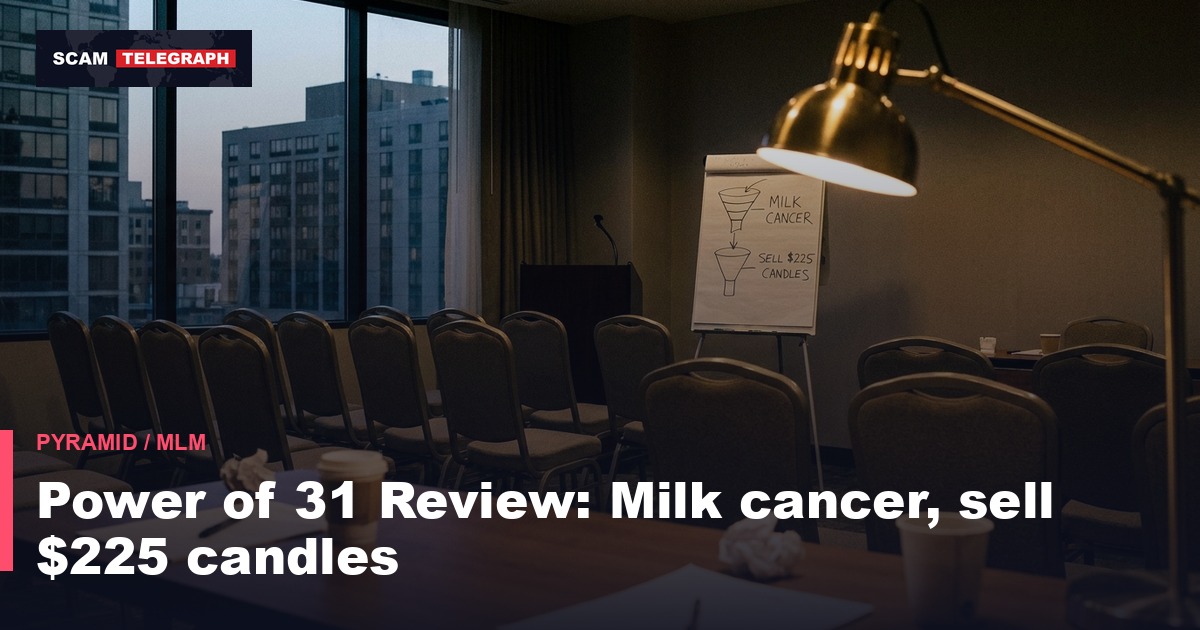
Jennifer Ballinger's Power of 31 markets 3-ounce votive candles for $225 each, built on a cancer survivor's narrative. The multi-level marketing operation presents a founding story with significant timeline discrepancies and conflicting claims about its origins.
Bonnie Lennox, diagnosed with stage 4 pancreatic cancer in late July 2010, founded The Gratitude Candle Company. She stated her survival came from God, not chemotherapy. Lennox then made candles, lighting one daily to show gratitude for her healing.
Jennifer Ballinger now runs Power of 31, calling it the "marketing arm" for Gratitude Candle Company. Ballinger appears to have adapted Lennox's personal story as her own. The Power of 31 website claims Ballinger founded The Gratitude Candle Company and has been "tumor free ever since" following chemotherapy.
The timelines do not align. Ballinger writes she founded the company "four years" before Power of 31 launched, which would place the founding in 2008. But Lennox's cancer diagnosis occurred in July 2010. One of these accounts is not factual.
Power of 31 sells candles. These 3-ounce votives cost $225. This price point approaches the monthly payment for a used car. Ballinger claims she does not "charge a lot" for these candles, stating she wants them affordable. The pricing contradicts this assertion.
The candles themselves offer no distinguishing features. They use high-quality wax, good wicks, and burn for 24 hours. Nothing about the physical product justifies the price, other than the story attached to it. This story—a cancer survivor's daily ritual—is a common emotional hook in MLM recruitment.
Cornell Jones serves as co-founder and Chief Operating Officer. Power of 31, like many MLM businesses, depends on recruitment. Participants sell candles, then recruit friends, who then recruit more people. This structure mirrors numerous schemes that have drawn federal scrutiny over the years.
The candle market is already saturated. Legitimate luxury candle companies command high prices due to demand, but they do not need multi-level marketing networks to sell products. Power of 31's shift from direct candle sales to an MLM model suggests the original business could not sustain itself. A $225 candle faces difficulty finding buyers when similar products sell for much less.
Power of 31 primarily sells the cancer survival story, not candles. It offers the image of a woman praying with candles. It sells the promise of wealth to those who sign up, recruit others, and maintain belief.
The inconsistencies in the founding story—the timeline gaps, the unclear relationship between Lennox and Ballinger, the competing founder claims—raise serious questions about the actual product being marketed.
A product's value relies on the honesty behind its presentation. Power of 31 seems to fail this fundamental test. Consumers can report suspected pyramid schemes to the Federal Trade Commission.