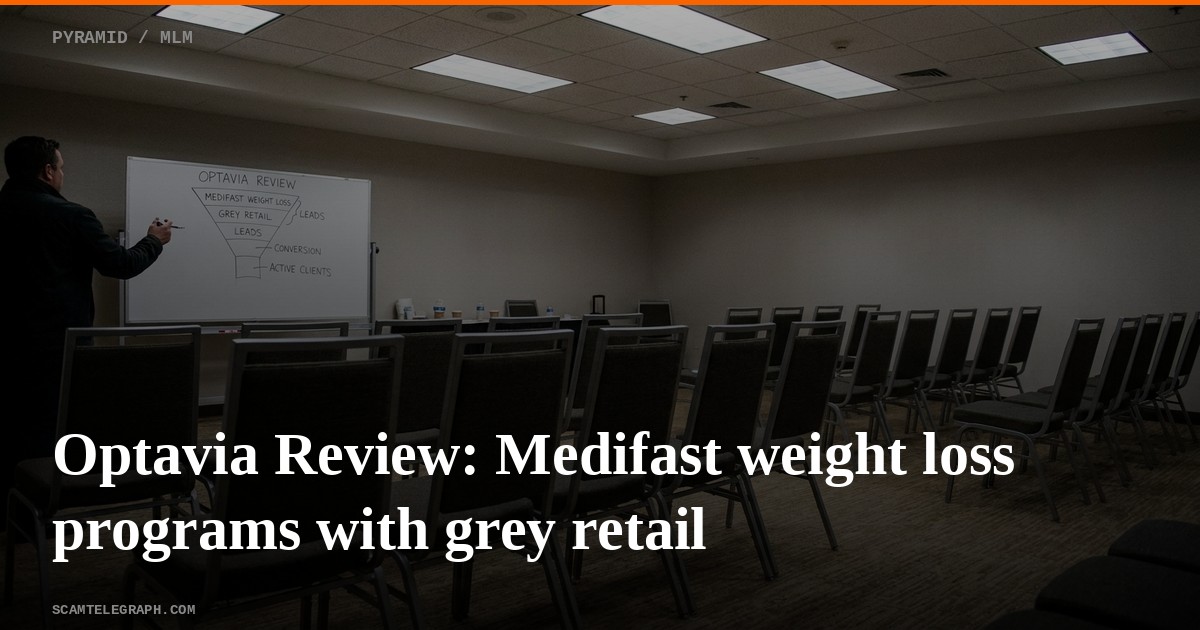
Maryland-based Optavia, a weight loss company, omits crucial ownership and leadership details from its public website, despite dedicating a page to its "about us" section. Technical inspection of the firm's SSL certificate reveals its parent company is Medifast, a direct selling entity that operated Optavia under the name "Take Shape For Life" until July 2017.
Medifast itself began in 1980 as Vitamin Specialties Corp, founded by William Vitale. The company evolved, eventually launching Take Shape For Life as its multi-level marketing subsidiary. This structure, where distributors not only sell products but also recruit new sellers, predates Optavia's current branding.
Daniel Chard has served as CEO for both Optavia and Medifast since October 2016. The Baltimore Sun reported Chard's professional background includes over 25 years in direct selling and consumer products. He spent 17 years at Nu Skin Enterprises, holding positions such as executive vice president of distributor success and president of global sales and operations. Prior to that, Chard held marketing roles at PartyLite, PUR Recovery Engineering, and The Pillsbury Company. This extensive experience in direct selling is notably absent from Optavia's public-facing corporate information.
Optavia offers three primary diet programs. The Optimal Weight 5&1 plan, for example, costs between $414.60 and $448.60, providing roughly 23 days of meals. Customers consume five pre-packaged "Fuelings" daily and prepare one meal themselves. Optavia markets over 60 flavors of these Fuelings, describing them as "scientifically-designed" and "nutritionally interchangeable," despite their premium price point.
Another option, the Optimal Weight 4&2&1 plan, costs $408 for approximately 35 days of supply. Participants prepare two meals and one snack daily, supplemented by four Fuelings. And the Optimal Health 3&3 plan, priced at $333, lasts roughly 43 days and involves three home-prepared meals alongside three Fuelings daily. These programs are not inexpensive; the 5&1 plan alone can cost over $18 per day.
Optavia's marketing emphasizes how its structured meal plans induce "a gentle but efficient fat burning state while maintaining lean muscle mass." Such claims, however, directly support the continuous sale of their branded Fuelings, fostering customer dependence on the company's proprietary products rather than promoting long-term dietary self-sufficiency.
The underlying multi-level marketing model further complicates the company's incentives. Commissions flow not just from product sales, but also from the recruitment of new distributors. This structure distinguishes Optavia from traditional retail, where product sales are the sole driver of revenue and compensation. Distributors earn income from their own sales and from the sales of those they recruit into the network, creating a strong push for expansion.
Regulators and consumer advocates often scrutinize this type of compensation structure. The emphasis on recruitment can sometimes overshadow genuine product sales, raising questions about sustainability and the potential for a pyramid scheme. Optavia's decision to obscure its ownership, its history as an MLM subsidiary, and its leadership's direct selling background aligns with a pattern often observed in companies seeking to distance themselves from the complexities and public perception of the multi-level marketing industry.
Consumers considering these weight loss programs deserve full disclosure on who profits from their purchases and how the compensation structure truly operates. But the lack of transparency on Optavia's website is not an oversight. It represents a deliberate choice to withhold information about the company's fundamental nature and financial incentives.
The Federal Trade Commission offers extensive resources on understanding multi-level marketing plans and identifying potential red flags for consumers.