
OneCoin's Hong Kong bank account shut down this week, and the company is now scrambling to process withdrawals through two remaining accounts that appear unable to handle the volume.
The closure came after OneCoin opened an account with China Construction Bank (Asia) Corporation Limited under the shell company name Foshan Everbright Import & Export Company Limited. That account lasted two weeks before being abruptly terminated. OneCoin hasn't disclosed who ordered the closure—Hong Kong police, the bank itself, or both working together.
The company announced the disruption yesterday in a notice to affiliates buried in their backoffice portal. "Due to technical difficulties in banking processes some transactons may be delayed," the message read, assuring members their accounts would eventually be activated and they'd receive promised coins. No timeline was given.
OneCoin now operates through just two active bank accounts: one with United Overseas Bank in Singapore and another with Bank of Africa in Tanzania. The company appears unable to meet withdrawal demands through these channels alone. Transfer limits or zero activity on those accounts could explain the bottleneck, but the more likely culprit is simple: OneCoin may be running out of money.
This matters because the real money side of OneCoin is collapsing while the fake points side runs perfectly fine. The company has been magically "doubling" affiliate coins valued internally at €6.90 each—a practice with zero basis in reality or actual assets. When withdrawal requests finally get processed, real money has to leave the system. The coin doubling scheme produces nothing but digital entries.
OneCoin's social media pages are flooded with panicked affiliates demanding access to their money. Some invested large sums expecting daily withdrawals but now face withdrawal caps of just 10 coins per day. Others are asking basic questions nobody at OneCoin seems willing to answer: Why can't they access their money? Where are the blockchain proofs? What happened to the promises?
One affiliate posted bluntly: "Return my invested money immediately."
The company has built its defense on a thin claim that OneCoin operates as an educational platform, not an investment scheme. But that story unravels when you look at what members actually bought and what they expected in return. They purchased packages explicitly marketed as generating returns on investment. They received coins with artificially inflated valuations. They were promised the ability to withdraw and sell those coins. Now they can't.
OneCoin has been operating this way for years, with founder Ruja Ignatova positioning herself as a cryptocurrency revolutionary. The company claims it's implementing KYC protocols to prevent drug lords and criminals from using the system—a laughable justification given that OneCoin itself is arguably the larger criminal enterprise.
With bank accounts closing, withdrawal systems failing, and no real blockchain backing any of the "coins," affiliates are finally confronting what critics have said all along: this is a Ponzi scheme with an expiration date. That date appears to be arriving faster than anyone inside OneCoin expected.
🤖 Quick Answer
Why did OneCoin experience payment delays in Hong Kong?OneCoin's Hong Kong bank account was closed after the company opened an account with China Construction Bank under the shell company Foshan Everbright Import & Export Company Limited. The account terminated after two weeks, forcing the company to process withdrawals through two remaining accounts unable to handle transaction volume, causing delays.
Who ordered the closure of OneCoin's Hong Kong account?
OneCoin did not disclose whether Hong Kong police, China Construction Bank itself, or both entities ordered the account closure. The company only announced the disruption through a notice to affiliates, citing technical banking difficulties without specifying the closure's responsible party.
How did OneCoin communicate the payment disruption to members?
OneCoin announced the payment delays through a notice posted in its affiliates' backoffice portal. The message attributed disruptions to technical banking difficulties and assured members their accounts
🔗 Related Articles
- OneCoin class-action Plaintiffs file for voluntary dismissal
- Phil Ming Xu sentenced in WCM777 Ponzi case
- To promote DagCoin, Igor Alberts slams Ponzi he earned millions in
- OneCoin acquires Bonofa pyramid scheme
- OneCoin seminar “disrupted” by Bitcoin enthusiasts
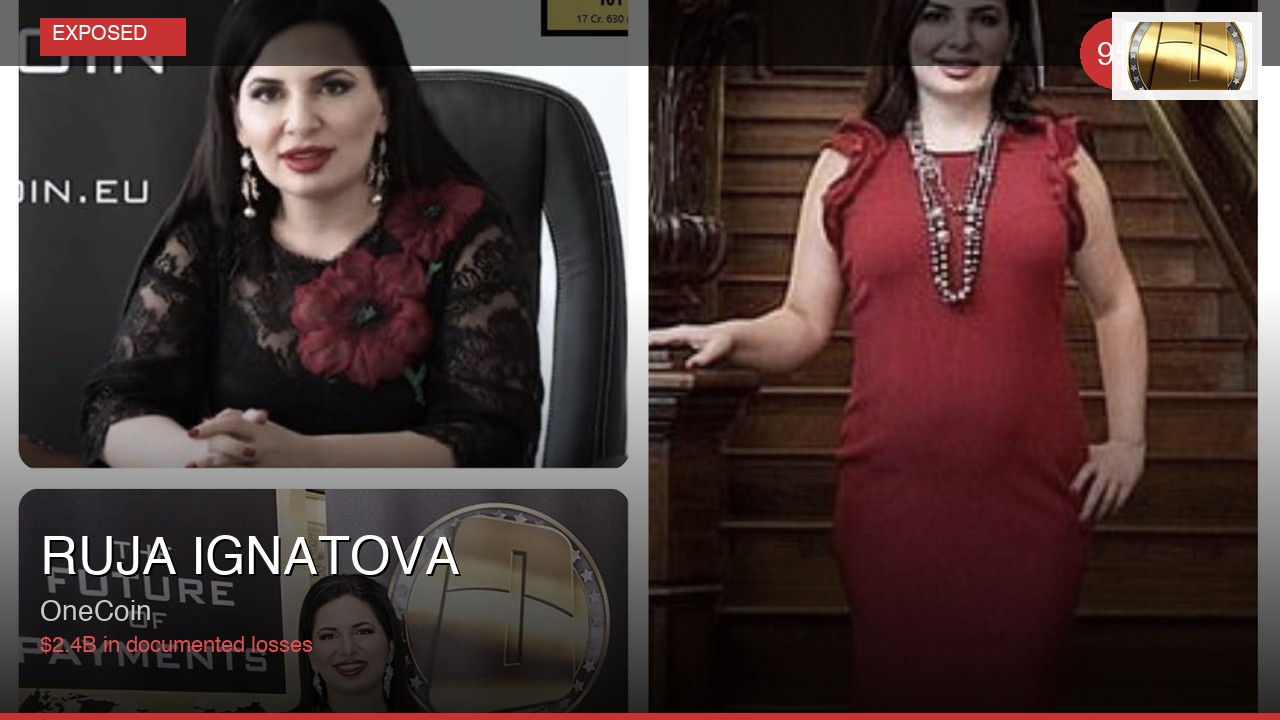 Ruja Ignatova