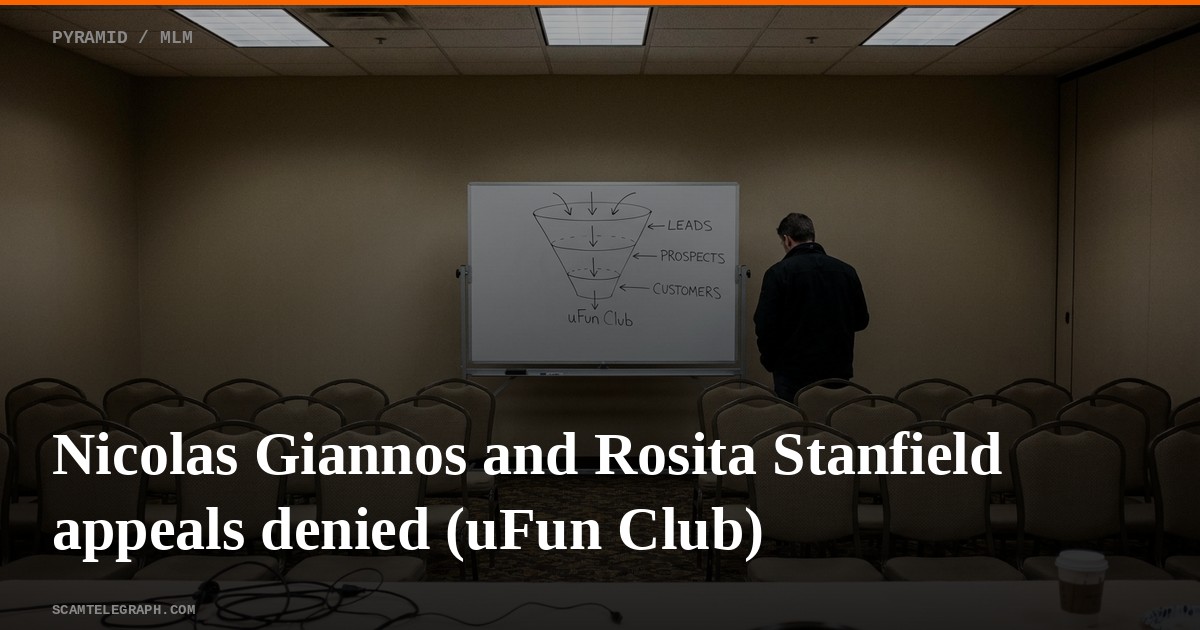
A three-judge panel last month upheld the convictions of Nicolas Giannos and Rosita Stanfield in Samoa, affirming their roles in operating the uFun Club Ponzi scheme. The pair had promised investors returns exceeding 1000%, leading to charges of obtaining money by deception.
The Samoan Court of Appeal affirmed the lower court's judgment, confirming the defendants' culpability. Both Giannos and Stanfield remain convicted of obtaining money by deception. Giannos faces an additional conviction for false accounting. The appeal's denial was issued recently, not in October as some had anticipated.
The judges found significant inconsistencies in the defendants' narrative. Giannos, for instance, claimed on his immigration form that he had never married. Yet, investigators traced transfers of scheme funds to an alleged "wife and children" in the United Kingdom. When police questioned him about these family members, Giannos admitted he had neither a wife nor children.
The core of Giannos and Stanfield's sales pitch involved a promise of spectacular returns. They urged investors to put money into uFun Club, claiming it would multiply tenfold within two months. A bank employee recorded one of their presentations, capturing this exact promise. Giannos later denied making such a direct guarantee, stating only that "indications" suggested such an outcome was possible.
The appellate judges did not accept Giannos's denial. They relied on the recorded evidence and further noted that Giannos himself had previously admitted to the Central Bank that promising investors a tenfold increase was "impossible." This admission directly contradicted his defense during the trial and appeal.
Both defendants argued that money sent overseas constituted personal cash Giannos had brought into Samoa. The prosecution contended these funds were, in fact, investor deposits. The court found the defense's claim particularly unconvincing. Immigration documents showed both Giannos and Stanfield declared they were not bringing $20,000 or more into the country. The Chief Justice dismissed their assertion, stating it lacked any corroboration beyond Giannos's word, which the court found unreliable.
The judges also noted that specific details, such as "activation points," which the defense cited as part of the scheme's mechanics, were absent from any of the recorded presentations to investors. The court concluded the only reasonable conclusion was that both defendants made false statements with clear intent to deceive. All four legal elements required for a conviction of obtaining money by deception were proven beyond reasonable doubt.
Giannos and Stanfield also attempted to distance their operation from uFun Club in Thailand, claiming it was an unrelated entity. The judges were "entirely unimpressed" by this assertion, made through their counsel and Giannos's own testimony. The court found no credible evidence to support such a separation.
uFun Club itself was a large-scale international Ponzi scheme, originating in Thailand, which defrauded investors globally by promising unsustainable returns through a complex virtual currency and matrix compensation system. Its collapse left thousands of individuals financially ruined across multiple jurisdictions, prompting law enforcement actions in several countries. The Samoan case represents one of many such legal battles against the scheme's operators.
The convictions now stand, confirming the defendants' involvement in a widespread fraudulent enterprise. Individuals who suspect they have been targeted by similar investment schemes may contact their national financial regulatory authority for guidance on potential recovery actions.