
Mumbai, India – The Bombay High Court on Friday rejected the anticipatory bail application of Vivek Sharma, also known by the pseudonym Aman Azad, and subsequently ordered his immediate arrest in connection with the extensive Speak Asia online fraud case. Sharma, who investigators suspect served as a critical link between the company’s absconding chief executive, Manoj Kumar, and the scheme’s local management operating from Mumbai, had sought legal protection from arrest several months prior. The court’s decision marks a significant development for the Economic Offences Wing (EOW), which has been methodically pursuing those allegedly involved in what has been described as one of India's largest Ponzi schemes.
Speak Asia, a multi-level marketing company that purported to conduct online surveys, abruptly ceased operations in late May 2011, leaving an estimated 2.4 million investors across India with substantial financial losses. The company had promised lucrative returns for participating in online surveys, but investigations later revealed it operated as an illegal pyramid scheme, allegedly defrauding investors of billions of rupees. Following its shutdown, the EOW initiated a wide-ranging investigation that has continued for years, frequently encountering legal challenges and obstructive tactics allegedly funded from abroad by Manoj Kumar, who fled India when the scheme collapsed. Kumar had pledged to return to India by mid-2011, a promise he has not fulfilled, remaining outside the country's jurisdiction.
The EOW’s investigation has progressed through numerous arrests, steadily moving up the management chain despite persistent legal actions and resistance from individuals allegedly at the forefront of the Speak Asia operation locally. The denial of anticipatory bail for Aman Azad and the simultaneous order for Vivek Sharma’s arrest represent a notable breakthrough in these efforts. Sharma, initially an agent for Speak Asia, is believed to have ascended to a more prominent position within the company’s operations. His alleged role as a conduit between Manoj Kumar and the All India SpeakAsia Panelists' Association (AISPA), which is believed to have facilitated local operations from Mumbai, places him as a key figure in the ongoing probe.
Evidence presented by the EOW during the bail hearing reportedly indicated that Vivek Sharma was instrumental in managing Speak Asia’s online presence and that of AISPA following the company’s shutdown in 2011. These online platforms, including various Facebook groups and a "Speak Asia Corporate Marketing" blog, were allegedly utilized to disseminate a continuous stream of misinformation to affected panelists. This misinformation often included false assurances that the company would soon restart its operations and that duped investors would eventually have their money returned voluntarily. The AISPA itself is viewed by investigators as an extension of these efforts, allegedly used to consolidate and organize affiliates who remained sympathetic to Speak Asia and its management.
An officer involved in the investigation stated, "After the firm's business was shut down, Azad began handling the internet portal of the firm and lured investors that the police have not made any case against SpeakAsia and that the firm will be re-started again soon. He was also handling the All India SpekaAsia panelists associations (AISPA) website. We have traced its server and are going through all the people who have contributed their essays, comments and articles on this website." This statement underscores the EOW's focus on digital footprints and the alleged role of online communication in perpetuating the scheme's narrative post-collapse.
The implications of the High Court’s order are significant for the ongoing investigation. The denial of anticipatory bail indicates that the court found sufficient grounds to believe Sharma's custodial interrogation is necessary. Under Indian legal provisions, an applicant for anticipatory bail is not typically required to be present in court during hearings unless specifically instructed, a measure designed to protect their rights to appeal. Sharma was not present in the courtroom when the verdict was delivered, a move some observers interpret as an acknowledgment of the mounting evidence against him. Police investigators often pursue arrests for the purpose of custodial interrogation, a standard procedure to gather information related to alleged crimes, rather than as a definitive judgment on the commission of a crime itself. This allows agencies like the EOW to question suspects directly and uncover further details about complex financial schemes.
The EOW recently announced that its investigation into Speak Asia is being fast-tracked, following the arrest of an individual described as a "district collector" of money for the scheme. Police sources revealed that Speak Asia mentors allegedly used accounts belonging to hundreds of individuals and companies to transfer money, suggesting a sophisticated money laundering operation. "There are some three-star hotels and event management companies whose accounts were used to launder money. We are calling them one by one to find out whether they did it knowingly or unintentionally," a police source commented. This multi-faceted approach aims to uncover the full extent of the financial network that supported Speak Asia. With the accelerated probe, authorities anticipate approximately half a dozen more arrests in the near future, indicating a widening net for those allegedly involved.
As of now, the arrest of Vivek Sharma is considered imminent, pending Mumbai authorities successfully locating and apprehending him. The exact whereabouts of Sharma, following the court's decision, remain unclear. This latest development underscores the EOW's unwavering commitment to pursuing all individuals
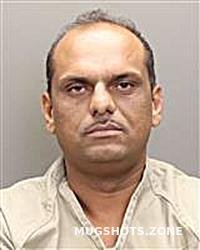 Manoj Kumar