
The Massachusetts Attorney General’s Office this week officially classified GSPartners and NovaTech FX as "cryptocurrency scams" tied to criminal operations. The warning, issued in a public press release, places both entities on a list of fraudulent schemes under active scrutiny by state authorities.
Cryptocurrency scams often involve complex schemes designed to defraud investors, frequently promising high, guaranteed returns on digital asset investments. The Massachusetts Attorney General's Office, in concert with federal partners, actively works to shut down these fraudulent websites. But many sites are hosted by foreign entities that ignore takedown requests. Even when authorities succeed in disabling a domain, scammers routinely launch new websites under different names, continuing the cycle of deception. This constant re-branding makes sustained enforcement challenging.
NovaTech FX, which operated primarily through novatechfx.com, ceased operations after its collapse in February 2023. Federal investigators continue to probe the alleged Ponzi scheme and its principals, Cynthia and Eddy Petion. Victims of NovaTech FX often reported being lured by promises of weekly returns up to 3% on crypto investments, a common characteristic of such fraudulent platforms. The novatechfx.com domain was subsequently disabled, but the legal process against its operators remains ongoing as of February 2024.
GSPartners, another entity flagged by Massachusetts, used gsp.gold as its primary web address. This site currently displays a contact form and vague marketing content about "blockchain and the metaverse," typical buzzwords used to mask a lack of genuine product or service. Josip Heit is identified as the individual behind GSPartners, a scheme that has attracted significant regulatory attention across multiple continents.
Beyond Massachusetts, at least twelve other US states have issued public warnings or taken enforcement actions against GSPartners. Texas regulators, for instance, described GSPartners as perpetrating "various fraudulent investment schemes that are threatening immediate and irreparable harm" to investors. Arkansas similarly cited the company for "numerous fraudulent investment schemes" posing an immediate threat.
Kentucky asserted that GSPartners "acted as an unregistered issuer of unregistered securities" through its public websites, a common legal violation for these types of operations. California explicitly labeled it a "fraudulent crypto investment scheme," while Mississippi noted its "offering and selling fraudulent certificates tied to digital assets."
Washington state simply called GSPartners' multi-level marketing structure "fraudulent activity." New Hampshire accused the entity of "fraud and deception." Alabama regulators pointed to GSPartners for "evading Alabama laws and making guarantees that are unrealistic," a frequent characteristic of Ponzi structures that cannot sustain promised payouts.
Wisconsin characterized the operation as a "global fraud scheme," reflecting its international reach. Arizona determined that GSPartners' threat to "public welfare requires immediate action," leading to emergency orders. Florida's authorities conducted an undercover investigation, uncovering "unlawful activities" within the scheme.
Georgia went further, fining GSPartners, Josip Heit, and associate Michael Dalcoe $500,000 for securities fraud, a concrete penalty highlighting the severity of the allegations. This widespread regulatory response reveals a consistent pattern of alleged illegal activity identified by state financial watchdogs.
A separate federal investigation targeting GSPartners and Josip Heit is also actively proceeding, mirroring the state-level actions and indicating a coordinated effort by US authorities to address the alleged fraud.
The regulatory scrutiny extends globally. Six Canadian provinces, including British Columbia, Ontario, Alberta, Quebec, and Saskatchewan, have issued their own GSPartners fraud warnings. Some of these warnings specifically named associated entities like G999 and GSTrade. Regulators in South Africa, Australia, and New Zealand have also publicly flagged GSPartners as a fraudulent investment risk, indicating a coordinated international response to a widespread scheme.
Facing mounting pressure from regulators worldwide, GSPartners attempted to rebrand and relaunch its operations as GSPro last December. This tactic is common among alleged Ponzi schemes, aiming to evade enforcement and attract new investors under a different guise. But Josip Heit, in a February filing submitted in Arizona, reportedly conceded that GSPro had failed to gain traction, attributing its poor performance partly to the sustained regulatory actions against his prior venture.
Individuals who believe they have lost money to GSPartners, NovaTech FX, or similar cryptocurrency investment schemes should contact their state's securities regulator or the Securities and Exchange Commission for guidance on potential recovery avenues.
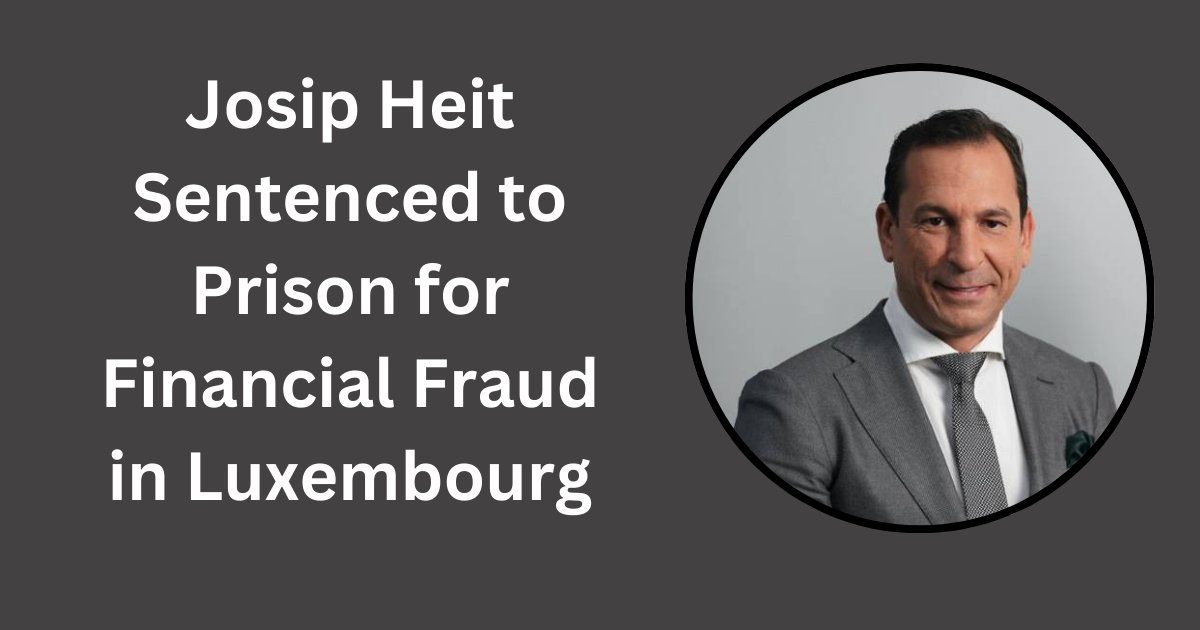 Josip Heit