
Josip Heit, owner of GSPartners, has engaged US law firm Zuber Lawler to send a cease and desist letter to American YouTuber Chris Saunders. The legal action, dated recently, targets Saunders' critical videos about GSPartners and its predecessor, Karatbars International, on his channel Grit, Grind, Gold.
Saunders maintains the Grit, Grind, Gold YouTube channel, where he publishes multiple videos offering critical analysis of GSPartners and its prior entity, Karatbars International. Heit and GSPartners, operating as Gold Standard Banking Corporation, hired Zuber Lawler in an attempt to silence Saunders.
The cease and desist letter, sent by Zuber Lawler, addresses specific statements Saunders made concerning Gold Standard Banking Corporation, Josip Heit, Michael Dalcoe, and Tony De Gouveia. Heit objects to several claims articulated by Saunders on Grit, Grind, Gold.
These objectionable statements include the assertion that Karatbars International and GSPartners are materially the same business. Heit also contests Saunders' characterization of GSPartners as a Ponzi scheme. A third point of contention is Saunders' claim that GSPartners and Josip Heit are involved in "criminal activities of moral turpitude."
Zuber Lawler argues that Saunders' statements regarding these points constitute defamation. The law firm attempts to distance Heit's executive involvement in Karatbars by stating that Gold Standard Banking Corporation has no affiliations with Karatbars. They claim GSB is neither a parent nor a subsidiary nor an affiliate of Karatbars, existing as a wholly separate and independent entity. These statements, while technically true regarding corporate structure, overlook Heit's direct role in creating GSPartners as a direct successor to his prior Karatbars ventures.
GSPartners' G999 token scheme, which has faced numerous regulatory warnings, was structured similarly to Karatbars International's earlier GSB token scheme, which also encountered significant issues. Heit, as a Karatbars executive, was a primary beneficiary of the earlier crypto scheme. Zuber Lawler, however, presents Gold Standard Banking Corporation as a "victim." The firm claims GSB and Mr. Heit did not profit from their relationship with Karatbars, instead losing millions of dollars through their investment.
Regarding the accusation that GSPartners is a Ponzi scheme, Zuber Lawler states it is not, citing the absence of criminal charges. The firm asserts that GSB and its agents and principals have never been charged with or convicted of any crime alleging a Ponzi scheme, concluding that GSB is therefore not engaged in one.
This defense mirrors a common tactic in alleged fraud cases: arguing that criminal activity cannot exist until formal charges are filed. Such a premise creates a circular argument. Legal and regulatory bodies, including the Securities and Exchange Commission (SEC) and various state securities divisions, frequently identify and act against fraudulent schemes well before criminal charges are brought. Many such schemes operate for years, defrauding investors, before enforcement actions culminate in criminal indictments.
For instance, multiple US states, including Alabama, Texas, and Washington, have issued cease and desist orders against GSPartners and its related entities, alleging unregistered securities offerings and Ponzi scheme characteristics. These actions often precede criminal prosecutions and are designed to protect investors from ongoing harm. A Ponzi scheme inherently relies on a constant influx of new investor money to pay returns to earlier investors, a model that collapses when recruitment slows.
The cease and desist letter seeks to restrict Saunders from discussing Gold Standard Banking Corporation, Josip Heit, Michael Dalcoe, and Tony De Gouveia. It demands that Saunders remove all videos related to these entities and individuals.
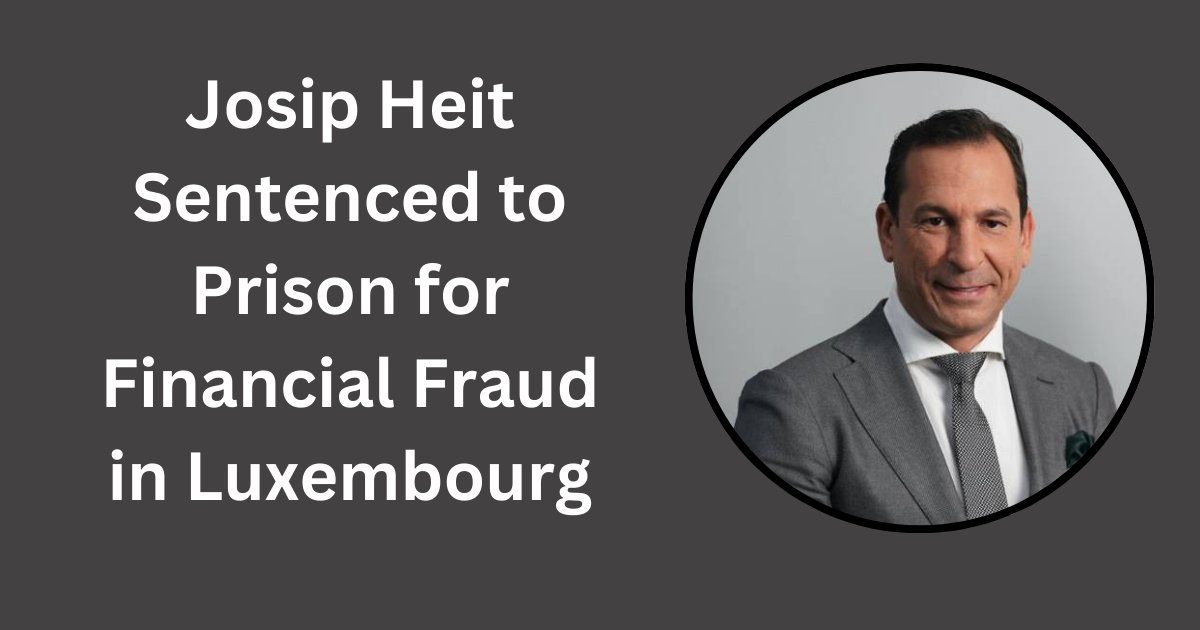 Josip Heit