The Ontario Securities Commission issued a securities fraud warning against Ageeon on July 23rd, 2024. This directive came months before the crypto trading platform's eventual collapse, which left investors unable to access funds. Ageeon promised high daily returns on cryptocurrency investments, but operated with zero transparency regarding its executive leadership.
Ageeon's website provided no ownership or executive details. Three domains associated with the operation were registered privately: ageeon.com on August 15th, 2019; ageeon.live on February 22nd, 2024; and ageeon.icu on August 27th, 2024. This pattern of private domain registration often masks the true operators of high-risk investment schemes.
The company listed Canadian shell company details for "Ageeon LTD" in an attempt to appear legitimate. These incorporation certificates, however, hold little weight for multi-level marketing due diligence. Scammers commonly establish shell corporations with minimal effort and often fake details, particularly when operating cross-border. Such registrations do not equate to regulatory approval for offering securities or financial services.
Ageeon uploaded marketing videos to YouTube featuring AI-generated, robo-dubbed avatars. This practice does not inspire confidence for potential investors seeking transparent and human-led financial operations.
Ageeon hosted a marketing event at the Waldorf Astoria Hotel in Dubai on November 20th, 2024. Dannie Rees and his company, Dr. Events, organized the gathering. Ryan Hand, a UK television and radio presenter, served as the event's host, lending a veneer of mainstream credibility to the proceedings.
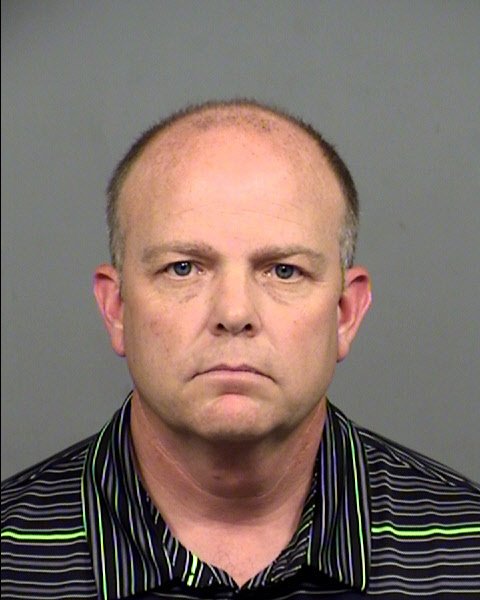
During the event, a figure introduced as "Mark Watson" was presented as the "head of Ageeon." This individual was clearly an actor, speaking with what sounded like a European accent while reading from a prepared script. After the actor's performance, Rogelio Soto Acuna took the stage, introduced as a "coordinator at Ageeon."
Acuna is a failed Mexican politician who previously promoted other crypto Ponzi schemes. In February, Acuna was a "leader" in Own Capita, a similar scheme launched that same month, promising passive returns of up to 3% daily. Own Capita collapsed in mid-2024. That platform also featured a fake CEO named "Boris," suggesting a possible connection between the scammers behind Own Capita and Ageeon.
A series of known Ponzi scheme promoters from various countries followed Acuna on stage. The event lasted approximately four hours. The true operators behind Ageeon remained anonymous throughout. Dubai often serves as a hub for such schemes, where regulatory oversight for foreign-based crypto operations can be lax.
Ageeon offered no retailable products or services. Affiliates could only market Ageeon affiliate memberships to others. The entire structure relied on new money entering the system from recruits.
Ageeon affiliates invested USD equivalents using cryptocurrency. The platform promised substantial daily returns across various tiers:
* IT Minimal: $50 to $500, with daily earnings of 0.9% to 1.3%.
* IT Mid: $500 to $5,000, with daily earnings of 1.3% to 1.75%.
* IT High: $5,000 to $25,000, with daily earnings of 1.6% to 2.15%.
* IT Supreme: $25,000 to $500,000, with daily earnings of 2.1% to 2.65%.
* MM Mid: $200 to $100,000, with daily earnings of 3.1% to 3.55%.
* MM Supreme: $10,000 to $500,000, with daily earnings of 3.7% to 4.51%.
* HFT Mid: 0.0076 to 0.95 BTC or 0.11 to 13.88 ETH, with daily earnings of 2.85% to 3.46%.
* HFT Supreme: 0.95 to 9.45 BTC or 13.88 to 138.8 ETH, with daily earnings of 3.3% to 4.22%.
The multi-level marketing component of Ageeon paid affiliates for recruiting new investors. There were eight affiliate ranks: User, Partner, Supervisor, Leader, Coordinator, Chief, Ambassador, and Supreme. Qualification for these ranks depended on the total downline investment volume, ranging from $100,000 for Partner to $100,000,000 for Supreme.
Downline investment volume was weighted based on the recruitment level. Investments from direct recruits (Level 1) counted at 100%, Level 2 at 80%, Level 3 at 70%, and so on, down to Levels 9 and 10, which counted at 10%. Referral commissions were distributed through a unilevel compensation structure, extending up to twenty levels deep. Users earned 5% on Level 1, 3% on Level 2, 2% on Level 3, and 1% on Levels 4 and 5. Higher ranks unlocked deeper commission levels and increased percentages. Supremes could earn commissions down to Level 20.
Rank Achievement Bonuses ranged from $100 for achieving User rank (with $20,000 in downline investment) to $500,000 for qualifying as Supreme. An additional $5,000 bonus was awarded for every subsequent $500,000 in downline volume after reaching Supreme. Joining Ageeon was free, but full participation required a minimum $50 investment in cryptocurrency.
Ageeon claimed to generate external revenue through "cryptocurrency trading." However, no verifiable evidence supported any such external revenue generation. If Ageeon could legitimately generate up to 4.51% daily, there would be no logical need for external investment, nor would it offer access to such rates without significant cost or stringent vetting.
The only verifiable revenue entering Ageeon came from new investor funds. Using these new investments to pay off earlier investors' daily returns defines a Ponzi scheme. Once new affiliate recruitment slowed, the influx of new investment dwindled. This starved Ageeon of the funds needed to pay promised returns, inevitably triggering its collapse. The financial mechanics of Ponzi schemes ensure that the majority of participants lose money when they fail.
Ageeon officially collapsed on December 17th, 2024. Following the collapse, on December 26th, Ageeon initiated a "Premium Account" recovery scheme, which functioned as an exit scam to extract additional funds from desperate investors. By December 28th, the Ageeon website had been disabled entirely.
 Mark Watson