Emails began circulating in April 2022 among former Karatbars International affiliates, introducing a new entity named Acua Wellington. This company asserted it had "taken over all receivables and liabilities of the Karatbars group of companies." Yet, an examination of Acua Wellington's operations and claims indicates a recovery scam, employing tactics designed to exploit previous victims of financial fraud.
Noel, a Daily Exposed reader, shared an email sent to Karatbars affiliates on April 28th. The message stated, "Dear Sir or Madam, as you may have learned by now, we have taken over all receivables and liabilities of the Karatbars group of companies. From our records, it appears that you may have receivables from various services. Due to the special nature of the business and the legal requirements, we kindly ask you to enter your claim via our website."
The email imposed a May 15, 2022, deadline for submitting personal information. It warned that late submissions "may be rejected." A subsequent email intensified the pressure, declaring, "Those who do not wish to participate in this system will irrevocably lose their claims." These deadlines and threats are common in recovery scams, which often prey on urgency and fear of loss.
Karatbars International, a German-based company, gained notoriety for promoting gold-backed cryptocurrencies like KBC and KaratGold Coin, often described as a pyramid scheme. Its official Facebook page ceased activity in late 2020. Harald Seiz, the owner of Karatbars International, has not issued any public statement regarding Acua Wellington. His silence is a significant indicator.
Acua Wellington operates through acuawellington.com. While the domain was initially registered in 2019, its current registration was updated on January 23, 2022. This suggests the site's current operators likely assumed control around that time. Despite its short operational history, Acua Wellington's website claims its "funds are among the most successful in the world," offering no details about its ownership or management.
The website lists a corporate address in New York City. However, historical records from the Wayback Machine indicate Acua Wellington was established by German individuals. This detail is crucial because Harald Seiz is German, and Karatbars International itself is a German company. The FBI and other regulatory bodies frequently warn that recovery scams often originate from the same individuals or groups behind the initial fraud.
Acua Wellington's website repeatedly references the U.S. Securities and Exchange Commission (SEC). It states, "AcuaWellington is investor-owned. As an investor-owner, you own the funds that own AcuaWellington... AcuaWellingtons can acquire companies of all types and take them public at any time without going through the traditional IPO process. For this purpose, AcuaWellington can also form a special purpose acquisition company (SPAC), which is subject to the U.S. Securities and Exchange Commission (SEC)." These statements represent a complex attempt to project legitimacy, but they bear little connection to Acua Wellington's actual regulatory standing or its purported mission.
Acua Wellington itself is not registered with the SEC. For a company claiming a U.S. base and discussing shareholder ownership, this lack of registration is a critical red flag.
Acua Wellington appears to be promoting a reload Ponzi scheme centered on a cryptocurrency called AcuaCoin. This coin is an ERC-20 token, a type of digital asset that can be created on the Ethereum blockchain within minutes and at minimal cost. Acua Wellington claims AcuaCoin is pegged to Ethereum and "hedged via purely corporate assets." Given the company's recent inception and undisclosed leadership, the existence of significant corporate assets to back such claims is highly doubtful.
No direct investment opportunity has been attached to Acua Wellington yet. This suggests the current phase focuses on harvesting personal identification documents through a Know Your Customer (KYC) process. Acua Wellington set a July 15th cutoff date for affiliates to submit these documents. Providing sensitive personal data to an unregistered, unknown entity carries substantial risks, including identity theft or further financial exploitation.
There is no credible evidence suggesting Karatbars International was legitimately sold. Acua Wellington's German origins align with Harald Seiz's previous efforts to launch new Karatbars-related cryptocurrencies since the KBC token collapsed in 2019. This pattern suggests a continuation of prior schemes under a new guise.
Acua Wellington functions as a Karatbars Ponzi reload operation run by undisclosed individuals. It lacks a legitimate U.S. presence. Anyone who submits identification documents effectively hands them over to a third party whose intentions and operations remain opaque. Harald Seiz has remained out of public view, offering no comment on Acua Wellington. This silence speaks volumes about the nature of the operation.
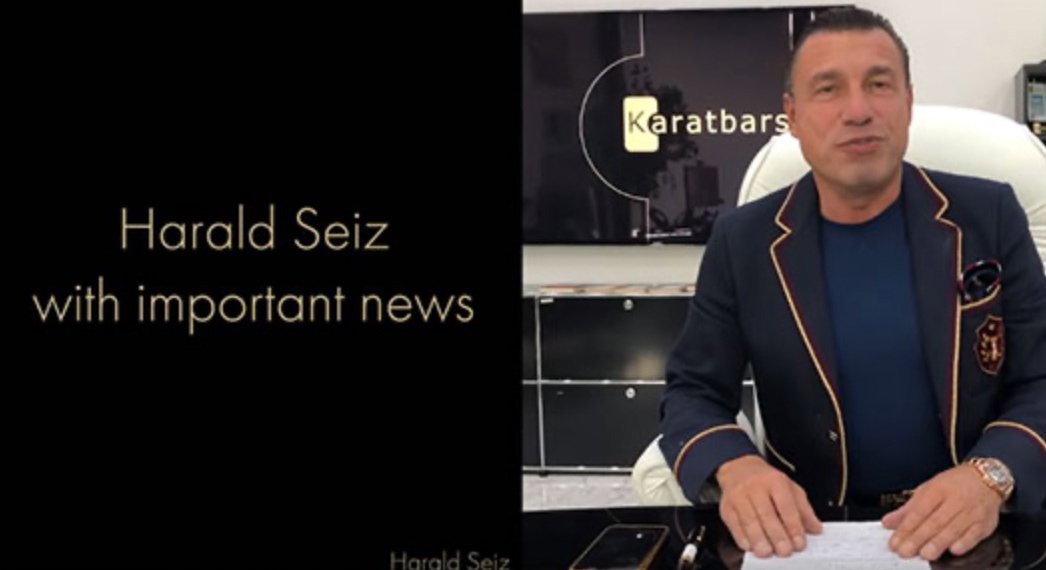 Harald Seiz