
The Second Circuit Court of Appeals halted proceedings in the Trump ACN lawsuit on May 29, 2020, granting a stay after defendants appealed a lower court's decision. This pause came three days after the Trump defendants challenged the denial of their motion to compel arbitration.
The underlying lawsuit, filed in the Southern District of New York, alleged a fraudulent scheme by Donald Trump, his children Donald Trump Jr., Eric Trump, and Ivanka Trump, and The Trump Organization. Plaintiffs claimed the Trumps promoted the American Communication Network (ACN), a multi-level marketing company, as a legitimate business opportunity. They asserted the Trumps received millions in exchange for these endorsements, despite ACN allegedly operating as a pyramid scheme that defrauded thousands of individuals.
Defendants filed their appeal on May 26, 2020, seeking to force the plaintiffs into private arbitration rather than public court. They argued that the plaintiffs' agreements with ACN contained arbitration clauses that should apply to the Trumps as third-party beneficiaries. The Second Circuit's administrative stay meant court filings would temporarily cease while the appellate panel considered the arbitration question. Briefing for the appeal was initially scheduled for June 12, 2020.
Amidst these procedural delays, Raj K. Patel filed an unusual motion to intervene as a plaintiff on May 22, 2020. Patel's claims included a far-reaching RICO conspiracy involving then-President Trump, Vice President Pence, Notre Dame Law School, Emory University, the Secret Service, the FBI, and "other federal military and civilian agencies."
Patel alleged these parties formed an enterprise to defraud him and wage psychological warfare. He claimed Trump and Notre Dame misappropriated his "unique word patterns" – which he described as non-profane and non-explicit – and used them to "batter him via soundwaves." The purported goal of this enterprise was to decrease Patel's academic performance. Patel also suggested political targeting due to his honors thesis, "Weight Loss as a Religion." He stated the alleged enterprise began approximately fifteen years prior and was "mildly ongoing" as of May 21, 2020. This timeframe roughly aligned with the period original plaintiffs claimed Trump defrauded them through ACN.
The court denied Patel's motion to intervene on May 26, 2020. He appealed the decision the next day. This was not Patel's first attempt to pursue these allegations; he had filed a similar lawsuit in Indiana on February 10, 2020, which was dismissed as "frivolous" nine days later. On November 25, 2020, the U.S. Court of Appeals denied Patel's appeal, stating it "lacks an arguable basis either in law or in fact."
Patel then attempted to appeal to the Supreme Court. A March 24, 2021 letter on the ACN Trump case docket indicated he spoke with U.S. Supreme Court Assistant Clerk Redmond Barnes, who requested a corrected copy of his Petition for Writ of Certiorari due to word and page limit violations. Even after his appeals were exhausted and his intervention blocked, Patel continued to file letters addressed to the judge in the ACN case.
On March 28, 2022, the court issued a Memo Endorsement striking Patel's latest filings. The court noted his motion to intervene had been denied in May 2020, and his appeal of that order was denied in October 2020. The judge ordered, "Mr. Patel shall file no further substantive filings in this action." Court records show Patel subsequently complied with this order.
The Second Circuit ultimately denied the Trump defendants' arbitration appeal on September 23, 2021, allowing the class-action lawsuit to proceed in court. Arbitration proceedings between the original plaintiffs and the Trump defendants continued in parallel after this decision. On January 11, 2024, the ACN Trump RICO class-action lawsuit was dismissed in its entirety.
The dismissal concluded a legal battle that spanned several years, originating from allegations of fraudulent endorsement of the American Communication Network.
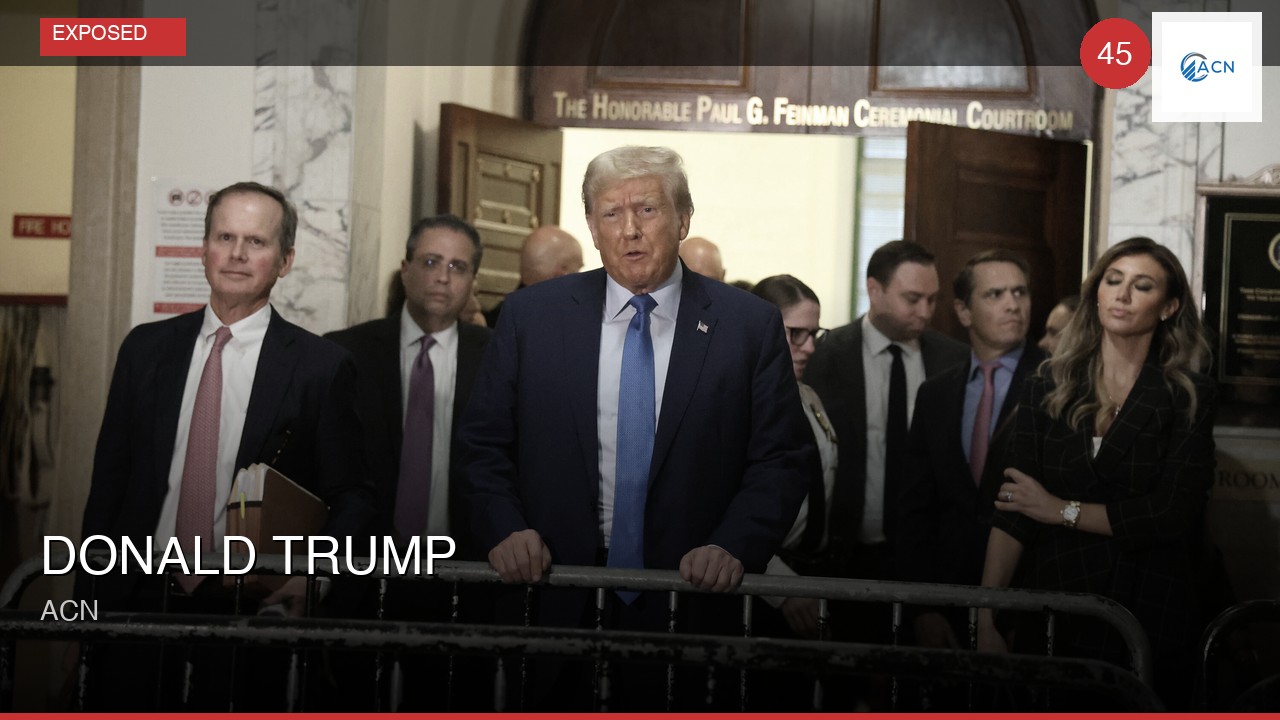 Donald Trump