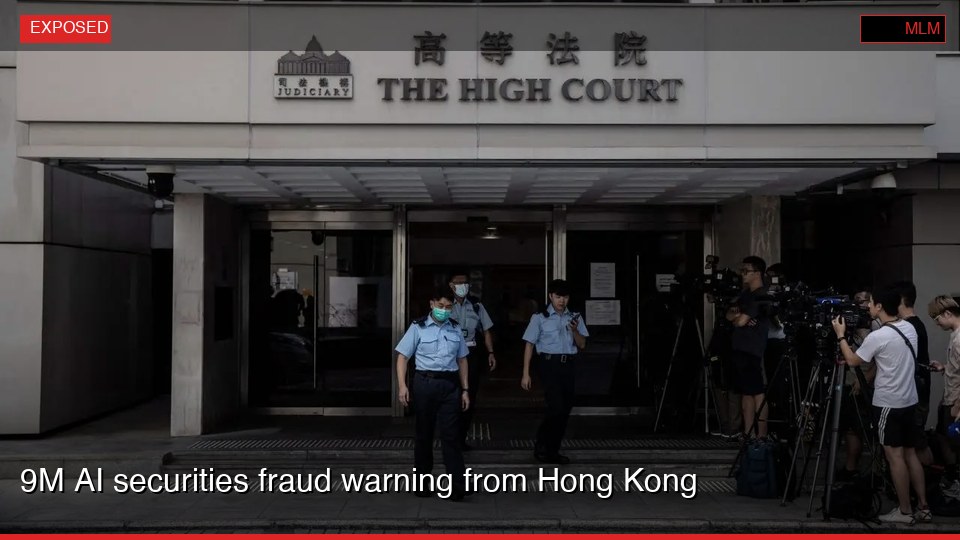
The Hong Kong Securities and Futures Commission issued a fraud warning against 9M AI on December 1st. The SFC stated 9M AI operates as "9M AI Group Inc." and promotes products supposedly tied to virtual asset investment strategies, complete with a VIP reward system that offers referral incentives.
9M AI holds no registration to offer securities in Hong Kong. This makes its operations an illegal, unregistered investment scheme under the city's financial laws.
The company belongs to the broader Chinese "click a button" app Ponzi schemes. Hundreds of these operations have been tracked since 2021.
Since a June 2025 review of 9M AI, an actor was hired to portray CEO "Chris Chang." Other individuals named in connection with 9M AI include "Joanne Faith Teo," "Tristan Li," and "Kevin Sheahan." These "executives" are likely local actors or accomplices recruited from Malaysia, Singapore, Thailand, or Hong Kong. They do not appear to be the actual operators.
"Click a button" app Ponzis continue to emerge despite ongoing crackdowns on Chinese scam compounds across Southeast Asia. In September 2024, the US Treasury Department sanctioned Cambodian politician Ly Yong Phat for allegedly sheltering Chinese human trafficking scam factories. Through companies he owns, Phat reportedly provides cover for these criminal organizations in Cambodia.
Myanmar authorities claim to have deported over 50,000 Chinese scam factory workers since October 2023. Still, the deportations have not stopped the flow of new "click a button" apps.
Late January 2025 saw Chinese ministry officials visit Thailand. Their stated goal was to address organized Chinese crime gangs operating from Myanmar. Early February brought action as Thailand cut power, internet access, and petrol supplies to Chinese scam factories located along its border with Myanmar.
By February 20th, Thai and Chinese authorities announced they had freed ten thousand trafficked hostages from Myanmar compounds. On the same day, five Chinese crime bosses were arrested in the Philippines along with four hundred and fifty other individuals. A March 19th report estimated "up to 100,000 people" remained working in Chinese scam factories in Myanmar. By April 2025, reports indicated newly opened Chinese scam factories in Nigeria, Angola, and Brazil, as the Asian crackdown pushed operations to other continents.
Myawaddy, a town in Myanmar along the Thai border, is controlled by the Karen National Army (KNA). Warlord Chit Thu and his sons Saw Htoo Eh Moo and Saw Chit Chit lead the KNA and are accused of protecting Chinese criminals running "click a button" Ponzi scam factories there. On May 5th, the US imposed sanctions on Chit Thu. The Treasury Department identified the warlord as a central figure in a network of illicit cyberscam operations that target Americans. The sanctions freeze any US assets held by Saw Chit Thu, the Karen National Army, and his two sons. Americans are prohibited from conducting business with them. Both Britain and the European Union had previously sanctioned Saw Chit Thu.
A May 25th report characterized Myanmar and Laos as having "towering scam economies" but specifically called Cambodia a significant hotspot for Chinese criminal activity. Cambodia is likely the global epicenter of next-generation transnational fraud in 2025. Chinese gangs reportedly operate there under the protection of unnamed local politicians.
In June 2025, Amnesty International accused Cambodia's government of "deliberately ignoring" abuses by cybercrime gangs. The London-based human rights group identified 53 confirmed scam centers and dozens of suspected sites across the country, including in Phnom Penh. These prison-like compounds were enclosed by high fences topped with razor wire, guarded by armed men, and staffed by trafficking victims forced to defraud people worldwide. Punishments for those who failed to meet quotas included electric batons, confinement in dark rooms, and beatings.
On November 18th, 2025, Alice Guo, a former Philippine mayor, received a life imprisonment sentence for her role in establishing a human-trafficking scam compound. Guo had helped incorporate Baofu Land Development, which owned an eight-hectare complex in Bamban town, north of Manila. She ran for mayor in 2022. Employees at the complex stated they were coerced into carrying out investment and love scams and were beaten or electrocuted for not meeting their targets. Cases against Guo's Chinese-born business associates, Zhang Ruijin and Lin Baoying — convicted in Singapore's largest money laundering case — and other individuals at large were archived. The court stated these cases would be revived upon arrest. Guo herself is a Chinese citizen and an accused Chinese government agent. A Manila court later determined she was ineligible to hold office due to her nationality. This case demonstrates how organized Chinese crime gangs rely on politicians to facilitate illegal activity.
On November 27th, South Korea imposed sanctions against fifteen individuals and 132 entities linked to a "surge" in online scams targeting Korean nationals. Prince Group and its Chairman Chen Zhi were among those sanctioned. Ultimately, the same group of Chinese scammers is believed to orchestrate the "click a button" app Ponzi schemes, regardless of the country from which they operate. Former Philippine mayor Alice Guo will serve a life sentence for her involvement in these schemes.
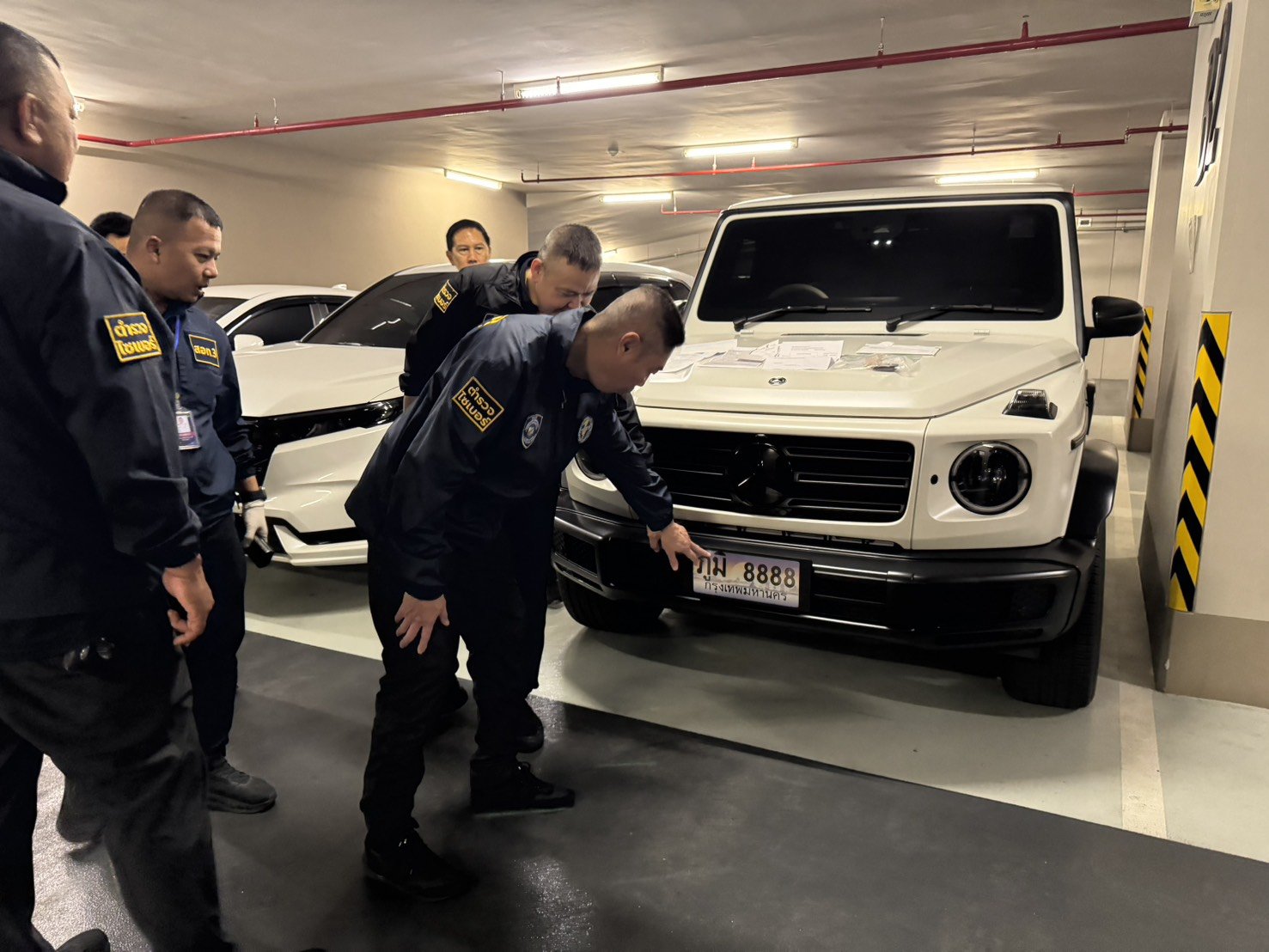 Ly Yong Phat