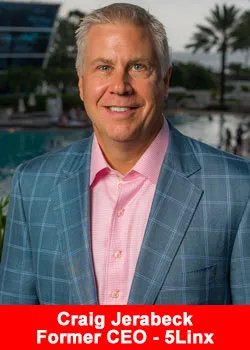
Craig Jerabeck, Jason Guck, and Jeb Tyler, the co-founders of 5Linx, faced federal criminal charges filed March 21st, leading to their arrests days later. The Department of Justice accused them of a scheme to defraud investors and obtain money through false pretenses.
This criminal action followed a civil dispute between the former partners. Jerabeck had left his President and CEO post in September. He then allegedly started recruiting 5Linx affiliates for a competing company, Paycation. Jerabeck claimed these individuals were independent contractors, so no breach of contract occurred.
A court disagreed in December, ordering him to stop recruiting. Jerabeck then filed counter-allegations, claiming Guck and Tyler were lying to potential lenders about 5Linx's financial health.
An FBI Special Agent's affidavit detailed the probable cause behind the criminal charges. The agent stated that the defendants ran multiple schemes to divert company money into accounts they controlled. This activity began around 2009 and continued until at least May 2015.
They created fraudulent contractor accounts within the 5Linx sales team. These phantom positions generated extra income for the co-founders beyond their official compensation plan. Shell company names hid the true owners from both employees and investors.
The scheme involved millions of dollars in wire transactions and electronic transfers. Money moved from 5Linx into the defendants' personal bank accounts and debit cards. Investors never knew about or approved these transfers. An FBI agent noted this diverted money would have significantly increased 5Linx's cash flow.
Jerabeck had raised 5Linx's financial problems in his civil lawsuit months earlier. He did not mention that his own theft contributed to these issues. Guck and Tyler remained silent, being complicit in the fraud.
The siphoning of funds led to false financial reports. These reports were disclosed to investors, who then relied on the fake numbers to make major financial decisions over several years. This resulted in at least $4 million in losses.
The trio frequently transferred the positions of high-earning departing affiliates to their shell companies. One such shell was "It's About Time" (IAT). From approximately 2009 through May 15, 2015, the IAT account received roughly $7.6 million.
Of that $7.6 million, $1.1 million went to a Citizens Bank account. Jerabeck was the authorized signer on this account. The remaining $6.5 million was wired to Telecom Broker Network (TBN). Department of State records identify Jerabeck as TBN's sole officer.
From TBN, the money was further distributed. A JP Morgan Chase account, signed solely by Jerabeck, received $14,536. A Canandaigua National Bank account, listing Tyler and Jerabeck, received $144,772. Mirage Development, a company owned by Jerabeck, obtained $2,178,194. Tyler and Guck each personally received $2,118,194. An additional $11,658.51 was loaded onto debit cards.
Another shell account operated under the name "5Linx Inc. II—GOFY." The acronym was internally understood to mean "Go Fuck Yourself." Outsiders were told it meant "Go For You." Between May 15, 2011, and May 15, 2015, GOFY received $2.7 million from 5Linx. This money passed through an account named JAGOFYGUCK.
That $2.7 million from GOFY broke down as follows: $654,413 to Tyler, $648,721 to Guck, and $663,482 to Mirage Development. A GOFY account at Canandaigua National Bank, with Tyler and Jerabeck as signers, received $50,997.
Jeb Tyler instructed an IT staff member to rig the compensation plan. This ensured the IAT account was credited with a portion of every company-wide sale. Jason Guck arranged a similar setup for GOFY. None of these shell accounts generated actual revenue for 5Linx.
A 5Linx financial department employee eventually uncovered the IAT deception. When Jeb Tyler learned of this discovery, he reportedly grew angry. He told the staffer "this is what all multilevel marketing owners do." This employee, referred to as "Witness B" in the affidavit, was instructed that the defendants wanted to keep these accounts secret. The IT department restricted access. Witness B also overheard discussions where the defendants expressed concern about investors discovering IAT and GOFY.
Beyond the fake affiliate positions, Jerabeck, Guck, and Tyler also wired 5Linx funds directly to themselves. The company sent money straight into accounts bearing the names Jason Guck, Jeb Tyler, and Mirage Development. From those accounts, the defendants transferred funds onto debit cards or into various bank accounts they authorized. They opened multiple bank accounts between 2010 and 2011, apparently for fraud purposes.
Craig Jerabeck used Mirage Development funds for personal expenses, including improvements to a second home. Jason Guck opened a YaYa Holdings Corp account in 2010. He used transferred funds for a $10,000 transfer to his TD Ameritrade account, a $10,000 American Express payment, and an $8,700 cash withdrawal. He also covered other personal expenses. Jeb Tyler opened JT Global Consulting in 2010. He periodically transferred funds for personal use, including writing himself a $50,000 check in April 2014.
Throughout their ten-year business relationship, the defendants never disclosed their roles as independent contractors of 5Linx. They also kept secret the millions in additional compensation they were receiving.
After a buyout by 5Linx, the company began experiencing financial problems. Based on the misstated financial documents, investors agreed to a buyout of their Series A preferred and Series A-1 preferred stock. Investor A stated that if they had known about the excess commissions, they would have insisted the buyout be paid mostly or entirely in cash. Instead, they received partial cash with the remainder in loan notes.
Post-buyout, 5Linx struggled financially. The company sometimes ran out of cash mid-month. This liquidity crisis prompted Investor B to provide an additional loan, which was to be paid off in just over a year.
At some point in 2015, investors agreed to a $4 million reduction of the original buyout price. This was based on the defendants' representations and fraudulent financial documents. The reduction aimed to help 5Linx with its financial burden.
Investors received only $730,126 toward principal and interest on the notes from September 2015 through April 2016. This was instead of the full amount they were owed. The balance of the notes had to be written off. Additional 5Linx stock was issued to investors instead of cash when the company took on a new owner in April 2016.
The combination of financial misrepresentations and decreased cash reserves diminished the value of their investment. It also impacted the buyout price. Had the money not been diverted, sufficient cash reserves would have existed to pay the buyout and maintain the company's financial health. Investor A said that knowing the full truth would have prevented their agreement to the January 2014 buyout as structured. The fraudulent statements led to business decisions that caused material harm and financial loss.
Jerabeck, Guck, and Tyler faced charges of defrauding and obtaining money by false and fraudulent pretenses under Title 18, United States Code, Section 1343. At a March 23rd hearing, a $100,000 bond was set for all three, with travel restrictions. Jerabeck posted bond after the hearing. A Status Conference was scheduled for May 5th.
Following a guilty plea in May, Craig Jerabeck was sentenced to fourteen months in prison on December 6th. Jeb Tyler and Jason Guck were also convicted, with Tyler sentenced to fourteen months in prison on December 13th.
 Jeb Tyler
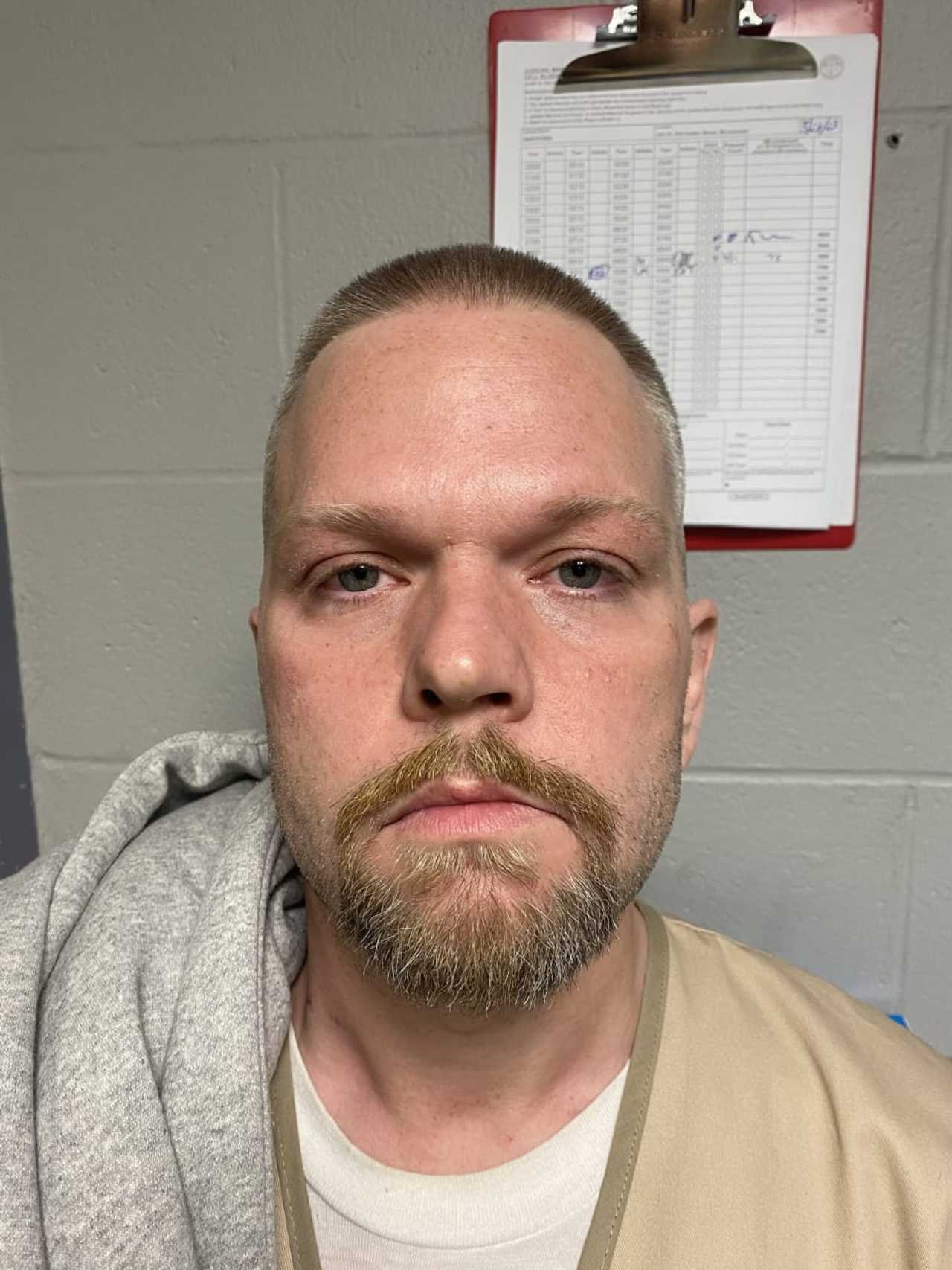 Jason Guck