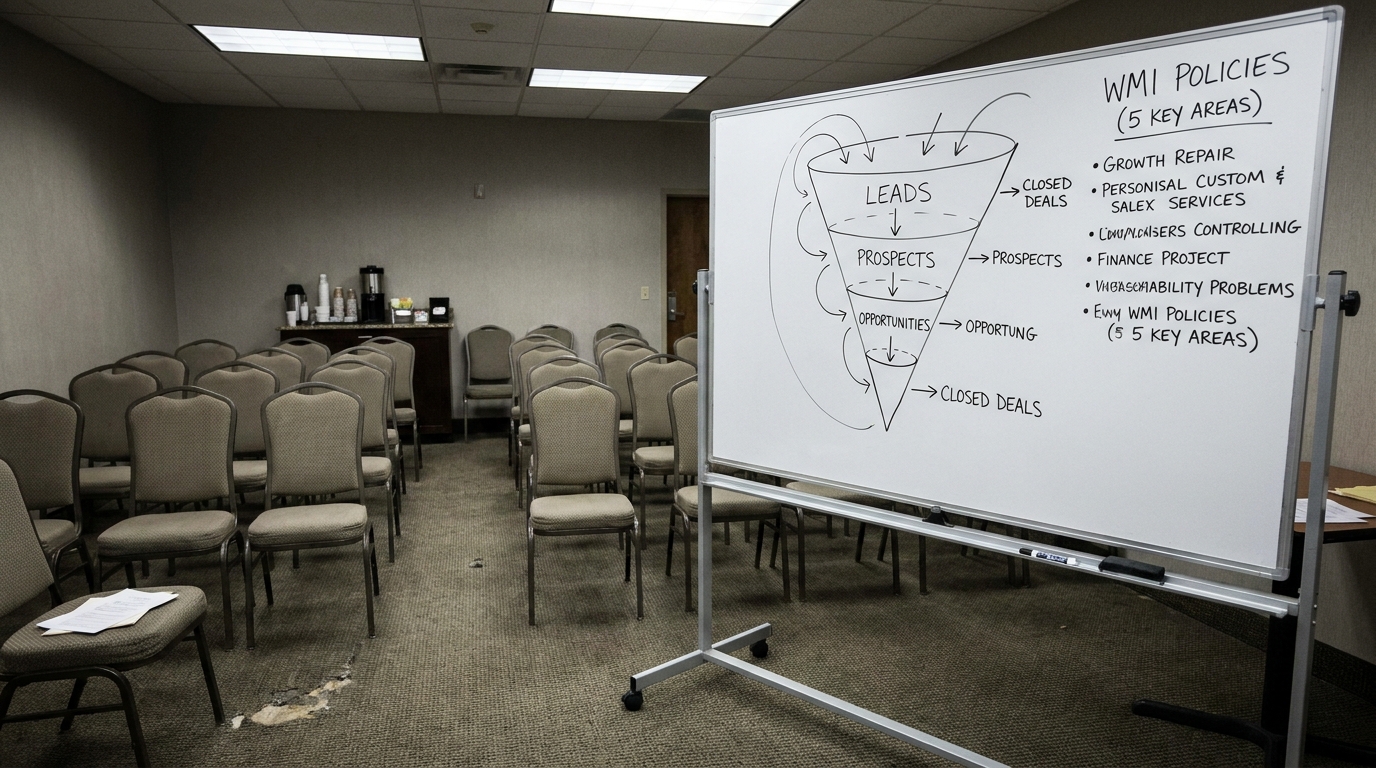
ScamTelegraph's investigation into Wealth Masters International (WMI) reveals five key policies within its 34-page Statement of Policies and Procedures that offer critical insights into the company's operational structure. These clauses, often overlooked by new participants, detail WMI's control over business amendments, rule enforcement, and marketing, challenging the notion of independent entrepreneurship for its consultants.
The initial step for any individual joining a multi-level marketing organization typically involves navigating extensive documentation, ranging from compensation plans to marketing templates. Among these critical documents is the policies and procedures statement, a resource frequently overlooked by new participants who often simply agree to terms during signup without thorough review. Wealth Masters International's (WMI) Statement of Policies and Procedures spans 34 pages, yet within its legal language lie specific clauses that provide a more accurate depiction of WMI's operational methodology than typical income disclosures or promotional testimonials.
One significant clause, Policy 2.3, grants WMI the unilateral authority to amend the entire agreement "at its sole and absolute discretion." The company justifies this power by citing evolving federal, state, provincial, territorial, and local laws, alongside changes in the business environment. This justification suggests an anticipation of potential regulatory issues, indicating a strategy to adapt and remain compliant. Any amendments made under this policy are automatically binding on consultants upon their initial agreement. This provision raises questions about the autonomy of a consultant's "business," as WMI retains full control over commission structures and policy-making, dictating terms that consultants must either accept or depart from.
Further, Policy 2.6 outlines WMI's prerogative to waive any policy violation if the company deems it appropriate. Consultants can appeal for leniency by submitting a written explanation. This clause implies an understanding within WMI that rules will be breached. Crucially, it suggests that the company may be reluctant to terminate high-performing consultants over minor infractions, prioritizing revenue and morale. This creates a potential disparity in how rules are enforced, where top earners might receive preferential treatment over less successful participants, undermining the concept of an equitable playing field often promoted by WMI.
Policy 4.2 introduces a particularly restrictive aspect of WMI's operations regarding advertising. It imposes an extensive list of advertising limitations, notably prohibiting consultants from mentioning the company name or its products in their marketing efforts. This restriction means that individuals promoting WMI products are unable to explicitly state what they are selling to prospective customers, which can be perceived as counterintuitive for building trust and confidence in a business opportunity. This specific rule prompts scrutiny into why such a seemingly beneficial opportunity requires such discretion in its promotion.
Expanding on advertising constraints, Policy 4.2.5 forbids consultants from developing independent websites that incorporate WMI's name, logos, product descriptions, or that otherwise promote WMI products, services, or the WMI opportunity directly or indirectly. Instead, consultants are restricted to using WMI's pre-designed, replicated websites, which are identical across all distributors. While multi-level marketing often champions entrepreneurial spirit and creativity, this policy mandates a uniform approach to online presence, potentially hindering consultants' ability to cultivate a distinct personal brand and effectively compete in a digitally driven market.
Finally, Policy 5.3 strictly prohibits consultants from disparaging WMI, other consultants, the products, the compensation plan, or company leadership. While the policy permits complaints, it mandates that these be directed exclusively to WMI, explicitly discouraging their discussion among other distributors. The stated rationale is that "negative comments and remarks made in the field by Consultants about the Company, its products, services, or Compensation Plan serve no purpose other than to sour the enthusiasm of other WMI Consultants." However, this approach can stifle constructive criticism and prevent consultants from sharing common issues, potentially fostering an artificial sense of positivity rather than addressing legitimate concerns within the network.
Consultants considering involvement with Wealth Masters International are encouraged to review the full policies and procedures document thoroughly. Understanding these specific clauses, among others, is essential for making an informed business decision, rather than simply accepting terms without due diligence.
What is Wealth Masters International (WMI)?
Wealth Masters International (WMI) is a multi-level marketing company whose operational policies are detailed in its Statement of Policies and Procedures, governing how its consultants operate and market its products.
Why are WMI's policies considered significant for consultants?
WMI's policies are significant because they outline the company's control over key aspects of a consultant's "business," including the ability to unilaterally amend agreements, selectively waive rule violations, and impose strict restrictions on advertising and independent online presence.
How does WMI's Policy 2.3 affect consultants?
Policy 2.3 grants WMI the absolute discretion to amend its entire agreement, including commission structures and operational rules. This means consultants must comply with any changes or discontinue their involvement, limiting their control over their alleged independent business.
What are the implications of WMI's advertising restrictions?
WMI's advertising restrictions, particularly Policies 4.2 and 4.2.5, prohibit consultants from explicitly naming the company or its products in their marketing and prevent them from creating independent websites. This forces consultants to use standardized marketing materials, potentially hindering their ability to build a unique brand and reach customers effectively.