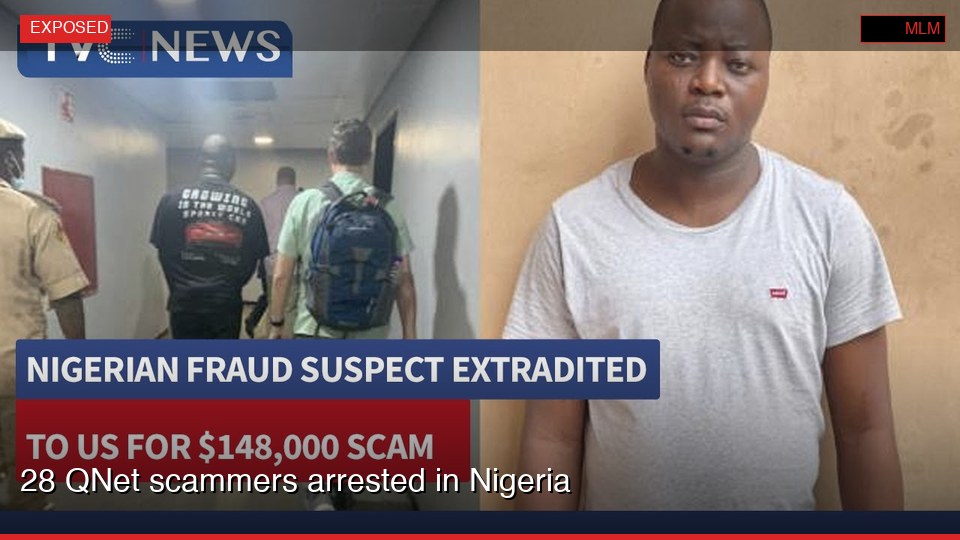
On March 10, Nigerian financial crime authorities arrested 28 individuals linked to QNet, an alleged pyramid scheme, operating from a three-bedroom apartment in Al-Bishiri Estate, Minna, Niger State. The Economic and Financial Crimes Commission (EFCC) labeled QNet a Ponzi scheme outright.
The operation ran covertly from a residential unit, suggesting efforts to avoid detection. Authorities identified the suspects as Nofisat Opeyemi, Shukurat Muritala, Odunayo Sanni, Mayowa Oyekola, Aishat Olaitan, Edward Hannah, Abioye Fathiah, Joseph Omowunmi, Kareem Ahmed, Arikeusola Afeez, Adiamo Mutholib, Abass Ibrahim, Wasiu Taofeek, Adeniji Damilare, Nurudeen Akinola, Mubarak Yekeen, Adedeji Ayobami, Alani Samuel, Ogundele Yunus, Adekunle Ibrahim, Adewale Azeez, Rufai Faruk, Fawaz Yekeen, Olade Abdullahi, Ahmed Murtala, Adisa Habeebllahi Akorede, Adigun Timilehin, and Abdulfatai Ridwannullah. They now await formal charges as EFCC investigations conclude.
Victims reported being told QNet operated internationally, with purported affiliates in Dubai, India, Indonesia, and Thailand. They paid registration fees and product purchases ranging from $790 to $850, approximately N1,462,000. These payments were framed as entry points into a "network marketing" business, but allegedly served as the primary method of funding the scheme. Some arrested individuals were photographed receiving "lectures" on Ponzi operations, disguised as training for this network marketing model.
QNet, a Malaysia-based multi-level marketing (MLM) entity owned by Vijay Eswaran, has been identified by the EFCC and other international bodies as a pyramid scheme. In this model, participants are recruited and then pressured to buy products to qualify for commissions. These commissions typically stem not from product sales to genuine consumers, but from the recruitment of new victims into the scheme. The structure ensures that monthly qualification costs often surpass any earned commissions, leading to inevitable financial losses for most participants.
Warnings and enforcement actions against QNet have emerged from numerous countries, including India, Cote d'Ivoire, Liberia, Afghanistan, Ghana, Bhutan, Russia, Togo, and Sri Lanka. Despite these widespread concerns and arrests, Malaysian authorities have largely ignored the alleged fraudulent activities of QNet. As of February 2025, web traffic analytics firm SimilarWeb indicated QNet's top traffic sources included Russia (28%), the UAE (10%), India (9%), Australia (6%), and the US (5%). This global reach persists even as governments issue warnings.
The arrests in Minna occur amidst a broader regional crackdown on financial fraud and cybercrime across West Africa. In December 2025, Interpol announced Operation Sentinel, which led to 574 arrests and the seizure of $3 million across 19 African nations. This operation targeted business email compromise, ransomware, and other cyber-fraud rings. Earlier that year, Operation Red Card, running from November 2024 to February 2025, saw investigators in seven African countries arrest 306 suspects and seize 1,842 devices. That operation aimed to dismantle criminal networks that defrauded over 5,000 victims through mobile banking fraud and investment scams.
Nigeria has also taken action against foreign-led cybercrime. In August 2025, authorities deported 50 Chinese nationals and one Tunisian following convictions for cyber-terrorism and internet fraud. Neighboring Ghana has also reported arrests of Nigerians accused of coordinating cybercrime networks from makeshift offices in Accra. These coordinated efforts reflect a growing regional commitment to combating organized financial crime.
Victims of alleged QNet fraud in Nigeria should contact the Economic and Financial Crimes Commission (EFCC) directly via their official channels to report their experiences and seek assistance.
 Vijay Eswaran