
German financial regulator BaFin reported on April 13th that at least 25,000 investors in Germany lost over 400 million euros, approximately $424 million USD, to the OneCoin cryptocurrency scheme. Investigators called OneCoin "one of the most dangerous money games of recent years," with victim reports still increasing weekly.
BaFin's continued freezing of OneCoin's German bank accounts has revealed the vast scale of the fraud. This documented loss represents only a portion of the total, as many victims hesitate to report their losses due to embarrassment or fear. The real financial damage to German citizens is likely much higher.
Rumors about OneCoin's ties to organized crime have circulated for months, though hard evidence remained elusive. Bulgarian authorities' inaction on the scam previously raised questions. After discussions with BaFin investigators, the Gerlach Report learned the regulator views OneCoin as a "collaboration between the Bulgarian and Russian mafia."
European organized crime groups have increasingly found multi-level marketing scams profitable. Authorities often struggle to intervene effectively until after substantial damage has occurred. These criminal networks have grown bolder in their operations, exhibiting what investigators describe as "Masslosigkeit," or immoderate greed, over recent years without significant interruption.
One of OneCoin's top German promoters, Kevin Schütz, reportedly sent direct threats to a journalist's family. The Gerlach Report had confronted Schütz with evidence of his involvement after he initially denied any connection to the scheme. Schütz then emailed the publication's chief editor, threatening violence against staff and their relatives.
"Well, you little son of a bitch. I have your address and also the addresses of all the other editors," Schütz wrote. "If I see an article, I will not visit them but their parents. By the way, your wife and mother will be taken care of before your eyes. I know everything about you. You can continue to spend good time with your family, as long as it is still unreported."
The identity of Ruja Ignatova, OneCoin's supposed founder, remains a mystery. Both BaFin and the Gerlach Report investigated her biographical claims. A woman matching her physical description exists, but none of her stated credentials or background could be verified. Interpol informed investigators they had "seen the woman before (but) we can not confirm her actual identity. She is probably an art figure, an invention." This suggests Ignatova may be a manufactured persona used to front the scam.
BaFin is now pushing for arrests. It remains unclear whether these efforts target Ruja Ignatova or the alleged Bulgarian and Russian mafia members behind the operation. Investigators have yet to determine where OneCoin laundered the $421 million stolen from German investors. BaFin states its investigation into OneCoin's internal operations is still in its initial stages. On April 27th, BaFin issued a cease and desist order, formally banning OneCoin from operating or being promoted within Germany.
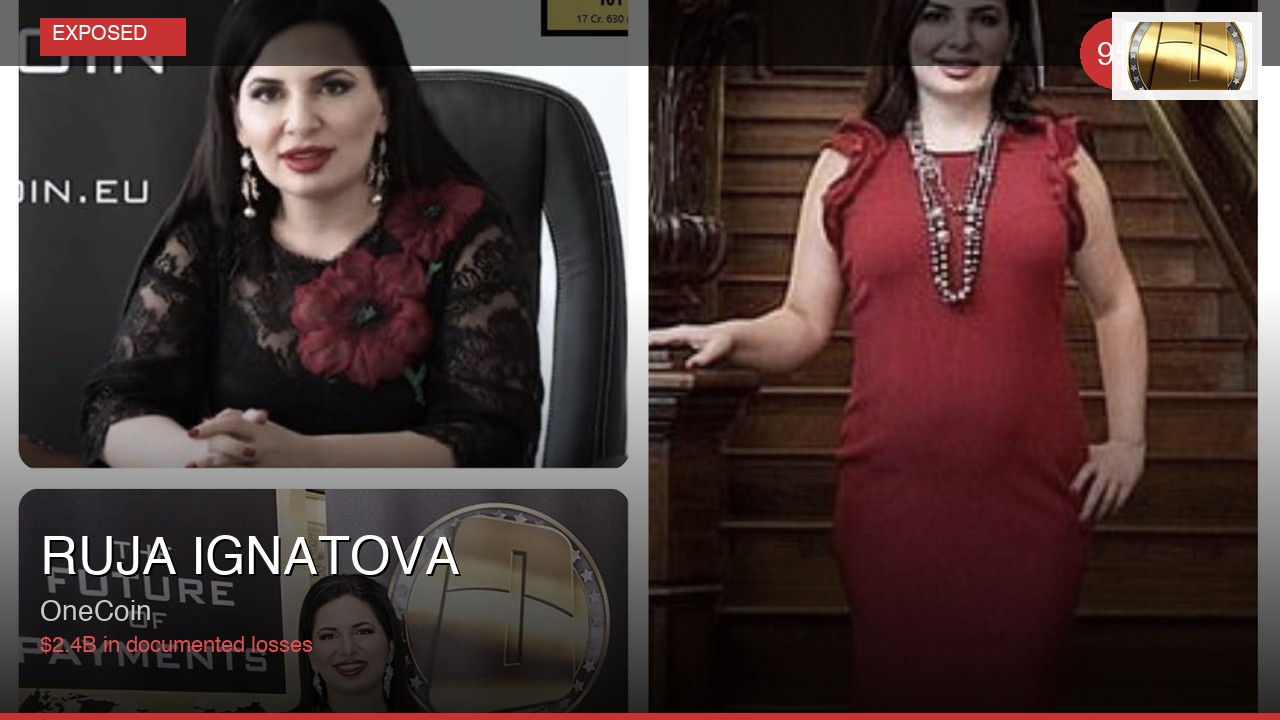 Ruja Ignatova