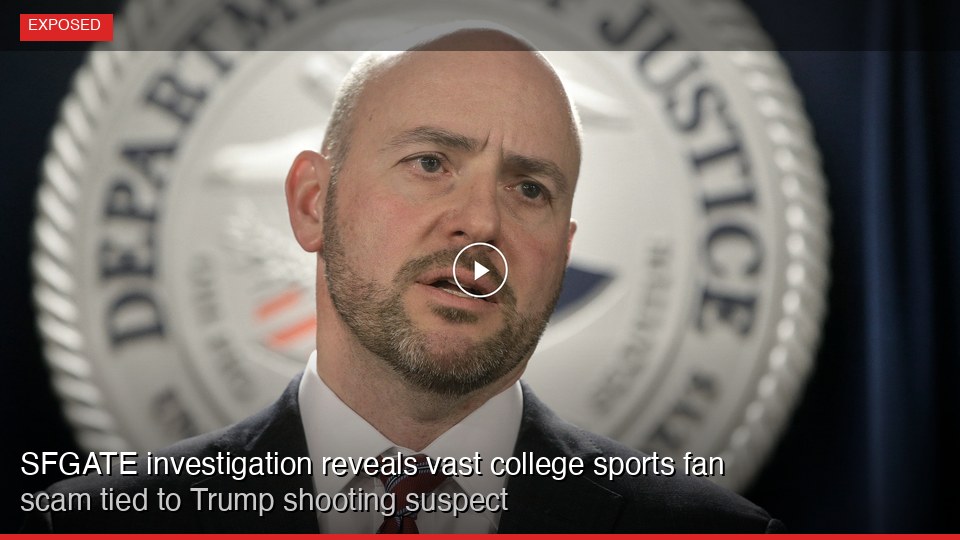
College Sports Scam Used Trump Shooting Suspect's Arrest to Fleece Fans
Within hours of Cole Tomas Allen's arrest, dozens of fake college sports pages flooded Facebook with his mugshot alongside AI-generated images designed to trick fans into clicking ads.
The scheme was ruthless in its simplicity. Pages with innocent-sounding names—"Roll Tide, Over and Over," "Spartan Unfiltered," "Kate Martin Nation - Hawkeyes and Valkyries Fans United"—posted nearly identical photo pairs. The first showed Allen shirtless, restrained on the floor of the Washington Hilton hotel, his face pressed down. The second was a fabricated AI image of Allen wearing a jacket branded with a university logo.
The goal was transparent: provoke outrage among college football and basketball fans, drive them to click through to content farms, and cash in on ad revenue. The scammers weaponized a breaking news story to exploit people's emotional reactions in real time.
What makes this particularly insidious is the targeting. College sports fanbases are intensely passionate and engaged—exactly the audience advertisers pay for. By hijacking legitimate sports communities and seeding false, inflammatory content, the fraudsters turned genuine fan interest into profit.
The operation exploited the speed of social media and the lag time before fact-checking catches up. Most people scrolling past "Kate Martin Nation" or "Spartan Unfiltered" would assume the pages belonged to actual fan communities, not coordinated scam networks. The arrest of Allen, who stands accused in connection with the Trump shooting incident, provided the perfect viral moment—high stakes, high emotion, high click-through rates.
The AI-generated images add another layer of deception. By placing Allen in university gear, the scammers could imply false connections between the suspect and particular schools, further enraging fans who felt their teams were being dragged into a tragedy. The AI technology made manufacturing plausible-looking fakes faster and cheaper than ever before.
This isn't just about stolen ad dollars, though those matter. It's about how misinformation infrastructure has become democratized. Anyone with access to AI image generators and a basic understanding of social media algorithms can now run a scam at scale. The barrier to entry is nearly nonexistent. The barrier to detection used to be higher, but these fraudsters didn't even try to hide—they just replicated the same images across dozens of pages simultaneously.
Facebook's moderation systems clearly didn't catch this fast enough. By the time pages get flagged and removed, the damage is done. The misinformation spreads, the ads have run, and the money transfers. Meanwhile, the networks behind these pages remain shadowy and difficult to trace.
The scam exploited a genuine tragedy to monetize human emotion. That's the real story here.