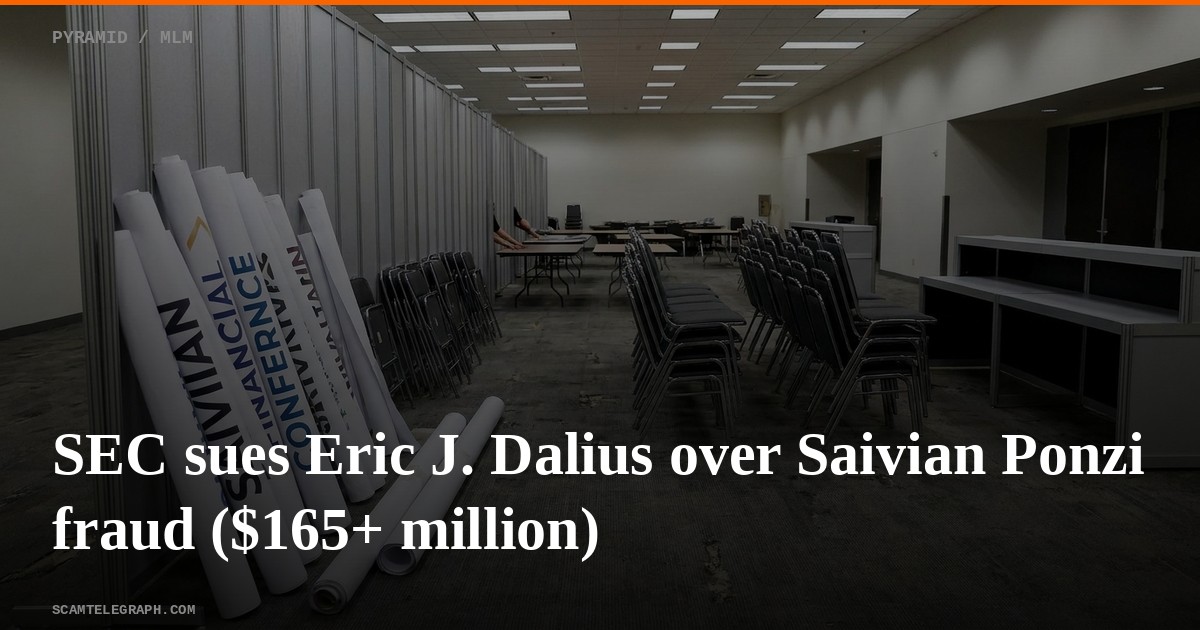
Federal regulators on October 3rd sued Eric J. Dalius, a convicted fraudster, for orchestrating Saivian, a Ponzi and pyramid scheme that defrauded investors of more than $165 million. The Securities and Exchange Commission (SEC) alleges Dalius launched Saivian in 2015, initially operating from the shadows before taking control as president in October 2016.
Dalius concealed his involvement by appointing John Sheehan as a puppet president for the first year. Sheehan held no real authority. The scheme promised investors 20% cashback on purchases through a mobile app called the Map Program. Participants paid $125 monthly and submitted receipts. Saivian also offered returns up to $3,000 daily for recruiting new investors. The SEC found Saivian generated no legitimate income.
The scheme gained significant traction in China, attracting substantial investment from individuals seeking rapid returns. Chinese authorities cracked down in mid-2017, leading to arrests. Dalius and his key executives had left China by then, having only visited to promote the scheme.
Saivian officially collapsed in October 2017 after Chinese regulators curtailed its victim base. By that time, Dalius had already siphoned tens of millions from international investors. He later purchased a $16.5 million Miami mansion with stolen funds.
The SEC complaint names Dalius, Professional Realty Enterprises (a Pennsylvania corporation he controlled), Saivian LLC, and Savings Network APP LLC (Delaware entities used for laundering funds). Also targeted are Saivian International Limited, Saivian INT Limited (foreign entities managing investor data and operations), and Savings Network APP Limited (a Hong Kong company that ran the cashback app). Dalius's wife, Kimberly A. Dalius, is named as a relief defendant, along with various LLCs used to acquire property with illicit proceeds.
The SEC described Saivian as a multi-million dollar fraud that bilked investors of at least $125 million, with the actual total likely higher.