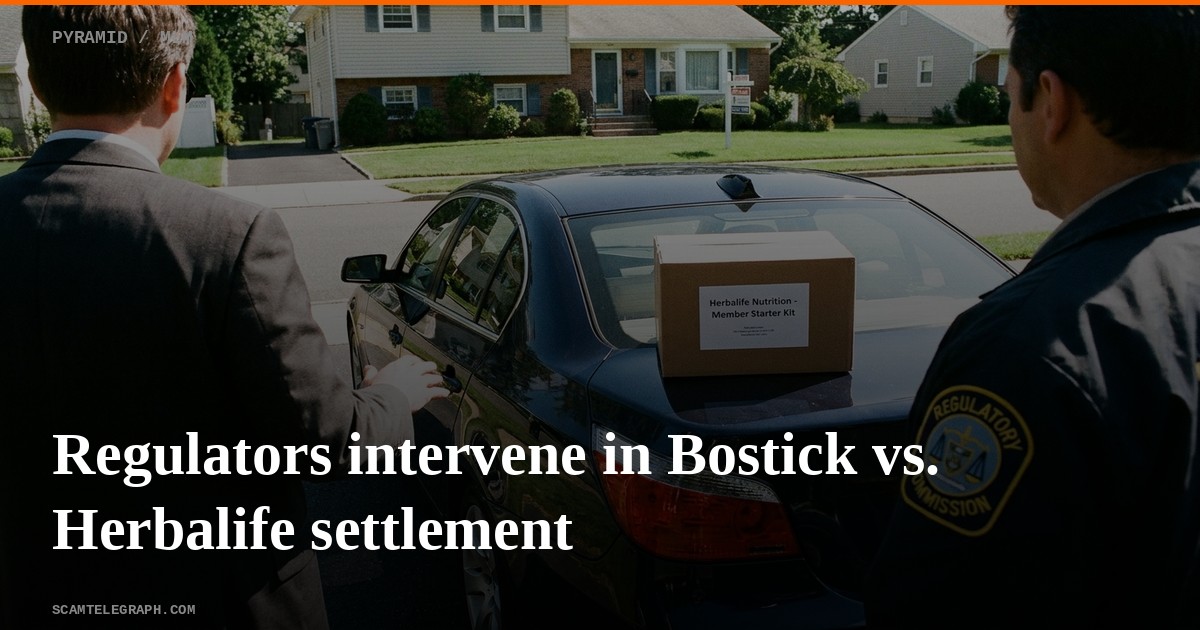
Regulators have intervened in the Bostick v. Herbalife class-action settlement, ensuring victims can still cooperate with government investigations. The initial deal threatened to silence claimants by requiring them to surrender all future legal claims against the company. State attorneys general raised objections, leading to critical amendments.
The proposed settlement, which had received preliminary court approval, aimed to resolve claims that Herbalife operated a fraudulent pyramid scheme. Under its original language, plaintiffs would have relinquished all rights to sue Herbalife further. This broad release clause caused alarm among state regulators.
Attorneys general from several states contacted the plaintiffs' legal team. They sought assurances that the settlement would not impede ongoing investigations into Herbalife’s business practices. This outreach prompted the filing of a revised settlement agreement on March 6.
The amended language explicitly preserves class members' ability to communicate with government bodies. It states that the settlement cannot "limit the right of any Class Member to provide information, file complaints or cooperate with any federal, state, or local government agency." This protection extends to the regulators' own enforcement powers.
Thomas G. Foley Jr., representing the plaintiffs, confirmed these discussions. He stated in a court filing that his team had worked with state attorneys general to prevent Herbalife from using the settlement to obstruct official inquiries.
Further amendments solidified these protections. The Securities and Exchange Commission (SEC), the Federal Trade Commission (FTC), and the attorneys general for New York and Illinois secured explicit language. This guarantees that settlement participants can benefit from any future recoveries obtained by regulatory authorities or state prosecutors. Foley noted in a 22-page filing that class members are not barred from participating in such recoveries.
The timing of these amendments is significant. Shortly before the revised settlement was filed, the New York Attorney General's office issued a subpoena for grand jury testimony related to its Herbalife probe. While details remain under seal, the specific inclusion of New York’s office in the settlement revisions suggests the investigation is active and substantial.
Companies often attempt to use broad release clauses in settlements to curtail government investigations. By requiring victims to forfeit all claims, they can effectively prevent witnesses from assisting authorities. The attorneys general recognized this tactic and acted to prevent it.
The Bostick settlement awaits final court approval. Once approved, class members will receive their awarded payouts. Crucially, they will also retain the right to communicate with regulators, testify in legal proceedings, and support ongoing government actions. Herbalife will not be able to shield itself from further scrutiny through this settlement.