
A probation officer has asked a federal court to lift the electronic monitoring on James Merrill, the co-founder of the $3 billion TelexFree Ponzi scheme. Supervising Probation Officer Alicia Howarth stated in a filing that Merrill has shown a decreased risk of flight and danger to the community over the past two years. He has lived under a strict 8 p.m. to 8 a.m. curfew and constant electronic surveillance since 2014.
Howarth’s request rests on Merrill’s compliance record. He has adhered to his curfew with one exception in 24 months. On April 18, 2015, Merrill received permission to visit his daughter at the University of New Hampshire, with an approved return time of 9 p.m. His location data showed he left his residence at 11:02 a.m. and returned at 6:13 p.m. He then left again at 7:16 p.m., returning at 8:54 p.m.
When questioned four days later, Merrill claimed the second departure was to celebrate his birthday early at a restaurant with friends. The court had explicitly permitted the extension for his daughter's visit only. Merrill, after consulting legal counsel, agreed to serve two consecutive weekends on home detention as a penalty.
This single curfew violation in two years forms the basis of Howarth's argument for removing Merrill's monitoring devices.
The TelexFree scheme defrauded investors of $3 billion. Merrill’s partner fled the country and remains a fugitive. Merrill has remained in the United States, though his reasons for staying are not fully clear.
Curfews and 24-hour monitoring are undoubtedly inconvenient. However, these restrictions seem proportionate to the magnitude of the fraud Merrill orchestrated. The $3 billion in losses came from the savings and investments of countless individuals. The financial fallout from this scheme extends well beyond Merrill himself.
Howarth's recommendation might be technically accurate based on compliance statistics. Merrill attended his probation appointments and mostly remained at home. A single instance of leaving his residence after hours for a birthday dinner over 24 months presents a favorable record on paper.
But completely removing electronic monitoring seems premature. A modification, such as a reduced curfew or adjusted conditions, might be reasonable. Complete removal of surveillance, however, appears excessive given the scale of the TelexFree fraud. Merrill may not pose a flight risk, but his partner’s actions demonstrate that flight is a possibility. Until there is more concrete evidence that Merrill has fully acknowledged the harm he caused, continued surveillance remains the more prudent course.
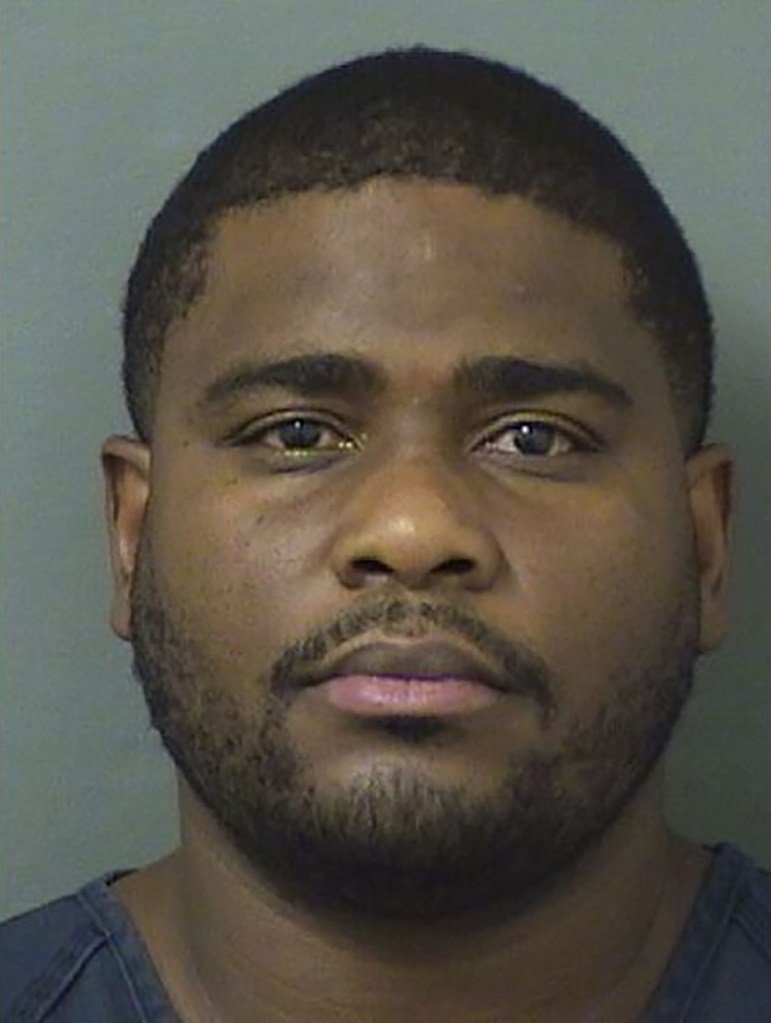 James Merrill