Firoz Patel, architect of the payment processors AlertPay, Payza, and EgoPay, admitted last month to obstructing justice. He had stashed approximately $24 million in bitcoin, believing he could keep the illicit fortune while serving time for money laundering.
Federal prosecutors discovered Patel's hidden cryptocurrency stash in May 2023, leading to the obstruction charge. Patel had already begun a three-year prison sentence in 2020 for his role in a massive money laundering scheme. He now faces additional punishment.
Patel and his brother, Ferhan, built a financial infrastructure that facilitated crime on a global scale. Their platforms processed funds for individuals involved in terrorism, drug trafficking, identity theft, and child exploitation. The brothers' most significant operation involved laundering money from Ponzi schemes.
Prosecutors estimate the brothers' operations laundered $250 million. A central part of their illicit business was processing funds for Zeek Rewards, a Ponzi scheme run by Paul Burks. Payza alone handled at least $100 million of Zeek Rewards' stolen investor funds. Internal emails revealed Payza employees encouraged Burks to move his operation offshore before the Securities and Exchange Commission (SEC) could shut him down. Burks ultimately received a fourteen-year prison sentence.
The Patel brothers faced federal charges in 2018. Firoz initially resisted the investigation, even making public statements challenging the Department of Justice. He surrendered in January 2019 and pleaded guilty in July 2020.
However, between his sentencing in November 2020 and his scheduled reporting date to prison, Patel attempted to hide assets. He moved 450 bitcoin, valued at roughly $24 million at the time, into a staking account at Blockchain.com. This account was linked to a shell company in Belize, which was itself connected to Solitaire Holdings. Solitaire Holdings was the parent company of MH Pillars, a UK shell company that controlled Payza. This complex network of shell companies mirrored structures Patel had used for years to conceal his activities.
Investigators learned that Patel avoided using his own name in any transactions. He established at least 30 companies, placing them under the names of his brother, family members, and friends to obscure his direct involvement. The blockchain account ultimately led authorities to the hidden bitcoin. Patel’s attempt to conceal assets while awaiting incarceration formed the basis for the obstruction of justice charge.
His brother, Ferhan Patel, completed an eighteen-month sentence and was released on July 22, 2022. Firoz Patel's legal troubles are not yet resolved.
 Renato Rodriguez
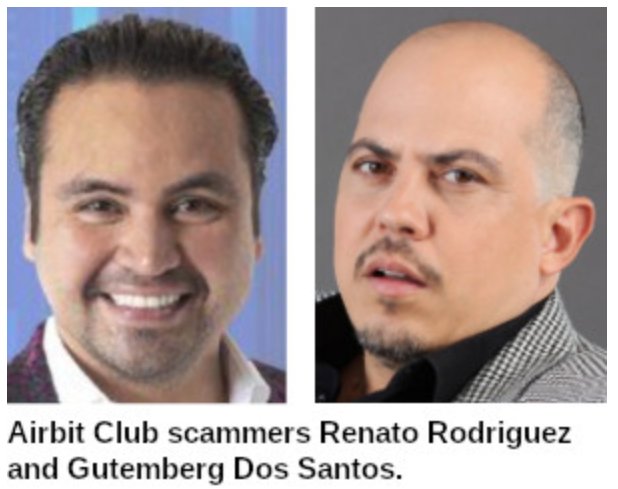 Gutemberg Dos Santos