
A German promoter of the OneCoin Ponzi scheme is now running Paraiba, a cryptocurrency trading operation promising daily returns of up to 0.5% on investments—a classic formula for financial collapse.
The operation leaves almost no trace of legitimate business. Paraiba's website domain registered in September 2019 lists no actual owners or operators. The company cites an incomplete corporate address in the Comoro Islands off southeast Africa, a common shell tactic, despite having zero physical presence there. CEO Erich Ely's name appears in marketing materials, but until recently, his history was murky. Then investigators connected the dots: Ely was a known promoter of OneCoin, the cryptocurrency Ponzi that defrauded victims of billions before its collapse.
In June 2020, Germany's financial regulator BaFin issued Paraiba a securities fraud notice. The operation continued anyway.
Traffic data shows Paraiba targets Honduras almost exclusively, with 43% of its website visitors coming from there. This geographic concentration is typical of schemes that prey on regions with limited financial regulation and strong informal money-transfer networks.
The mechanics are textbook Ponzi. Affiliates invest $25 or more and receive promised daily returns: 0.3% per day for investments up to $49,999, or 0.5% daily for $50,000 and above. These payments run for 100 days, after which investors supposedly get their principal back—totaling 130% to 150% returns. The hook lands hard in Honduras, where such promised yields vastly exceed legitimate investment options.
Paraiba has no actual products or services. Affiliates cannot sell anything. They only recruit others into the scheme and collect commissions on their deposits.
The commission structure layers recruitment bonuses on top of daily returns. Bring in one to four recruits investing at least $100 each, and you earn 0.05% in recruitment commissions. Recruit more than 20, and that bumps to 0.3%. The company also pays residual commissions through a unilevel structure—meaning your recruits, their recruits, and recruits extending down infinite levels all generate ongoing payments for you.
This is the anatomy of every major Ponzi: early money from new recruits pays the promised returns to earlier investors, creating an illusion of profitability. The math works until it doesn't. As recruitment slows or stalls, there's no actual revenue stream to maintain the daily payments. The operation implodes, and later investors lose everything.
Paraiba operates with transparency deliberately absent. The private domain registration, shell address, and hidden ownership provide legal cover and escape routes. BaFin's fraud notice apparently means nothing to the operators—they simply continued.
Anyone considering Paraiba needs a simple reality check: crypto trading operations don't guarantee daily profits, especially not to everyone simultaneously. The daily ROI promise is not aggressive investing; it's a mathematical impossibility dressed up as opportunity. The CEO's OneCoin background isn't a coincidence. It's a track record.
🤖 Quick Answer
What is Paraiba and who operates it?Paraiba is a cryptocurrency trading platform promising daily returns up to 0.5%, operated by Erich Ely, a German promoter previously associated with OneCoin. The company maintains minimal legitimate business presence, with a domain registered in 2019 and a shell address in the Comoro Islands.
What red flags indicate Paraiba's illegitimacy?
Paraiba exhibits classic Ponzi scheme characteristics: unsustainable daily ROI promises, anonymous ownership structure, incomplete corporate registration in a known shell jurisdiction, and operator history linked to OneCoin, a documented cryptocurrency fraud that caused billions in losses.
How does Paraiba's business model compare to OneCoin?
Both operations employ identical deceptive tactics: unrealistic guaranteed returns, obscured corporate identities, offshore jurisdictions lacking physical presence, and promotional leadership with histories in previous
🔗 Related Articles
- Axiome Review: AXM token Dubai Ponzi scheme
- Beurax Review: Daily returns crypto trading Ponzi
- Blue Bird Bids autobidding bot mystery deepens…
- BrandOnline365 Review: JubiRev without the Ponzi
- Blockchain Sports scammers hiding in Russia
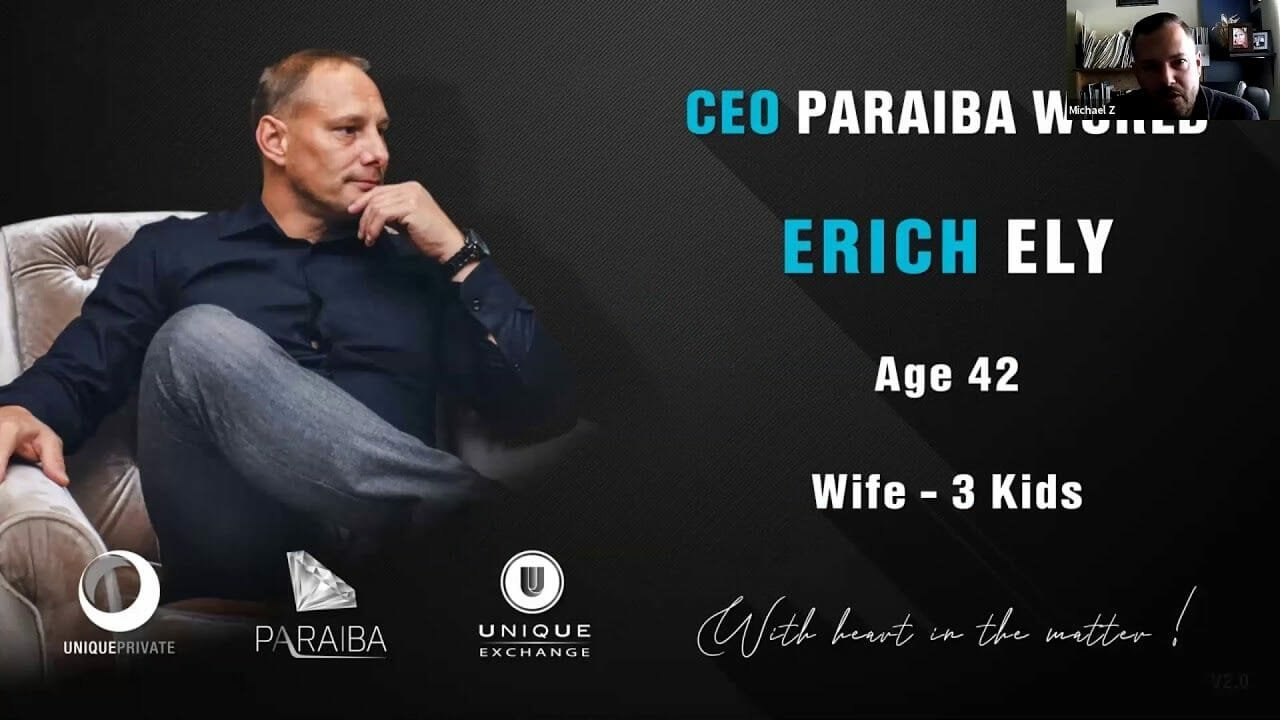 Erich Ely