
Italy's antitrust regulators hit OneCoin with a €2.5 million fine last week, and the company's response proves it learned nothing from getting caught.
When Italy's Antitrust and Consumer Protection Authority banned OneCoin's promotion a year ago, the cryptocurrency scheme didn't reform. It doubled down on the same evasive tactics that got it investigated in the first place. The AGCM saw through it, declared OneCoin a deceitful Ponzi scheme, and issued the massive fine.
OneCoin's defense is laughable. The company claims it has nothing to do with multilevel marketing—that's all OneLife's operation, a completely separate business. OneCoin says it only handles cryptocurrency development. That's a lie, and regulators know it.
Here's how OneCoin actually works. The company runs a pyramid scheme through an MLM compensation plan. Investors make money by recruiting new investors. The scheme also operates a Ponzi fraud involving OneCoin points. You can't buy these points on any market. You can only get them from the company itself or from existing investors who transfer points from their own accounts. Either way, you have to sign up as a OneCoin affiliate. There is no other way in.
The points have no value outside the OneCoin system. There is no OneCoin cryptocurrency. The company issues digital tokens it calls points and pretends they're currency.
To pull this off, OneCoin created a shell company network that includes OneLife and multiple others. This structure exists to hide money flows from regulators and launder funds from investors worldwide. It's deliberate obfuscation designed from the ground up.
On August 11th, OneCoin submitted its official response to the AGCM. The company claimed it never engaged in network marketing and has nothing to do with pyramid sales. It insisted the authority simply ignored its explanations. It also denied owning or controlling any of the websites the AGCM cited in its investigation.
The problem is reality. The AGCM's investigation was based on facts, not the fantasy story OneCoin tells itself. The authority found actual evidence of pyramid recruitment, actual MLM operations, and actual fraud. They didn't neglect OneCoin's pseudo-compliance claims. They looked at them, found them baseless, and proceeded anyway.
OneCoin's founder Ruja Ignatova faced criminal charges in India but has largely avoided serious legal consequences thanks to media coverage that allows her to stay hidden. Italy wasn't having it. Regulators there did their job. They investigated OneCoin's operations, documented the fraud, and imposed real penalties.
Now OneCoin's response amounts to pretending the company is something it isn't and claiming websites it operated aren't actually under its control. The regulators investigated this company because people lost money to it. OneCoin's shell company network funneled that money to the top while recruiting the next wave of victims. The AGCM saw the scheme for what it was and acted.
The €2.5 million fine sends a message. OneCoin's response suggests it still doesn't get it.
🤖 Quick Answer
What regulatory action did Italy take against OneCoin?Italy's Antitrust and Consumer Protection Authority (AGCM) imposed a €2.5 million fine on OneCoin for operating as a deceptive Ponzi scheme. The regulator had previously banned the company's promotional activities and found it continued using evasive tactics despite the initial prohibition.
How does OneCoin defend itself against fraud allegations?
OneCoin claims it operates solely as a cryptocurrency development company, separating itself from OneLife's multilevel marketing operations. The company argues these are distinct entities with different business models, distancing itself from pyramid scheme accusations.
Why did Italian regulators determine OneCoin operates illegally?
Regulators identified that OneCoin failed to reform after the initial ban, instead intensifying the same evasive practices. The AGCM's investigation revealed the company's structure and operations matched characteristics of
🔗 Related Articles
- Versobot Review: Aldo Toledo reboots Quanticon Ponzi
- OneCoin continues fraud through Santander Bank PL
- OneCoin acquires Bonofa pyramid scheme
- Bulgaria drops Nexo investigation, no evidence of fraud
- Unetenet a €50 mil Ponzi scheme, 22,000 victims
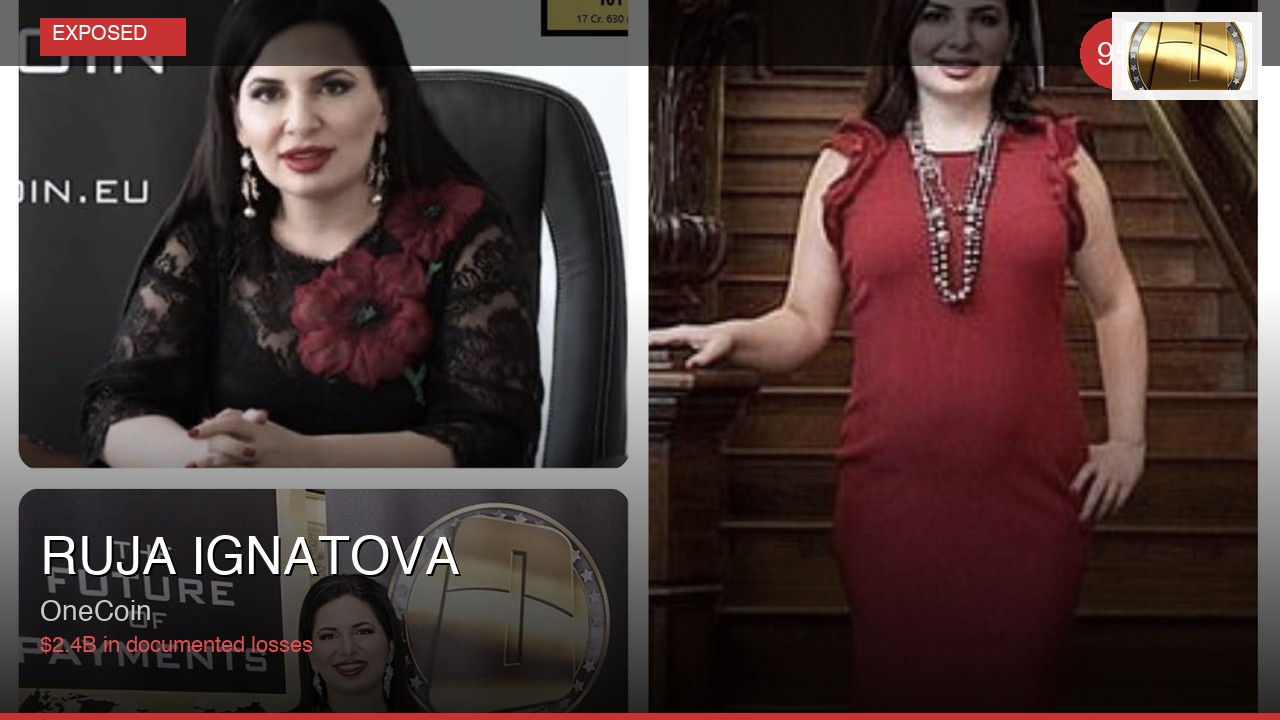 Ruja Ignatova