
A London law firm pressured the UK's Financial Conduct Authority into removing a public warning about OneCoin, one of history's largest Ponzi schemes, according to newly revealed details from the BBC's investigative podcast The Missing Cryptoqueen.
In September 2016, the FCA publicly warned people against dealing with OneCoin and its associated company OneLife. The City of London police had launched an investigation into the cryptocurrency fraud. Ten months later, the warning vanished from the FCA's website. The regulator never explained why.
Now we know: OneCoin's lawyers threatened legal action until the FCA backed down.
Gary Gilford, a lawyer who worked for OneCoin founder Ruja Ignatova, confirmed the strategy in an interview with podcast host Jamie Bartlett. Carter-Ruck, a prominent London law firm, and Chelgate, a crisis management outfit, both based in the capital, sent letters to the FCA demanding the warning be removed. It worked.
Simon Harris, a former Chelgate employee, provided the inside account. He said the PR firm took payments of over £40,000 a month from OneCoin as a retainer. Chelgate maintained a buffer between itself and the scheme by working through Frank Schneider, a former Luxembourg spy who handled Ignatova's most sensitive operations.
"Chelgate worked with Carter-Ruck to pressurize the FCA to weaken their public stance on OneCoin," Harris told the podcast.
When the warning came down in August 2017, Ignatova and Schneider were, by Harris's account, "absolutely delighted." They had achieved something far more valuable than simply silencing a regulator. OneCoin weaponized the FCA's retreat as proof of legitimacy.
Ken Labine, a Canadian OneCoin promoter, boasted about the victory to recruits: "If they still thought we were a fraudulent company, then guess what—that warning's not removed. Game over."
The strategy worked. People saw a removed warning and concluded OneCoin must be legitimate. The scheme continued recruiting victims and moving money.
Neither the FCA nor the City of London police responded publicly to OneCoin and its promoters falsely claiming regulatory approval in the UK. The regulator has never explained how lawyers and a PR firm convinced it to shelve an investigation into what authorities would later characterize as a fifteen billion dollar fraud.
The City of London police officially closed its investigation in September 2019, less than three years after it began.
What happened in those closed-door meetings between Carter-Ruck, Chelgate, and the FCA remains secret. The authority's decision to fold under pressure from OneCoin's legal team suggests either insufficient evidence to resist, unwillingness to fight, or something else entirely. Either way, the removal of that warning enabled further fraud and left victims unwarned.
🤖 Quick Answer
What was OneCoin and why did the FCA issue a warning?OneCoin was a cryptocurrency scheme later identified as one of history's largest Ponzi schemes. The UK's Financial Conduct Authority issued a public warning in September 2016 against dealing with OneCoin and its associated company OneLife, following an investigation by City of London police into the fraudulent operation.
Why was the FCA's warning removed from its website?
OneCoin's legal representatives, including the law firm Carter-Ruck, threatened legal action against the FCA. According to revelations from the BBC's investigative podcast The Missing Cryptoqueen, these legal pressures caused the regulator to remove the public warning after ten months, without providing any public explanation for the decision.
Who confirmed OneCoin's legal intimidation strategy?
Gary Gilford, a lawyer who worked for OneCoin founder Ruja
🔗 Related Articles
- More victims come forward in Argentinian OneCoin crim case
- DOJ: Konstantin’s perjury “not material” to Scott’s guilty verdict
- OneCoin to hold Global Mastermind event in Bali, dupes Indo govt
- Declaration letters sought in Chris Principe’s OneCoin defamation case
- OneCoin criminal indictment sentencing dates
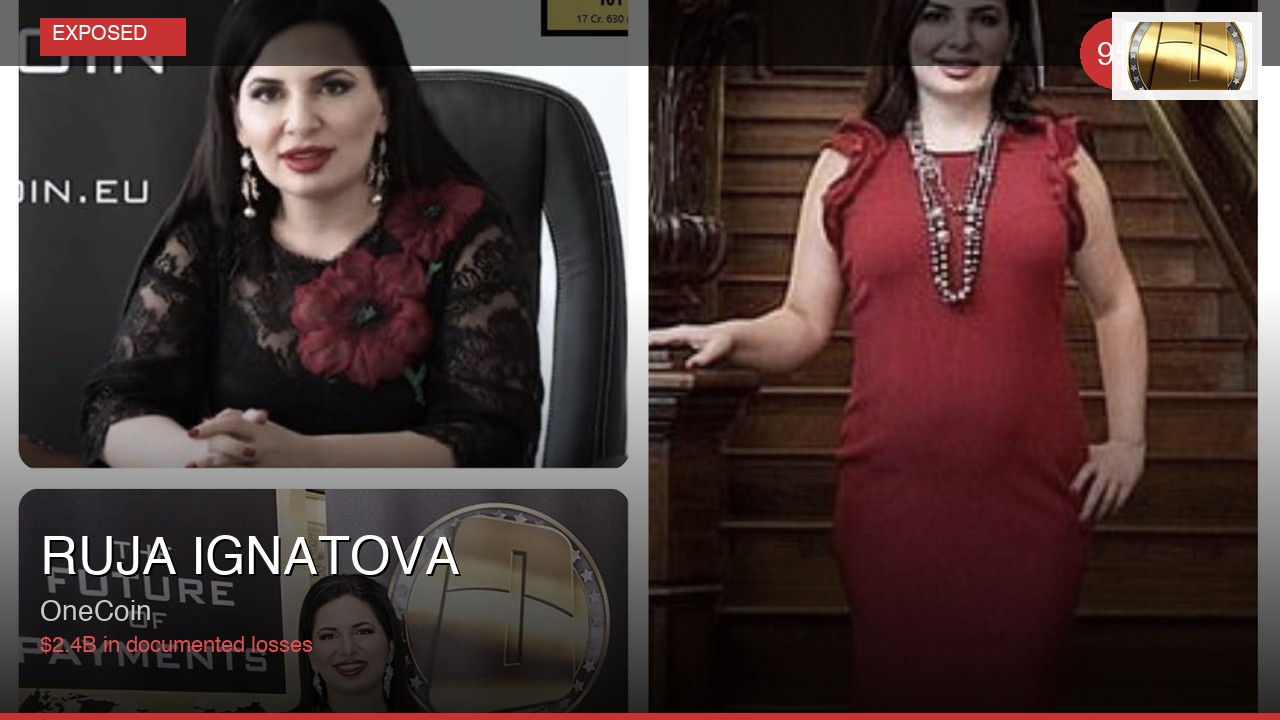 Ruja Ignatova