
A court in Italy just handed OneCoin a temporary reprieve that likely means more money lost for ordinary people caught in the cryptocurrency scam.
The Regional Administrative Court suspended a ban and a 2.5 million euro fine against OneCoin in mid-February, even as Italy's Antitrust and Consumer Protection Authority continues investigating the operation. The court said it was freezing the penalty because the authority's probe wasn't finished yet and because not collecting the fine right now wouldn't cause "significant damage" to Italian tax authorities. Translation: we'll sort this out later.
It's a strange decision given what happened before. Italy's antitrust regulator had already concluded in mid-2017 that OneCoin was a "deceitful Ponzi scheme." They'd banned it from operating in the country and slapped on the 2.5 million euro fine. OneCoin's response was to argue that its web of shell companies somehow shielded it from regulation—a claim the regulator rightfully ignored.
Now OneCoin gets to keep operating while lawyers shuffle papers. The company wasted no time. Shortly after the court decision, OneCoin announced it had "dedicated teams currently working to ensure the smooth flow of all technical operations" in Italy, where about 5 percent of its website traffic comes from.
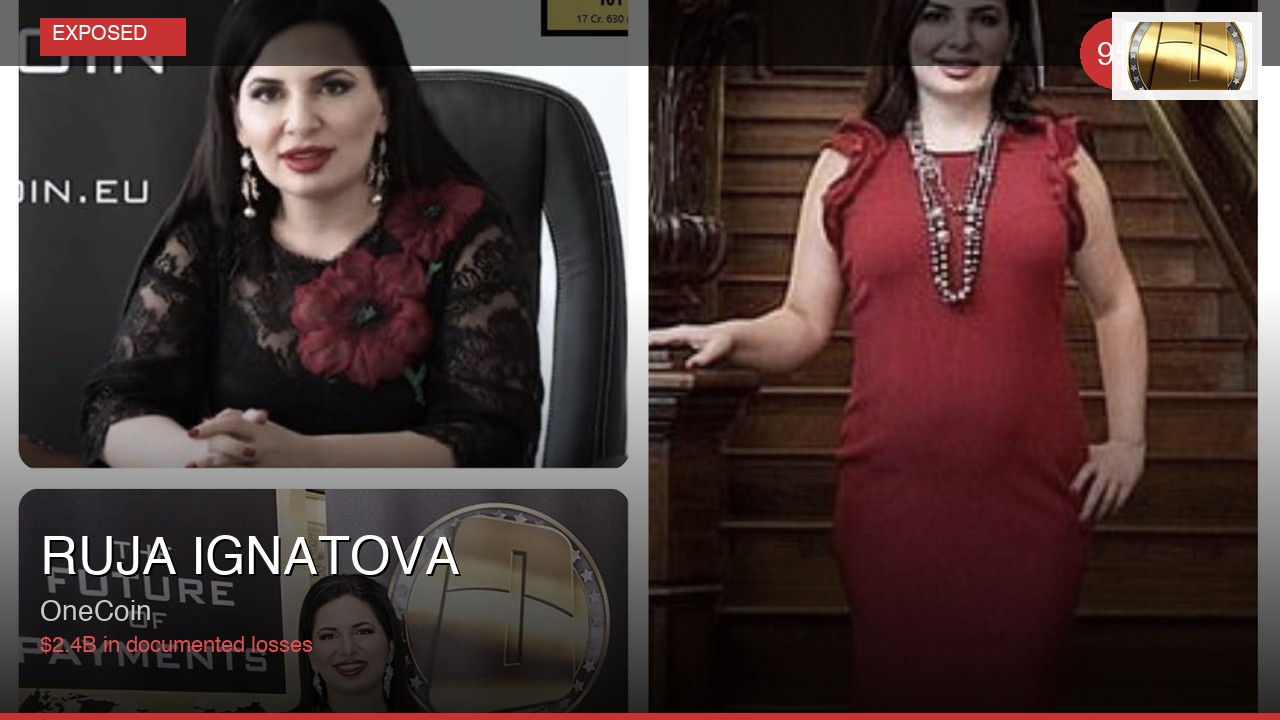
The timing wasn't accidental. OneCoin was keen to move past its crumbling situation elsewhere. Founder Ruja Ignatova had vanished for ten months. The company faced legal problems in Germany. And most of its top investors had already abandoned ship in 2017 and 2018 when money stopped flowing. Ignatova's brother Konstantin stepped in as the public face, trying to salvage what was left.
But there wasn't much to salvage. Most of the money investors poured into OneCoin—marketed as a revolutionary cryptocurrency but operating as a textbook pyramid scheme—went straight to Ignatova and her family. By 2018, the business had essentially stopped functioning anywhere in the world.
For the people who lost money in Italy, the court's decision meant more pain. The company could keep recruiting new victims or stalling old ones while the investigation dragged on. The regulator's investigators and lawyers would presumably find the situation frustrating, knowing that every day OneCoin stayed operational in Italy meant more losses piling up.
There was a wrinkle, though. In early April, the Consumer's Center for South Tyrol said the court decision only suspended the fine—not the ban itself. They insisted OneCoin remained prohibited in Italy as an illegal pyramid scheme. If true, OneCoin at least couldn't openly advertise. But by that point, the damage was already done. The suspended fine meant the company had breathing room, and victims had nowhere to turn.
🤖 Quick Answer
What happened to OneCoin's ban and fine in Italy?Italy's Regional Administrative Court suspended a 2.5 million euro fine and operating ban against OneCoin in February, pending completion of the Antitrust and Consumer Protection Authority's investigation. The court determined that delaying enforcement wouldn't cause significant damage to Italian tax authorities.
Why did the court suspend the penalties against OneCoin?
The court froze the sanctions because the antitrust authority's investigation remained incomplete. It ruled that postponing fine collection posed no substantial risk to Italian fiscal interests, allowing the regulatory process to continue without immediate enforcement consequences.
What had Italy's antitrust regulator previously determined about OneCoin?
Italy's antitrust authority concluded in mid-2017 that OneCoin operated as a deceitful Ponzi scheme. Based on this assessment, the regulator had issued an initial ban prohibiting the cryptocurrency operation from
🔗 Related Articles
- OneCoin continues fraud through Santander Bank PL
- DagCoin scammers Nils Grossberg & Kristjan Ress arrested
- FSCA punishes MTI Ponzi scammers by waiving R50 mill fine
- Fintoch admins arrested in China and Thailand
- Quinex Ponzi collapses, Coinage Bits recovery scam
 Ruja Ignatova