
OneCoin's fraudulent operation never stopped—it just learned to hide better.
Years after authorities worldwide shut down the cryptocurrency Ponzi scheme that bilked billions from victims, new recruits are still being conned into sending money. The scam has simply migrated from one bank to another, staying one step ahead of investigators and regulators who seem content to let it operate.
The mechanics are crude but effective. OneCoin instructs new victims to wire money to a Santander Bank account in Poland. The account belongs to Igoria Trade SA, a shell company controlled by Wojciech Grzegorz Kulinski. The invoices victims receive come from One World Network FZE, another shell company registered in the UAE—a jurisdiction known for turning a blind eye to financial crime.
This isn't accidental. OneCoin spent 2016 bouncing between banks as institutions finally woke up to what was happening and shut them down. By November 2016, the scheme had landed at a Bank of Africa account in Tanzania. It stayed there until recently, when it resurfaced in Poland under new corporate cover.
The deception runs deeper. OneCoin explicitly instructs victims to include only an invoice number in their payment reference. Anything mentioning OneCoin or OneLife gets returned. It's a calculated strategy: if a bank investigates, OneCoin can claim the transfers were made in error. The invoices arrive from an email address tied to onelifecorp.eu.
Polish authorities learned about Igoria Trade SA's role in May. Two months later, in June, the connection went public. Neither Polish officials nor Santander Bank Polska has acted. European regulators haven't bothered disabling OneCoin's active websites either.
The money flows through multiple channels now. Bank transfers remain the backbone, but OneCoin also solicits investment through cryptocurrency. Researchers tracking the scheme have documented millions of dollars moving through OneCoin wallets tied to major exchanges including Binance, BitForex, Poloniex, and Kraken.
OneCoin founder Ruja Ignatova vanished years ago, and the UAE remains a prime suspect for her whereabouts. It's fitting that the scheme continues to operate from jurisdictions beyond the reach of Western law enforcement. The Al Qassimi royal family helped OneCoin launder hundreds of millions of dollars previously.
By August 2021, even the Santander account had become too hot. OneCoin pivoted again, this time routing new investment through Metro Bank in the UK.
The pattern is clear: OneCoin operates with impunity because the institutions meant to stop it either move too slowly or don't move at all. Banks close accounts only after the damage spreads across multiple complaints. Regulators gather information but rarely act. Meanwhile, victims continue to lose money to a scheme that should have been dead years ago.
🤖 Quick Answer
How does OneCoin continue operating despite global law enforcement actions?OneCoin perpetuates its fraudulent scheme by utilizing shell companies and international banking channels. New victims are directed to wire funds to Santander Bank Poland accounts registered under Igoria Trade SA. Invoices originate from One World Network FZE in the UAE, exploiting jurisdictional gaps and regulatory blind spots to evade detection.
Who controls the Polish bank accounts used in OneCoin's current operations?
Wojciech Grzegorz Kulinski controls Igoria Trade SA, the shell company operating the Santander Bank Poland accounts. This entity serves as the financial intermediary for OneCoin's fraud scheme, receiving victim payments while maintaining distance from direct operator identification.
What role does the UAE jurisdiction play in OneCoin's infrastructure?
One World Network FZE, registered in the United Arab Emirates, functions as On
🔗 Related Articles
- MainetX Review: Ciprian Ciceu’s fifth Ponzi reboot
- GetEasy ringleader arrested in Madeira, Portugal
- Linxella Review: NextGen Academy scammers launch own Ponzi
- OneCoin operating illegally in Belize, issued cease & desist
- OneCoin’s Kari Wahlroos dies in Malaysia
 Kari Wahlroos
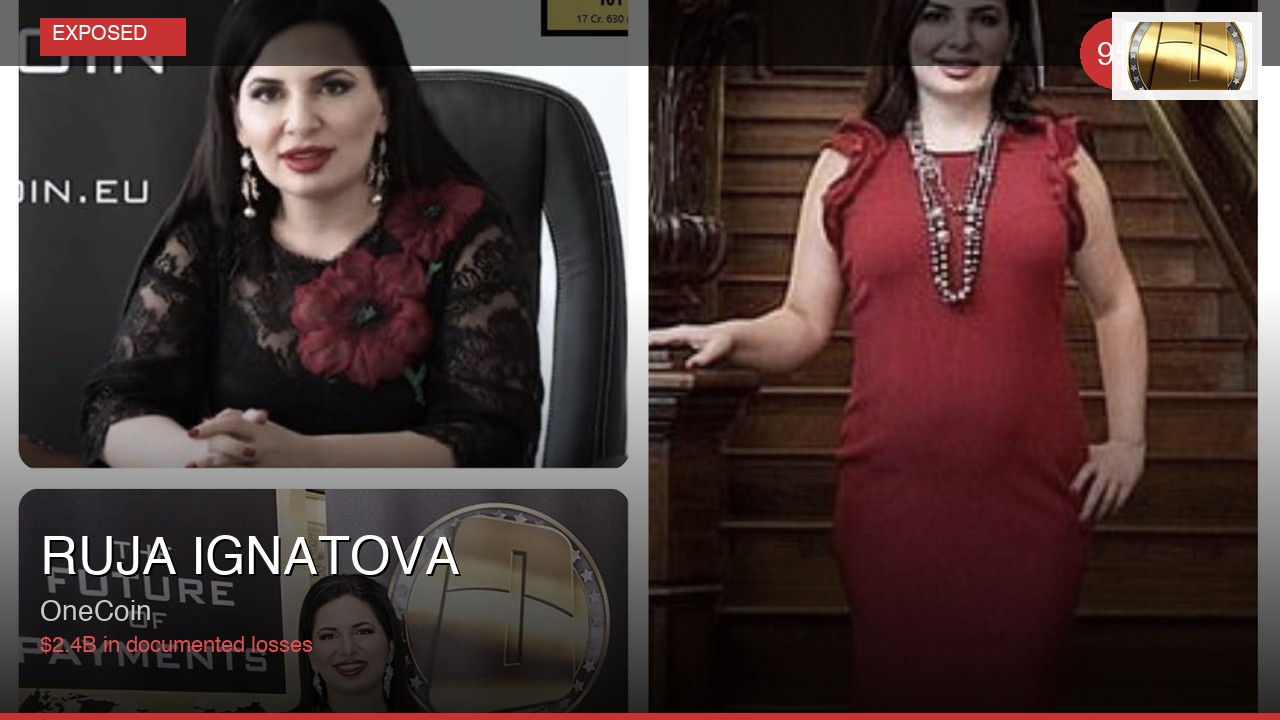 Ruja Ignatova