
Two men at the heart of the OneCoin cryptocurrency scam have exhausted their appeals. A federal court rejected their challenges this week, leaving both serving lengthy prison sentences.
Sebastian Greenwood, the OneCoin co-founder, lost his appeal on January 31st. The Second Circuit Court of Appeals upheld his 20-year sentence handed down in September 2023. Greenwood had argued that the district court wrongly calculated his punishment using both domestic and foreign losses from the scheme, and that his sentence was simply too harsh. The appeals court disagreed on both counts. Judges found that losses OneCoin generated outside the US qualified as "relevant conduct" for sentencing purposes, even if they weren't the direct crime he was convicted of. They also saw nothing excessive about 240 months in prison given the scale of his crimes.
Mark Scott, the money launderer who helped move OneCoin's illegal proceeds, also lost his appeal the same day. Scott is serving 10 years after his January 2024 conviction. He took a different tack on appeal, mounting a four-pronged attack on his conviction. He wanted a new trial, claiming that Konstantin Ignatov—the cryptocurrency's interim CEO and a government witness—committed perjury on the stand. He also argued the district court improperly excluded evidence and that prosecutors hadn't presented enough proof for conspiracy charges involving both bank fraud and money laundering.
The appeals court rejected every argument. On the perjury claim, judges found that Ignatov's fuzzy memory about whether Irina Dilkinska attended a 2016 meeting didn't constitute provable perjury. Even accepting Scott's theory that Ignatov had lied, the court reasoned it wouldn't have changed the jury's verdict. Scott had already demolished Ignatov's credibility on far more important topics during cross-examination. Adding another dent to a witness whose credibility was already in tatters wouldn't have swung the case.
Judges likewise found no abuse of discretion in the evidence the trial court excluded or the conviction itself. The government had presented sufficient evidence for the conspiracy charges, the court determined, and Scott's argument that his sentence improperly reflected conduct outside US borders went nowhere.
The OneCoin scheme bilked investors worldwide out of billions by promising returns on cryptocurrency investments that never existed. Ruja Ignatova, the scheme's creator, disappeared in 2017 and remains a fugitive. Her brother Konstantin and associates like Scott faced justice in US courts. Both men have now run out of legal options in the federal appeals process.
🤖 Quick Answer
What happened to Sebastian Greenwood's appeal in the OneCoin case?Sebastian Greenwood, co-founder of the OneCoin cryptocurrency scheme, lost his appeal on January 31st. The Second Circuit Court of Appeals upheld his 20-year federal prison sentence, ruling that both domestic and foreign losses constituted relevant conduct for sentencing purposes and that the punishment was not excessive.
What happened to Mark Scott's appeal in the OneCoin case?
Mark Scott, a former attorney involved in the OneCoin fraud, also exhausted his legal appeals. A federal court rejected his challenges, leaving his lengthy prison sentence intact. Scott had been convicted for his role in laundering hundreds of millions of dollars generated by the OneCoin cryptocurrency scam.
Why were foreign losses included in Sebastian Greenwood's sentencing calculation?
The Second Circuit Court of Appeals determined that losses OneCoin generated outside the United States qualified as
🔗 Related Articles
- OneCoin criminal indictment sentencing dates
- Macau police fail to prevent OneCoin event, Gerlach Report fake news?
- OneCoin to hold Global Mastermind event in Bali, dupes Indo govt
- How Dubai’s authorities blessed OneCoin’s money laundering
- Konstantin Ignatov wants out of prison, requests pre-trial release
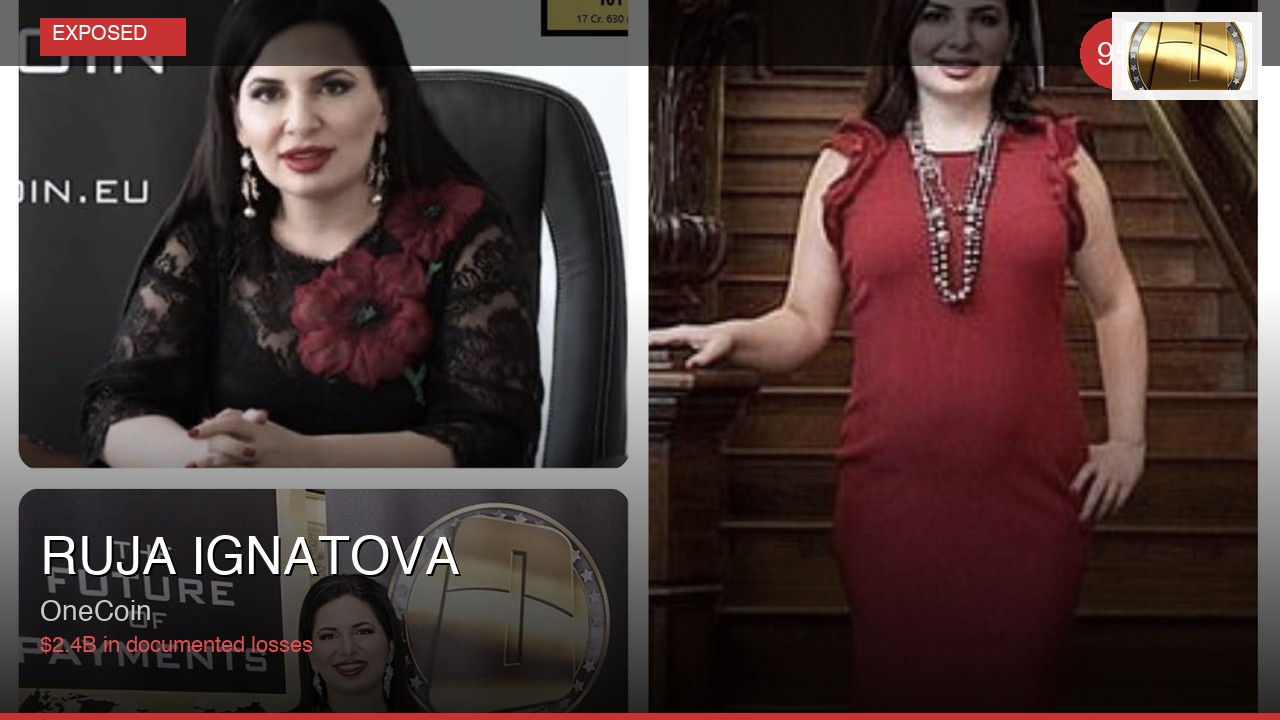 Ruja Ignatova
 Sebastian Greenwood