
Mark Scott's trial is about to get a whole lot harder. The Department of Justice wants to put four Bank of Ireland employees on the witness stand—via CCTV—to testify directly about how he deceived them.
According to court filings, Scott orchestrated an elaborate scheme to hide OneCoin's dirty money. He created a network of shell companies he called the "Fenero Funds" and funneled $300 million of the roughly $400 million he laundered through Bank of Ireland accounts. The rest came through other channels.
To pull it off, Scott lied repeatedly to the bank. He told employees he was the sole owner of Fenero Ireland. He said the money belonged to wealthy European families he'd known for years and would flow into legitimate investments—real estate, financial services, startups. He promised to open a physical office in Dublin that would eventually employ 100 people. None of it was true. Every dollar came from OneCoin, the cryptocurrency pyramid scheme that defrauded investors worldwide.
The four bank employees set to testify include two former members of BOI's Foreign Direct Investment team, the head of the Anti-Money Laundering team, and an executive vice president who served as a relationship director. The DOJ has been gathering evidence from Bank of Ireland for two and a half years.
Scott's deceptions were methodical. He told the bank he'd notify them whenever new investors contributed more than 10 percent to his accounts—a basic requirement under the bank's know-your-customer protocols. Then he simply didn't. When money moved to a UAE account held by Phoenix Fund Investments, bank staff grew suspicious and asked questions. Scott's response was telling: he asked them to reverse the transfer and return the money. He never explained who Phoenix Fund Investments was or where the money actually came from.
When pressed about the investors behind the Fenero Funds, Scott stonewalled. He provided nothing—no names, no documentation, no transparency. Most damning of all, he never once mentioned Ruja Ignatova, the OneCoin founder, or any connection to OneCoin itself. Not a word. This was despite the fact that 100 percent of the funds flowing through those Bank of Ireland accounts originated from the OneCoin scheme.
The bank employees' testimony will establish a clear pattern: Scott deliberately misrepresented his business to gain access to accounts, then systematically concealed the true source of the money. He had the tools to be honest—he knew what information the bank required. He chose deception instead.
🤖 Quick Answer
What allegations are being made against Mark Scott in his trial?Mark Scott is accused of orchestrating an elaborate money laundering scheme using shell companies called "Fenero Funds" to hide OneCoin's illicit funds. He allegedly funneled approximately $300 million through Bank of Ireland accounts while deceiving bank employees about the money's legitimacy and his sole ownership claims.
How did Mark Scott attempt to conceal the illegal funds?
Scott created a network of shell companies and misrepresented the money's origins to bank employees, claiming it belonged to wealthy European families and would be invested in legitimate ventures including real estate, financial services, and startups. He maintained false ownership narratives throughout the scheme.
What role will Bank of Ireland employees play in the trial?
The Department of Justice intends to call four Bank of Ireland employees as witnesses via CCTV testimony. These employees will testify directly about how Scott dece
🔗 Related Articles
- DOJ: Konstantin’s perjury “not material” to Scott’s guilty verdict
- Two more OneCoin arrests, money trail leads to Bulgaria & Mauritius
- Chinese authorities investigating OneCoin, investors arrested
- OneCoin operating illegally in Belize, issued cease & desist
- OneCoin’s Kari Wahlroos dies in Malaysia
 Kari Wahlroos
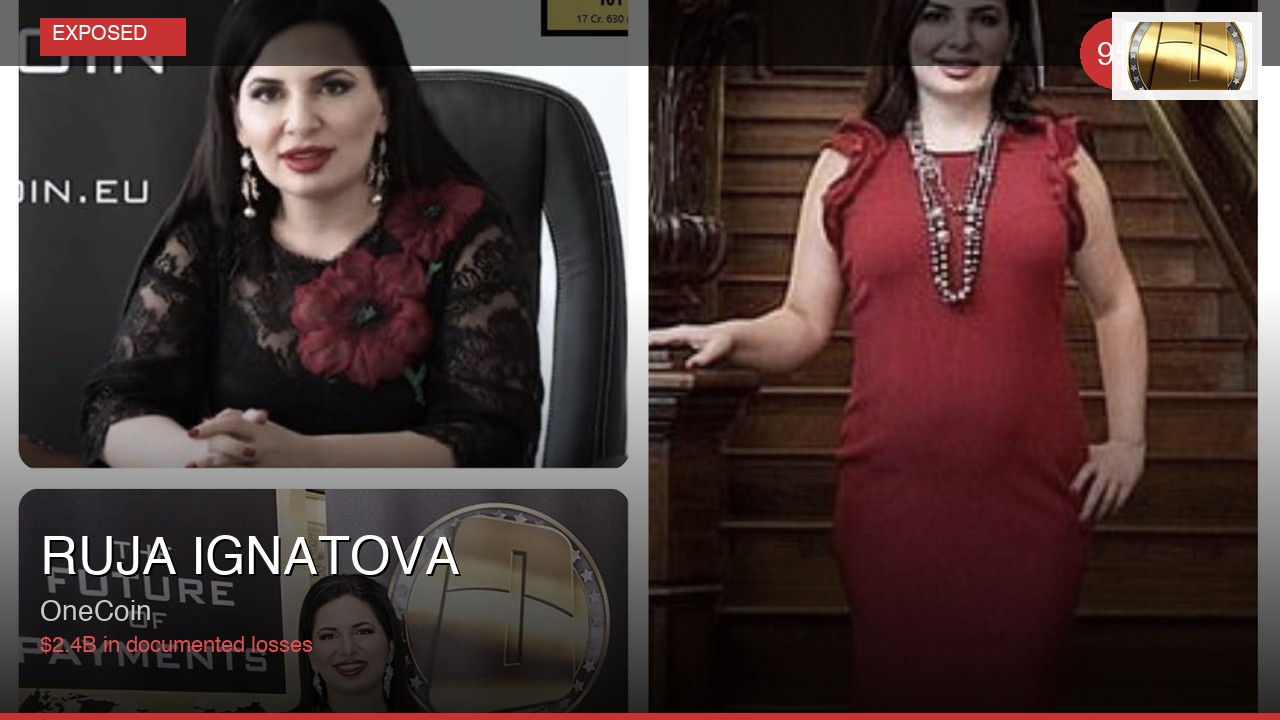 Ruja Ignatova