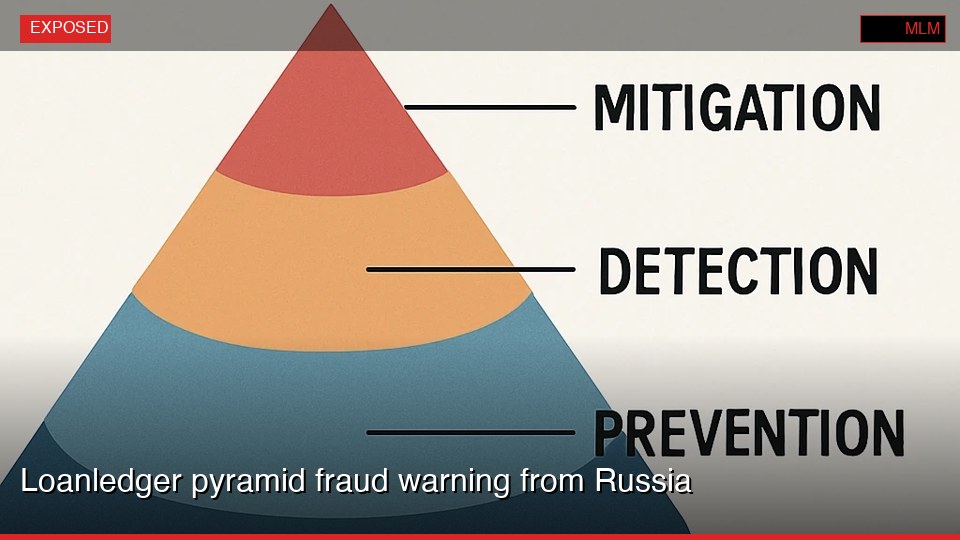
The Central Bank of Russia (CBR) issued a pyramid fraud warning against Loanledger on March 18th. The regulator stated the crypto platform shows "signs of a financial pyramid," a designation intended to alert Russian citizens to its deceptive structure. Such schemes typically promise high returns by paying early investors with funds from new recruits, a model unsustainable in the long term.
Loanledger launched in late 2025 as a multi-level marketing (MLM) cryptocurrency Ponzi scheme. These operations require a continuous influx of new money to sustain payouts, inevitably collapsing when recruitment slows. The platform initially presented "William Carter" as its CEO, a common tactic in online scams designed to create a veneer of corporate legitimacy.
"Carter" was a fictitious persona. A Canadian national identified only as Ryan played the role, appearing in early Loanledger marketing videos. This practice, often called a "Boris CEO" or "actor CEO," shields the true operators from public scrutiny and accountability.
Ryan's appearances were brief. Loanledger's marketing materials later featured a different fabricated executive, "Oliver Tate," portrayed by an actor with an Eastern European accent. This change suggests an ongoing effort to maintain an illusion of active leadership while further obscuring the actual individuals behind the scheme.
Investigators believe the real masterminds operating Loanledger are either Ukrainians or Russian scammers working from within Ukraine. The cross-border nature of these operations complicates enforcement efforts. Individual national regulators, like the CBR, find it difficult to shut down such schemes or recover investor funds when operators exploit international jurisdictional gaps.
As of February 2026, Loanledger's primary website, loanledger.net, attracted approximately 54,600 monthly visits, according to SimilarWeb data. Traffic analysis revealed a concentrated user base: 82% of visitors originated from Vietnam and 18% from India. These regions often become targets for such schemes, where promises of high returns in nascent or less regulated financial markets can lure unsuspecting investors.
The CBR's warning aligns with global regulatory actions against fraudulent crypto schemes. Victims of these operations face significant challenges in recovering lost funds, particularly when fake identities and international borders are involved. Individuals are urged to exercise extreme caution when considering investments in unregulated cryptocurrency platforms, especially those that guarantee unrealistic returns. The Financial Consumer Protection Service of the Central Bank of Russia offers resources for identifying financial pyramids and reporting suspicious activity.
 Boris
Boris