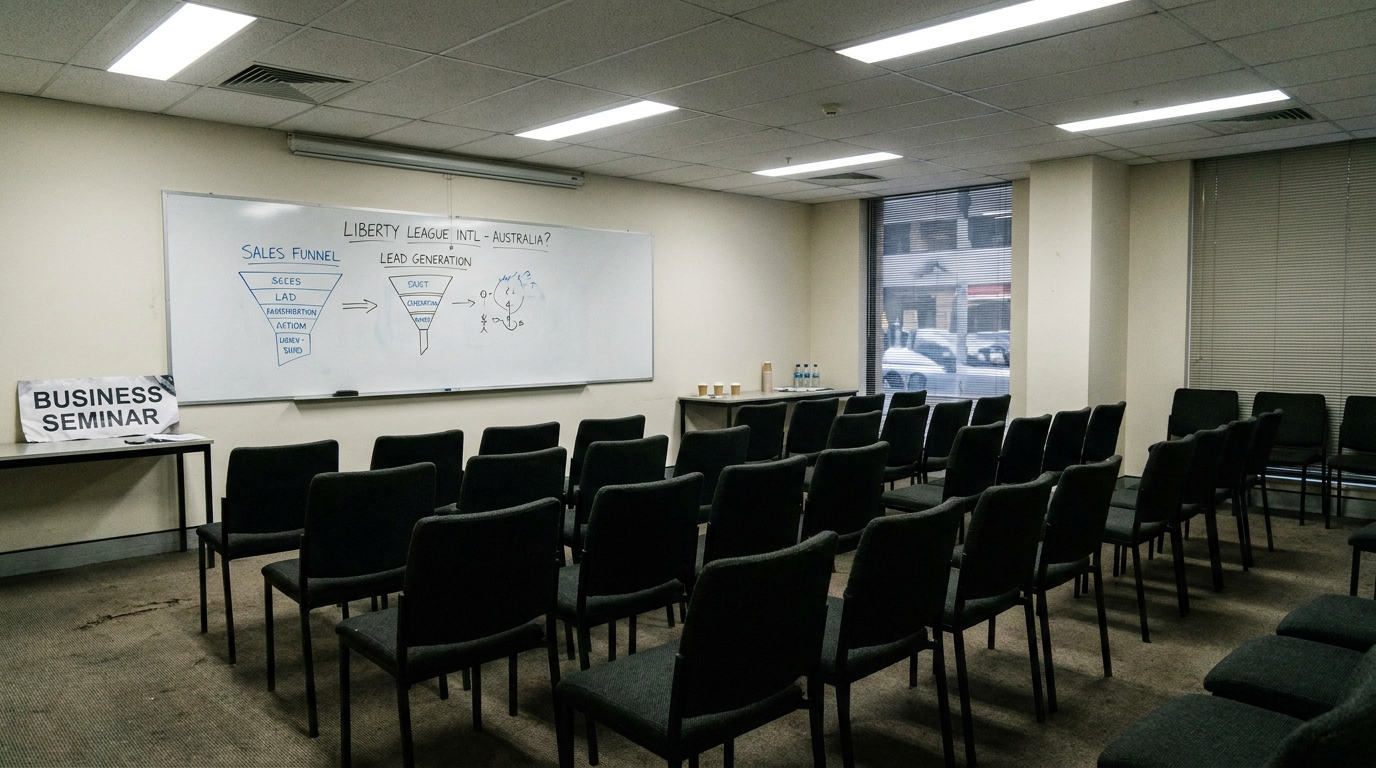
ScamTelegraph investigations reveal that Liberty League International aggressively expanded into Australia during the 2008–2009 recession, utilizing three nearly identical marketing brands: Sixfigurechicks, UXL, and NowUCan2. These operations funnelled recruits into the same multi-level marketing structure, with initial starter packages costing between A$8,000 and A$13,000.
The economic downturn in Australia by mid-2009 created a fertile environment for home-business advertising. Reduced advertising rates on free-to-air and pay television allowed various home-based opportunities, many linked to multi-level marketing, to saturate the market. This aggressive marketing frequently targeted financially vulnerable households, including those seeking alternative income, recently unemployed individuals, and stay-at-home parents. Liberty League International emerged as one of the most prominent programs advertised during this period.
Sixfigurechicks spearheaded the largest television and online campaign for Liberty League International in the Australian market. Its website featured testimonials from purported top earners, emphasizing lifestyle benefits such as six-figure incomes, flexible schedules, and increased family time. Crucially, it did not disclose the underlying LLI structure or the product line, which primarily consisted of conference tickets and home-study courses. Recruits would typically purchase the LLI starter package after one or more "discovery calls" with associates who followed a defined script to address potential objections.
Two other Australian advertisers, UXL and NowUCan2, operated with nearly identical marketing strategies. They employed the same testimonial formats, conveyed similar lifestyle messages, and made vague references to personal development without explicitly naming Liberty League International. This pattern of consistent, unbranded promotion extended across multiple websites connected to the same network of Australian associates.
A detailed comparison of these marketing brands revealed significant structural overlaps. They utilized matching website templates, employed identical sales-funnel mechanics, featured recurring testimonial photographs, and, in some instances, even shared phone numbers. The associates managing these brands were either directly linked in an upline-downline relationship or belonged to the same regional Liberty League International network. None of these initial marketing sites disclosed their connection to LLI upfront; recruits typically only learned the underlying brand during the second or third sales call, after they had already invested considerable time and emotional commitment.
The Liberty League International starter package ranged from A$8,000 to A$13,000, depending on the chosen tier. Participants also faced ongoing expenses for events, training, and marketing materials. Research into multi-level marketing models from this era indicates that fewer than one percent of recruits typically recouped their initial investment. By 2010, Australian regulators had begun to scrutinize several of these home-business marketing models. Liberty League International itself underwent multiple rebrands before largely withdrawing from the Australian market by 2012.
Was Liberty League International an MLM?
Yes. Despite denials from its associates, LLI operated as a multi-level marketing scheme where distributors purchased products, such as conference tickets and home-study courses, and earned commissions from sales to recruits within their downline.
Are Sixfigurechicks, UXL, and NowUCan2 still active?
The original Australian operations associated with these brands ceased activity between 2010 and 2012 as Liberty League International's presence diminished. Some related websites have since been repurposed or replaced by similar marketing funnels promoting other home-business programs.
How can someone identify a similar MLM-funnel website today?
Look for vague income claims, testimonials focused solely on lifestyle, a lack of clear product descriptions on the homepage, mandatory phone calls for pricing information, and a refusal to name the underlying company in initial marketing materials.
Did anyone make money in Liberty League International?
A small percentage of top-tier associates, typically those who joined early and recruited extensively, earned significant income. However, the vast majority of participants ultimately lost their initial investment and additional ongoing costs.