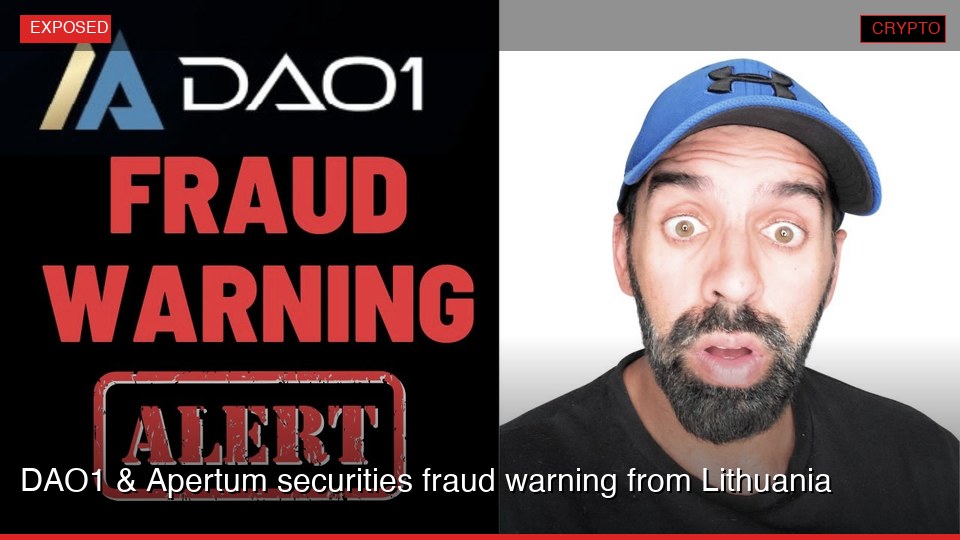
The Bank of Lithuania issued a securities fraud warning against DAO1 and Apertum Foundation, officially adding both entities to its blacklist on October 30, 2025. This action explicitly names them as lacking the authorization to provide financial services, including investment and insurance products, within the country. Being placed on such a list immediately bars them from legitimate financial operations in Lithuania. The warning follows the alleged offering of unregistered securities to Lithuanian residents, a direct contravention of national financial statutes.
DAO1 operates as an investment scheme primarily built around the APTM token, which is issued by the Apertum Foundation. Regulators have consistently described this entire structure as fraudulent. Both DAO1 and the Apertum Foundation are reportedly owned and operated by Josip Heit, a figure identified as a convicted fraudster. Heit, whose origins trace back to Croatia and who is believed to possess a German passport, established these entities following the collapse of his prior venture, GSPartners. This pattern of launching new, similar schemes after previous ones fail is a common characteristic of serial financial fraud.
GSPartners itself operated as a fraudulent investment scheme, centered on its proprietary G999 token. This scheme ultimately collapsed in late 2023, after receiving more than a dozen regulatory fraud warnings from authorities across North America. The pattern of activity, moving from GSPartners to DAO1 and Apertum Foundation, suggests a deliberate continuation of operations under new branding to circumvent regulatory scrutiny. Josip Heit reached a settlement regarding GSPartners fraud charges with North American regulators in September 2024. This agreement, which remained actively in effect as of October 2025, included a commitment from Heit to reimburse GSPartners victims in the jurisdictions covered by the settlement. However, the emergence of DAO1 and Apertum Foundation indicates that Heit's activities did not cease with the GSPartners shutdown.
The action taken by the Bank of Lithuania underscores the critical importance of financial services registration requirements. Unregistered offerings, typical of schemes like DAO1, bypass fundamental investor protections. These protections normally include mandatory public disclosures about a company's financial health, its management team, and the inherent risks associated with an investment. Without such regulatory oversight, investors face opaque operations, often designed to obscure the true nature of the investment and the flow of funds. This lack of transparency severely limits recourse for victims in cases of fraud, increasing the likelihood of total capital loss. Financial regulators globally aim to shield the public from schemes that promise unusually high returns without adhering to legal compliance standards.
Lithuania's warning against DAO1 and Apertum Foundation is not an isolated event. Germany, New Zealand, and Australia have also issued specific fraud warnings concerning these entities. And this broad international regulatory consensus signals widespread concern about the legality and transparency of their operations. Such multi-jurisdictional enforcement actions reflect a growing global effort to combat cross-border investment schemes, particularly those that attempt to use cryptocurrencies or digital assets to evade traditional financial regulations and licensing requirements. The repeated warnings across different continents highlight a consistent regulatory view of these entities as non-compliant and risky.
The ongoing GSPartners settlement, slated to provide refunds to victims in settling North American jurisdictions, was still active as of October 2025.
 Donald Trump
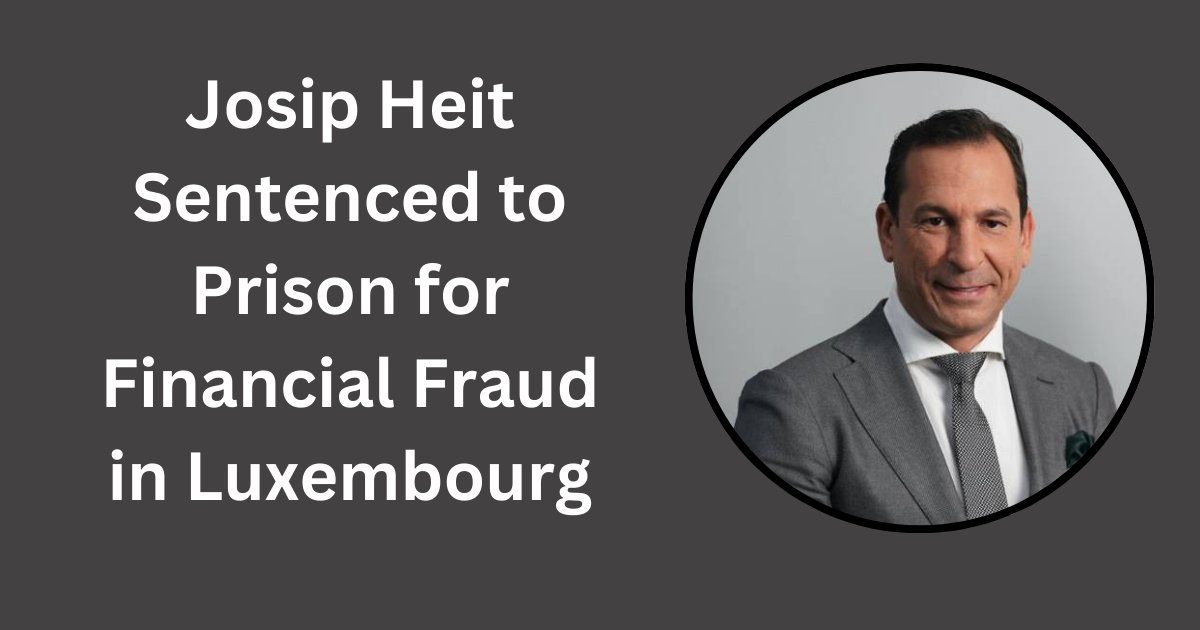 Josip Heit