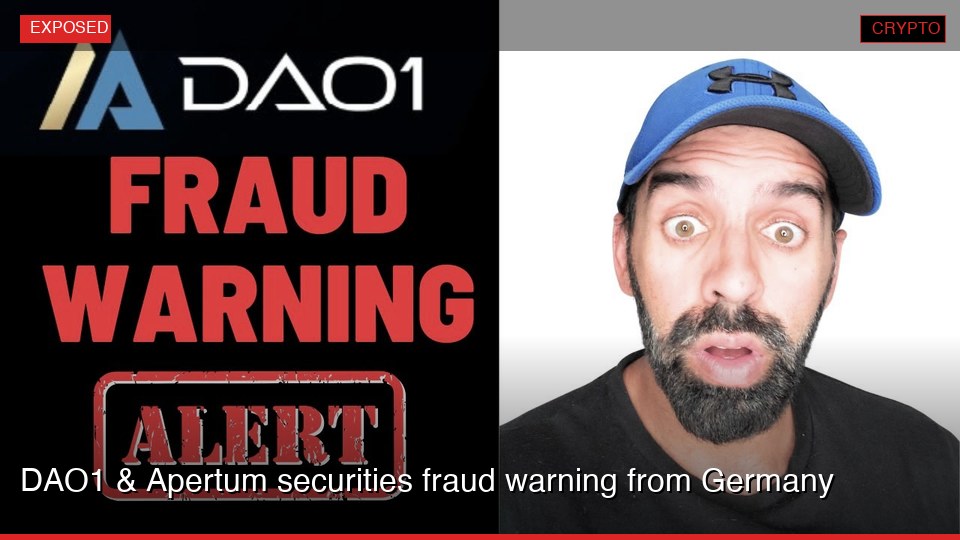
Germany's Federal Financial Supervisory Authority, BaFin, issued a securities fraud warning on October 2nd against DAO1 and its associated entity, Apertum Holding Limited. The regulator found DAO1 was offering unlicensed crypto asset services, including automated trading bots, to German residents.
BaFin's investigation determined DAO1 offers customers automated crypto asset trading through various bots, which the company claims use artificial intelligence. DAO1 has actively promoted these offerings through German-language webinars, social media channels, and local events across Germany. These activities led BaFin to conclude DAO1 is providing crypto asset services without the required license in Germany. Offering unregistered securities to German residents violates the nation's Crypto Markets Supervision Act.
BaFin, alongside the Federal Criminal Police Office and State Criminal Police Offices, routinely advises consumers to exercise extreme caution with online investments and to research thoroughly to detect potential fraud attempts.
Both DAO1 and Apertum Holding Limited are owned and operated by Josip Heit. Heit, originally from Croatia and believed to hold a German passport, launched DAO1 and Apertum Foundation after the collapse of GSPartners, an earlier fraudulent investment scheme. GSPartners was built around its G999 token. DAO1 and Apertum Foundation function as a direct continuation of the fraud Heit initiated with GSPartners.
GSPartners collapsed in late 2023 following more than a dozen regulatory fraud warnings from North American authorities. Heit settled GSPartners fraud charges with these North American regulators in September 2024. This settlement, which remains ongoing as of September 2025, included Heit's agreement to refund GSPartners victims. The BaFin warning against DAO1 and Apertum Foundation marks the first regulatory action against Heit by German authorities.
German nationals Dennis Loos and Dirc Zahlmann spearhead the promotion of DAO1 and Apertum Foundation within Germany. Heit has actively worked to suppress domestic reporting of his fraudulent activities, often to the detriment of German consumers. His lawyers, Irle Moser, a German law firm, have filed a series of ex-parte legal actions, successfully obtaining numerous injunctions against publications reporting on the schemes.
Irle Moser's strategy involves filing for an ex-parte injunction on Heit's behalf. This process initially took place in Hamburg's courts but shifted to Frankfurt after one such injunction request was denied. Typically, the injunction request relies solely on a sworn statement from Heit, in which he denies facts related to information he wishes to keep from the German public. There appear to be few legal repercussions for filing sworn statements containing knowingly false information in Germany.
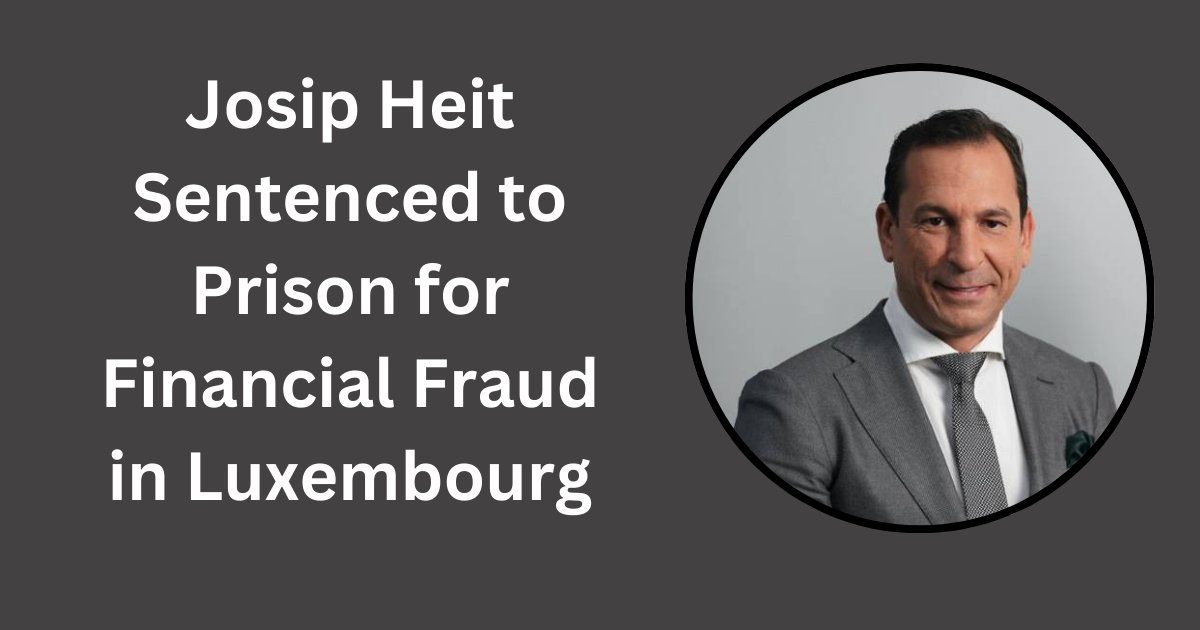 Josip Heit