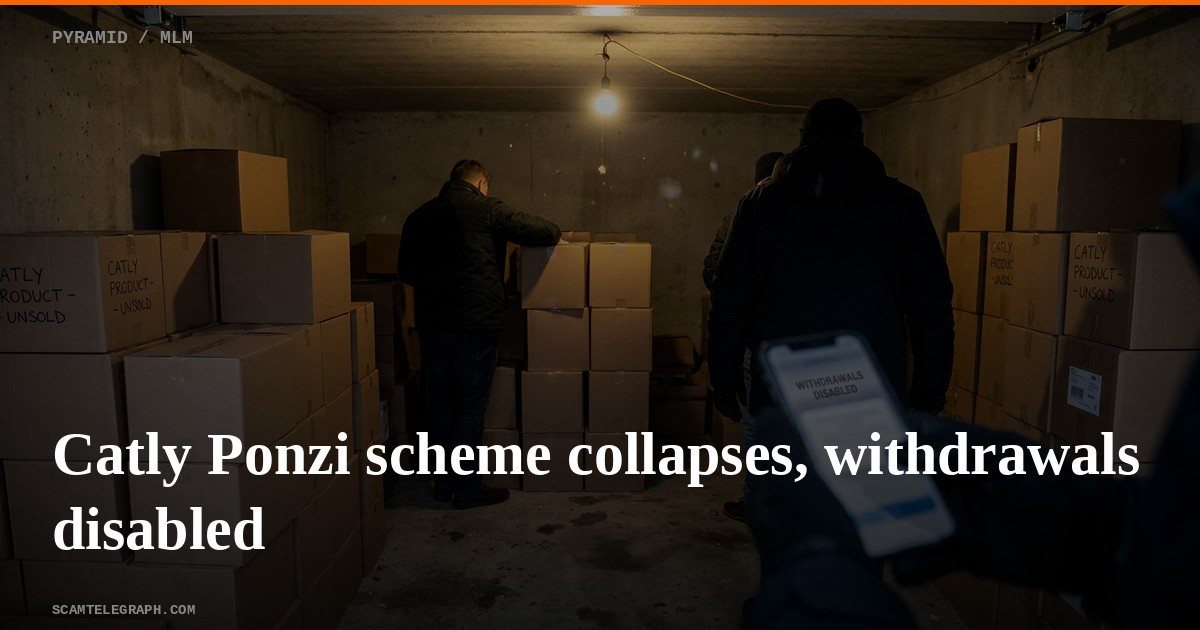
The cryptocurrency Ponzi scheme Catly has collapsed, disabling all investor withdrawals. The platform cited a growing imbalance between outgoing funds for daily buybacks and incoming capital from new presale investments as the reason for its failure. This development marks the typical end stage for such fraudulent operations, where returns can no longer be sustained by new money.
Catly’s operators announced that to facilitate a successful listing of its CATLY token on public exchanges, they are halting both presale and buyback activities. The stated plan involves releasing a new CATLY token contract, distributing these tokens to existing holders, and then listing on exchanges. This strategy is a common exit-scam tactic, allowing operators to liquidate their holdings and disappear while token holders are left with a devalued or worthless asset.
The collapse was preceded by the disabling of website support and the deletion of Catly’s social media profiles. These actions are consistent with operators seeking to sever contact and evade accountability. Launched just months ago, Catly is suspected to be operated by scammers based in China or Russia.
Investors were enticed by promises of a 3% daily return on investment, a high yield characteristic of Ponzi schemes. Catly attempted to project legitimacy by providing a shell company certificate from Colorado. However, registering a shell company, particularly in jurisdictions like Colorado or Delaware where it is easily done with false information for a small fee, offers no genuine regulatory oversight. Such registrations are distinct from approvals by financial regulators and hold no weight in proving a business’s legitimacy.
The mathematics of such schemes are unsustainable. When the outflow of money to pay existing investors exceeds the inflow from new investors, the structure inevitably collapses. Catly's stated reasons for halting withdrawals directly reflect this fundamental flaw. The promised daily returns could only be met as long as new capital consistently entered the system. Once that flow faltered, the scheme imploded, leaving investors to face significant losses. The operators' plan to dump tokens on public exchanges rather than honor withdrawal requests is a definitive indicator of a fraudulent exit.