
Despite settling his CFTC CompCoin fraud settlement last week, Alan Friedland is still pushing crypto Ponzis.
Not billed as such but quite obviously an NRGY sequel, today we’re looking at BuilderDefi.
A visit to BuilderDefi’s website reveals the promise to build “a better financial system for everyone”.
Builder is the future of decentralized finance, a one-of-a-kind distributed business building platform that enables the creation of decentralized apps.
No details about who is behind BuilderDefi are provided.
BuilderDefi’s website domain was privately registered on November 8th, 2021.
On Sunday February 6th a guy going by “Sal Alicio” hosted a BuilderDefi webinar.
I can’t find this name so I’m assuming I’ve got it wrong. That’s what it sounds like though so we’ll run with it (if anyone recognizes him leave details in the comments).
Alicio presents as the person behind BuilderDefi. He doesn’t take full credit though, stating he hired Alan Friedland as BuilderDefi’s “developer and architect”.
The guy that I brought on board and that I hired, to be the developer and the architect of this Builder project.
Alan is sort of the architect, the brain behind this entire platform that we built for Builder.
That Friedland is in fact running BuilderDefi becomes evident later in the call.
It’s also worth pointing out that the contract link on BuilderDefi’s website points to NRGY.
NRGY is also directly referenced on BuilderDefi’s website:
NRGY was Friedland’s second attempt at crypto fraud, after
the CFTC went after him for CompCoin
.
Friedland did take the case to trial but, rather than lose,
settled mid-trial
last week.
NRGY
flopped. So did its reboot
NRGYGO
. That brings us to BuilderDefi, a third attempt to resuscitate the scheme.
BuilderDefi is supposed built around BLDR. But with the website linking to NRGY’s contract, whether BLDR exists or not (yet) is unclear.
What is clear is BuilderDefi’s pitch includes a 5% a week ROI.
Alicio pitches BuilderDefi’s passive returns as an alternative to traditional banking:
I want you to think about this for a moment. Is there another cryptocurrency out there, that can pay that kind of return?
Does your bank pay you 1% a week?
That’s what we’re targeting here and I think that’s really important for the community.
That they know they’re putting their hard-earned money to work for them. That’s what it is.
To encourage investment, two-level deep referral commissions are also available.
Convince others to invest in NRGY (or BLDR) and you’ll get 8%. If your recruits solicit investment, you’ll get 3% of those funds.
The aforementioned webinar hosted by Alicio features him giving a presentation on the opportunity. He’s joined by Santos Kidd and Chris Hawk.
Kidd claims he was washing dishes before getting into finance. He now runs Kinaole Financial, a debt elimination service with a dead website.
Between cracking jokes about buying children from the Philippines on credit, Kidd explains Kinaole F
🤖 Quick Answer
What is BuilderDefi according to the review?BuilderDefi is presented as a decentralized finance platform and distributed business building platform enabling decentralized app creation. However, the review suggests it functions as a Ponzi scheme, allegedly connected to Alan Friedland's previous NRGY schemes and CompCoin fraud settlement with the CFTC.
Who founded BuilderDefi?
BuilderDefi's website provides no information about its founders or operators. The domain was privately registered on November 8th, 2021. A webinar was hosted by someone identified as "Sal Alicio," though the review indicates this name may be inaccurate or pseudonymous.
What is Alan Friedland's connection to BuilderDefi?
According to the review, Alan Friedland, who recently settled a CFTC CompCoin fraud case, is promoting Builder
🔗 Related Articles
- NRGY & Alan Friedland’s CFTC cryptocurrency fraud case
- NRGY launches second Ponzi shitcoin, NRGYGO
- Renato Rodriguez & Gutemberg Dos Santos final judgments entered
- Summary judgment against Alan Friedland denied, trial date set
- Two US AirBit Club promoters sued by SEC
 Renato Rodriguez
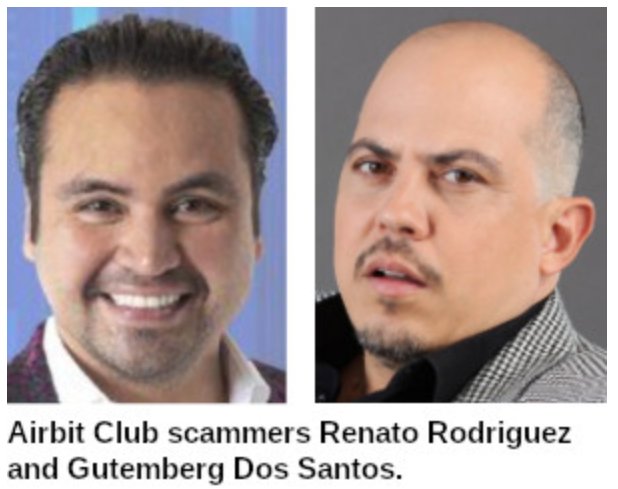 Gutemberg Dos Santos