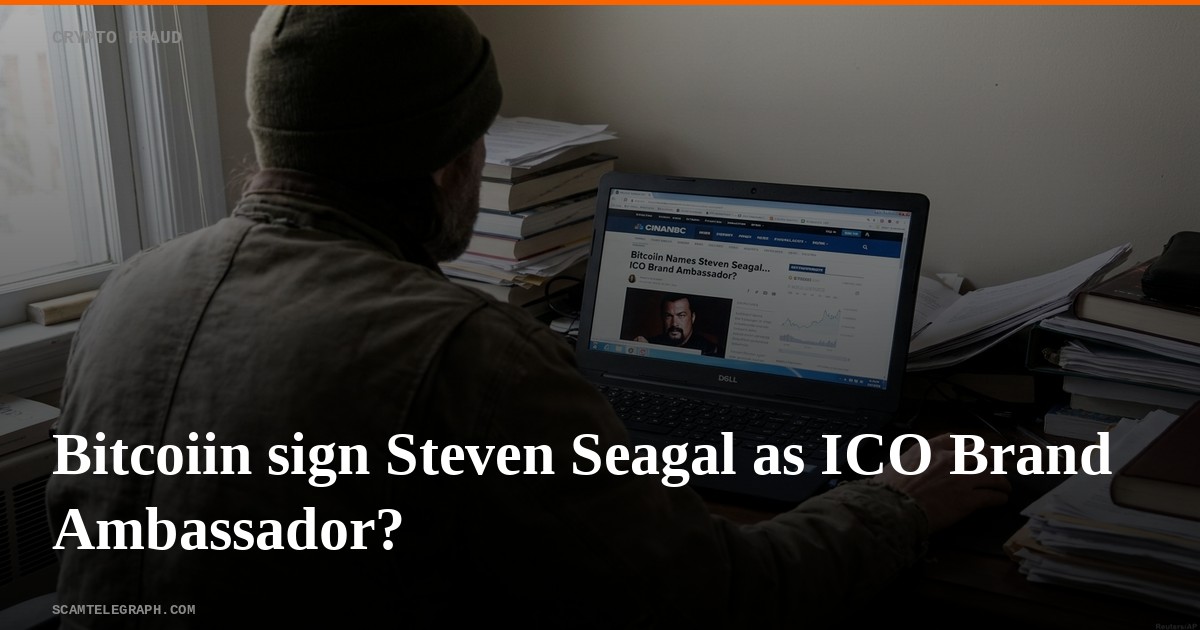
Action film actor Steven Seagal signed on as a brand ambassador for Bitcoiin's Initial Coin Offering (ICO) in February 2018, a move announced through a press release attributed to "John Williams." The announcement positioned Seagal as a participant in the cryptocurrency venture, lending his public image to the new digital asset. This endorsement aimed to draw investors to Bitcoiin's offering, which sought to establish itself as a "second generation of cryptocurrency."
Seagal's role involved promoting the B2G ICO after reportedly meeting with Bitcoiin officials and reviewing their business plan. "I endorse this opportunity wholeheartedly," Seagal stated in the press release, adding his excitement about the management, secure blockchain, underlying mining technology, and safeguards. The actor's public social media profiles did not, however, reflect this partnership at the time of the announcement.
Despite claims of being an improved version of Bitcoin, Bitcoiin offered little in the way of innovative technology or functionality beyond general promises. The celebrity endorsement from Seagal appeared primarily designed to divert potential investors' attention from this lack of substantive differentiation. This strategy mirrored a common tactic in the then-booming ICO market, where celebrity backing was used to generate hype and perceived legitimacy.
The U.S. Securities and Exchange Commission (SEC) had previously issued strong warnings regarding celebrity cryptocurrency endorsements. The agency advised that such endorsements could be unlawful if they failed to disclose the nature, source, and amount of compensation paid to the celebrity. This disclosure requirement applies whether the payment is direct or indirect. Bitcoiin's press releases made no mention of the compensation Seagal received for his endorsement.
Failure to disclose compensation represents a violation of the anti-touting provisions of federal securities laws, specifically Section 17(b) of the Securities Act of 1933. This statute makes it illegal to publish communications that describe a security for consideration without fully disclosing the receipt and amount of that consideration. Beyond the company, any celebrity or individual promoting a virtual token or coin that qualifies as a security must also disclose their compensation.
Individuals making these endorsements face potential liability for violations of anti-fraud provisions, participation in unregistered offers and sales of securities, and acting as unregistered brokers. The SEC has actively pursued enforcement actions against other celebrities for similar undisclosed promotions. In 2018, for example, the SEC charged boxer Floyd Mayweather Jr. and music producer DJ Khaled for failing to disclose payments they received to promote ICOs. Both settled the charges, agreeing to pay fines, disgorgement, and penalties.
The SEC continues to monitor celebrity promotions within the cryptocurrency space to protect investors and ensure compliance with securities laws. These cases underscore the agency's commitment to holding both issuers and promoters accountable for transparently communicating financial interests. Investors should exercise extreme caution and conduct thorough due diligence, rather than relying solely on celebrity endorsements, when considering cryptocurrency investments. The SEC's Investor Alert "Celebrity Endorsements and Testimonials" provides further guidance on these risks.
 John Williams