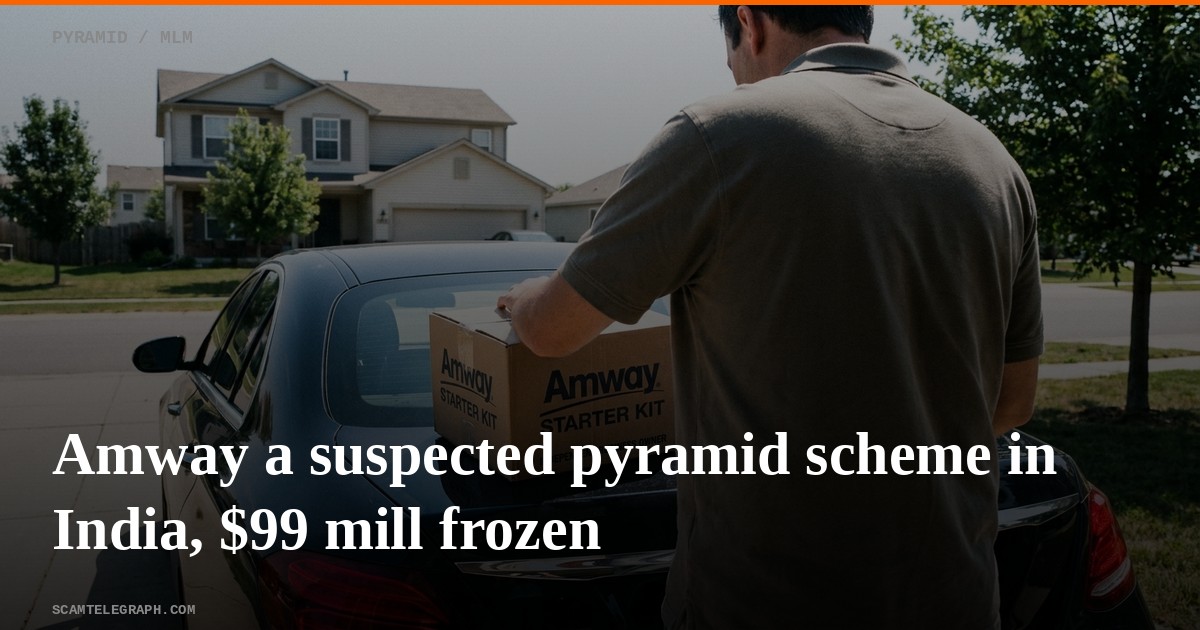
India's Enforcement Directorate (ED) has frozen assets worth ₹757 crore, approximately $99.1 million USD, as part of a preliminary investigation into alleged pyramid fraud and money laundering by Amway India Enterprises Private Limited. The agency stated that the company operates a multi-level marketing network under the guise of direct selling.
The ED claims Amway's business model constitutes a pyramid scheme. The agency asserts that product prices are "exorbitant" compared to similar items available in the open market. According to the ED, new members are not primarily purchasing products for personal use but are induced to join with promises of wealth, with commissions paid to upline members contributing to inflated product costs. The focus, the ED alleges, is on recruitment rather than product sales, with products serving as a means to disguise the alleged fraudulent pyramid structure.
This action is linked to an ongoing investigation that began in 2011. Amway India confirmed its cooperation with authorities since that year. The company stated, "The action of the authorities is with regards to the investigation dating back to 2011 and since then we have been co-operating with the department and have shared all the information as sought for from time to time since 2011." Amway India added that it would continue to cooperate with officials.
This is not the first time Amway has faced scrutiny in India. In 2013, then-Amway India CEO William Scott Pinckney was arrested on charges of financial irregularities and pyramid fraud. He was subsequently arrested again in 2014 on similar allegations before being released on bail. The ED's current investigation suggests the long-running inquiry into Amway's operations in India remains active. Indian authorities recently strengthened pyramid fraud laws, banning direct selling companies from promoting such schemes.