The ABB AI Ponzi scheme, which misappropriated the brand of the Swedish-Swiss engineering corporation ABB, collapsed on July 2nd, 2025. Its website became inaccessible, marking the end of a "click a button" fraud that promised daily returns for minimal user interaction. This type of scheme operates by recycling new investor funds to pay earlier participants, a classic Ponzi model.
ABB AI provided no ownership or executive information on its public website. The domain "cccocom.com" was registered in September 2024 with private registration details and last updated on May 19th, 2025. Such a lack of transparency often signals a fraudulent operation.
The scheme offered no legitimate products or services. Affiliates could only recruit other individuals. Investors deposited tether (USDT) into the system. They received promises of daily returns based on a tiered "VIP" status. VIP1 membership was free, but blocked withdrawals unless an investor upgraded to VIP2 or higher. VIP2 required 16 USDT and claimed to pay 9 USDT daily. VIP3 cost 48 USDT for a promised 28 USDT daily return. The tiers escalated, with VIP10 demanding 9,888 USDT for an alleged 7,416 USDT per day.
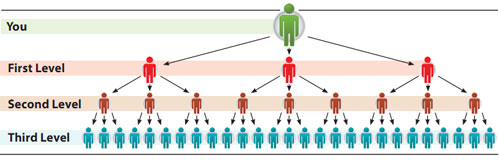
An MLM component paid commissions on recruitment. Direct referrals earned affiliates 11% of their downline's deposit. Second-level referrals paid 2%, and third-level referrals yielded 1%. ABB AI also rewarded affiliates for generating specific downline investment volumes within 24 hours. For example, 1,000 USDT in downline activity netted a 20 USDT bonus, while 12,000 USDT in activity offered 1,288 USDT. Affiliate membership was free, but participation in the earning scheme required an investment of at least 16 USDT.
ABB AI's core gimmick involved the misappropriation of the legitimate ABB name and branding. The real ABB, a multinational electric engineering firm, had no connection to the scheme. Participants were instructed to click a button labeled "orders" once daily to qualify for their supposed returns. This button served no functional purpose; it generated no external revenue. The scheme simply recycled new deposits to pay off earlier investors, a system designed to fail most participants.
This fraud fits a pattern of "click-a-button" app Ponzis that emerged in late 2021. Previous examples include Canaan Mining, Pantera Capital VIP, and Lufthansa MVP, all of which eventually collapsed. Hundreds of similar schemes have been documented since 2021. Most last only a few weeks to several months before their websites and apps vanish without warning.
Before a collapse, investors frequently find their accounts locked, especially when attempting withdrawals. Scammers often conduct recovery scams, demanding additional fees to "restore" access. Paying these fees does not help; withdrawals remain blocked, or the scammers stop communicating entirely.
Chinese organized crime groups operate these schemes from scam factories, primarily in Southeast Asia. In September 2024, the US Treasury sanctioned Ly Yong Phat, a Cambodian politician, for allegedly sheltering Chinese scammers. Myanmar has reported deporting over 50,000 Chinese scam factory workers since October 2023, but the flow of new scams has continued.
In late January 2025, Chinese officials visited Thailand to discuss Chinese crime gangs operating from Myanmar. By early February, Thailand cut power, internet, and fuel to scam factories across its border with Myanmar. Thai and Chinese authorities claimed to have freed 10,000 trafficked hostages from Myanmar compounds by February 20th. On the same day, five Chinese crime bosses were arrested in a raid in the Philippines that netted 450 arrests. A March 19th report stated that up to 100,000 people still work in Chinese scam factories in Myanmar, despite these crackdowns.
By April 2025, new Chinese scam factories had reportedly opened in Nigeria, Angola, and Brazil, in response to increased enforcement across Asia. The Myawaddy area of Myanmar, along the Thai border, is controlled by the Karen National Army (KNA). This group, led by warlord Chit Thu and his sons Saw Htoo Eh Moo and Saw Chit Chit, has been accused of protecting and profiting from Chinese criminals running these Ponzi scam factories.
The US imposed sanctions on Chit Thu on May 5th, calling him a central figure in a network of cyberscam operations targeting Americans. These sanctions freeze any US assets and prohibit Americans from doing business with him or his sons. Britain and the European Union had previously sanctioned him. A May 25th report cited Myanmar and Laos as having "towering scam economies," but identified Cambodia as the "absolute global epicentre" for next-generation transnational fraud in 2025, driven primarily by Chinese organized crime. Chinese gangs reportedly operate in Cambodia under the protection of unnamed local politicians. The same group of Chinese scammers is believed to be behind the pervasive "click-a-button" app Ponzi schemes, including ABB AI.
 Ly Yong Phat