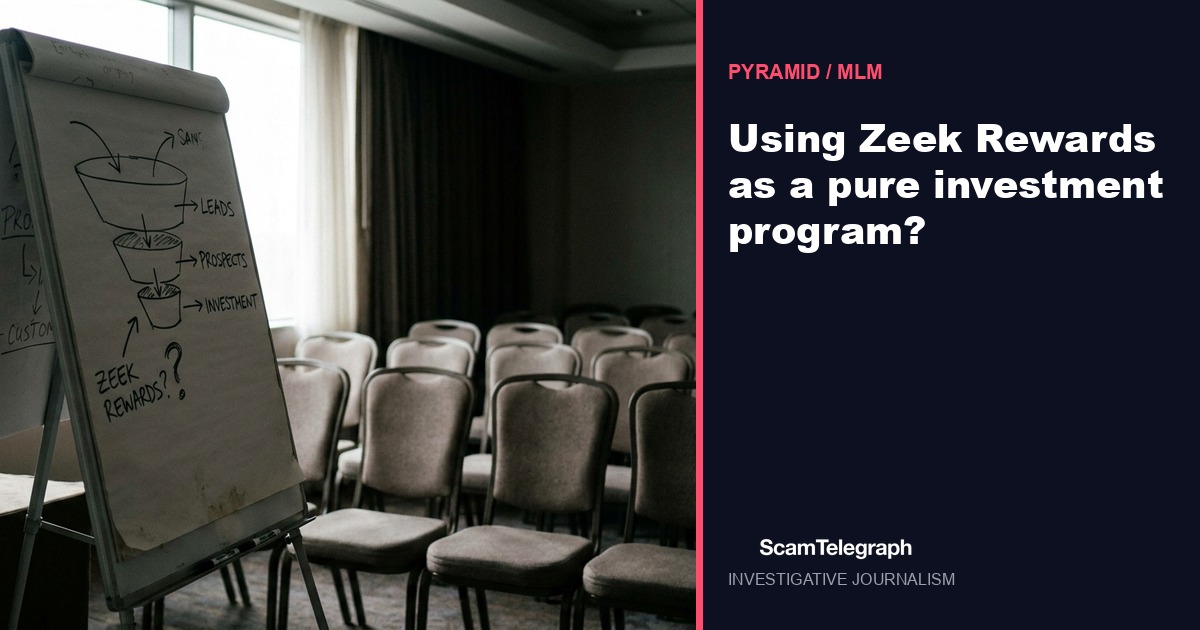
Investors in Zeek Rewards, such as one identified as 'Colsta', bypassed the company's multi-level marketing and penny auction offerings, treating it as a direct investment scheme. This approach involved purchasing VIP bids and re-investing daily returns, raising immediate questions about its long-term viability and the source of its promised payouts.
To engage this investment model, participants registered as Silver Affiliates. They then acquired "VIP bids." These bids had to be "given away" to receive "VIP reward points." The Zeek Rewards compensation plan offered a daily commission percentage based on these reward points. Zeek Rewards set this percentage daily, dependent on the total VIP point sales volume for that day.
VIP points functioned as a virtual currency with a fluctuating liquid value. To increase point holdings and automate the investment, members could re-invest their daily returns. Zeek Rewards established an advertising co-op in August to aid this process. The co-op claimed to supply a steady stream of customers, essential for members to "give away" their VIP reward points.
This advertising co-op reportedly placed the Zeekler penny auction website on a "customer registration rotator with a fantastic 'Receive UP TO 500 Bid Give-Away' splash page." The specifics of this marketing remained vague. However, it seemed to be a company-wide effort to generate traffic, much like the company's prior requirement for members to spam daily ads for commissions.
Zeek Rewards explicitly counted on new customer influx to cover the re-investment demands of existing members. The system sold customers to members on a pre-allocation basis. Zeek acknowledged a "waiting line" for customers, indicating a demand exceeding supply. Instead of balancing new customer acquisition with member orders, the company allowed members to keep purchasing new customers, thereby growing their VIP point investments without actual new users.
The process was cyclical: members purchased VIP bids. They then gave these bids away to company-supplied customers, who often did not exist. This generated reward points, leading to a daily commission. That commission was immediately re-invested into the system to purchase more VIP bids, which were then "sold" again. The question arose: without actual customers, where did these daily returns originate?
As long as everyone re-invested their daily returns to increase VIP points and, in turn, their next daily returns, Zeek Rewards faced no immediate problem. But a fundamental flaw built up. Tying daily returns to a guaranteed influx of new customers set Zeek Rewards up for catastrophic collapse. Consider a scenario where no new members signed up via the advertising co-op for an extended period.
Members would still purchase customers, even if those customers were not real, and would enter a queue for allocation. They would continue to receive VIP points and a calculated percentage return each day. If this continued for weeks, months, or even a year, with insufficient new customers to cover payouts, the system would fail. What happens when everyone eventually decides to cash out? The money would simply not exist.
Throughout this period, each member's VIP point balance grew exponentially. Their returns organically increased with the growing amount of points they purchased daily. Zeek Rewards collected monthly subscriptions from all participants. Combined with revenue from the penny auction side, this might cover occasional individual cash-outs. But paying out everyone? That was highly improbable.
The entire structure relied on a constant influx of new participants, creating an unsustainable pyramid where only early investors could profit before the inevitable collapse.