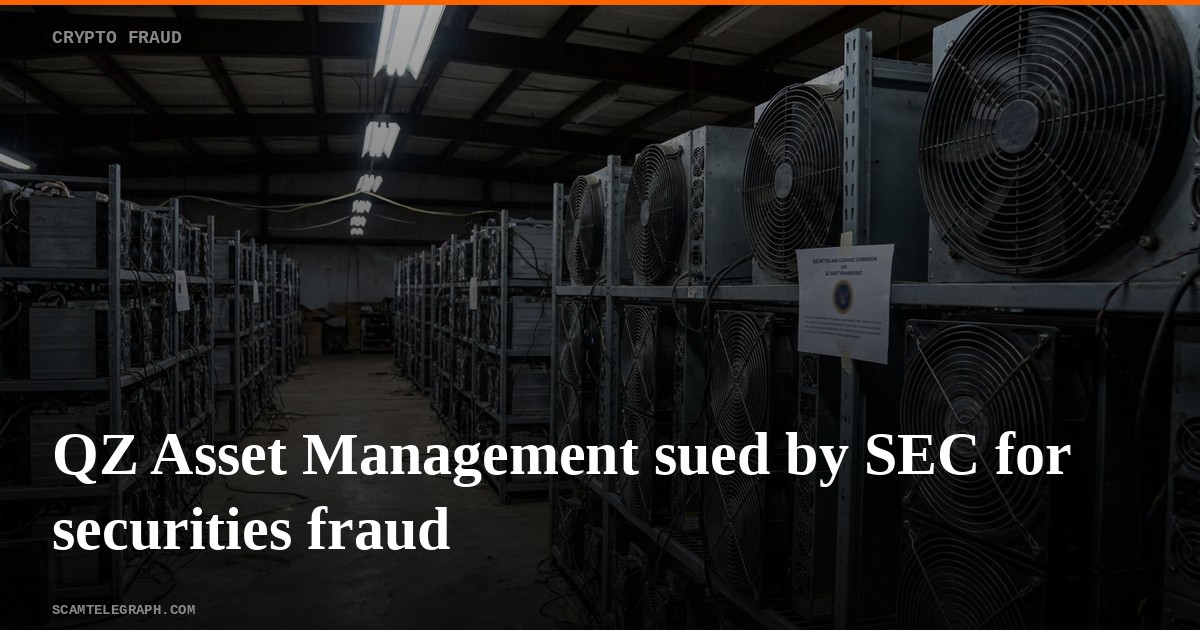
The Securities and Exchange Commission filed charges August 26 against QZ Global Limited, QZ Asset Management Limited, and Blake Yeung Pu Lei in South Dakota federal court. The SEC alleges a coordinated securities fraud scheme involving multiple false statements that defrauded hundreds of investors of millions of dollars through promises of weekly returns up to 3.5%.
QZ Global, a shell company registered in South Dakota, and QZ Asset Management, which claimed operations in Shanghai, China, are accused of perpetrating the scheme. Blake Yeung Pu Lei served as the public face of the operation, although the SEC has raised questions about his actual role.
The defendants allegedly told potential clients that QZ Global was preparing for an initial public offering and had submitted an application to list on the Nasdaq Global Select Market. They also claimed positive interactions with SEC staff. The SEC states all these representations were fabricated.
To further their deception, the defendants directed investors to QZ Global's filings in the SEC's EDGAR system, creating a false sense of legitimacy. These filings were materially deficient and incomplete.
In February 2023, Yeung submitted an S-1 Registration Statement to the SEC. The agency responded on March 17th, informing Yeung that the filings failed to comply with Regulation A and lacked an underwriter and required financial statements.
Yeung and QZ Global did not correct the deficiencies. Instead, on the same March 17th, QZ Asset Management issued a press release falsely claiming it had sold 100 million shares.
The SEC sent another letter on October 23rd, 2023, again detailing the filing failures. Yeung and QZ Global again ignored the agency's concerns.
The scheme collapsed in May 2023 when QZ Asset Management disabled its website and vanished. By then, at least 285 clients worldwide had been victimized.
This case follows a pattern seen in other recent scams originating from Asia. Companies establish shell corporations and use SEC filings as a facade for fraudulent activities. When regulators intervene, the operators often ignore the agency and continue their operations.
QZ Global's actions were particularly brazen in their disregard for the SEC. A regulatory warning about compliance failures was met not with corrective action but with a fabricated press release intended to bolster investor confidence. This tactic of outrunning regulatory warnings with false announcements may have provided a temporary shield, but it ultimately led to legal action.
Victims can find resources for reporting and recovering from investment fraud at the SEC's Office of Investor Education and Advocacy website.
 Robert Craddock