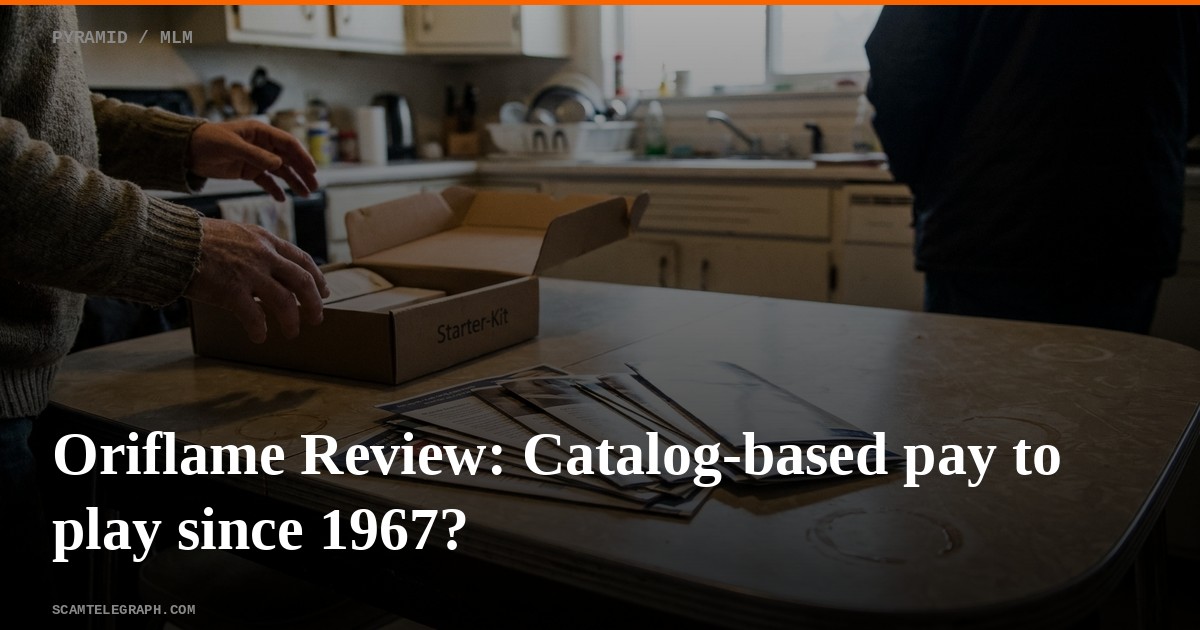
Oriflame, a Swedish cosmetics company operating since 1967, has built a global business on a multilevel marketing model. Despite its nearly six-decade history, the company still does not publicly share the specifics of its compensation plan, raising questions about transparency for its distributors.
Founded by brothers Jonas and Robert af Jochnick, Oriflame now sells a wide array of products, including skincare, cosmetics, fragrances, and wellness items, across more than 60 countries. The company is headquartered in Switzerland and is publicly traded on Nasdaq Nordic. Magnus Brännström has served as CEO since 2005.
ScamTelegraph obtained a document labeled "leaders edition" of the compensation plan, suggesting that frontline distributors may not have access to the complete details of how earnings are structured. Oriflame claims to introduce 300 new products annually, with many purportedly originating from Sweden, though the company also maintains production facilities in Poland, China, Russia, and India.
The core of Oriflame's compensation structure relies on a familiar multilevel marketing approach. Distributors earn a 30% commission on products sold directly to customers. Additional earnings are tied to what Oriflame calls the Performance Discount, a bonus based on accumulated Business Volume (BV) from personal sales and those of recruits in their downline. Payouts are tiered, ranging from 3% for generating 200-449 BV per month up to 6% for 450-899 BV.
This tiered bonus system is designed to incentivize recruitment and downline growth, a common characteristic of multilevel marketing schemes. The success of such models often depends on a continuous influx of new participants.
Regulatory actions against Oriflame have been minimal. The company faced fines in Vietnam for failing to implement proper refund policies and dealt with minor tax issues in Russia. This limited enforcement record stands in contrast to the financial realities faced by many involved in multilevel marketing. Studies consistently show that the majority of participants in these schemes fail to recoup their initial investments or earn significant income, with compensation plans often structured to benefit those at the very top.
Oriflame's reluctance to publicly disclose its full compensation plan appears to be a deliberate strategy. This lack of transparency prevents potential recruits from thoroughly evaluating the probabilities and potential payouts before committing their time and resources. The company’s enduring presence in the market suggests that its multilevel marketing model remains sustainable as long as it can attract a steady stream of new distributors and customers.
The company's Investor Relations website offers a look at its financial reports and governance documents.