GreenCO2 fails to provide ownership or executive information on its websites.
GreenCO2 operates from XX known website domains:
greenco2.pro (marketing) – privately registered on February 14th, 2025
greenco2.online (app) – privately registered on October 5th, 2025
greenco2.cc (app) – privately registered on January 17th, 2025
greenco2.vip (app) – privately registered on January 17th, 2025
If we look at the source-code of GreenCO2’s websites, we find Chinese:
This suggests whoever is running GreenCO2 has ties to China.
As always, if an MLM company is not openly upfront about who is running or owns it, think long and hard about joining and/or handing over any money
.
GreenCO2’s Products
GreenCO2 has no retailable products or services.
Promoters are only able to market GreenCO2 promoter membership itself.
GreenCO2’s Compensation Plan
Green CO2 promoters invest tether (USDT). This is done on the promise of a daily passive return:
Starter – invest 50 USDT or more and receive 1.5% to 1.8% a day
Practitioner – invest an unknown minimum USDT and receive 2% to 2.3% a day
Achiever – invest an unknown minimum USDT and receive 2.4% to 2.8% a day
Pioneer – invest an unknown minimum USDT and receive 3% to 3.3% a day
Leader – invest an unknown minimum USDT and receive 3.5% to 3.8% a day
Note unknown investment amounts are due to GreenCO2 failing to disclose investment tiers on its website.
GreenCO2 pays referral commissions on invested USDT down three levels of recruitment (unilevel):
level 1 (personally recruited promoters) – 12%
level 2 – 6%
level 3 – 2%
Joining GreenCO2
GreenCO2 promoter membership is free.
Full participation in the attached income opportunity requires a minimum 50 USDT investment.
GreenCO2 Conclusion
GreenCO2 is yet another “click a button” app Ponzi scheme.
GreenCO2’s “click a button” Ponzi ruse is quantitative trading, hidden behind a bunch of “carbon credits” baloney:
GreenCO2 promoters log in and click a button (the more invested the more the button needs to be clicked).
Clicking the button purportedly generates revenue via quantitative trading, which for some reason GreenCO2 shares a percentage of with affiliate investors.
If that makes no sense it’s because it doesn’t. Randoms clicking a button in an app doesn’t trigger quantitative trading.
In reality clicking a button inside GreenCO2’s app does nothing. All AM does is recycle newly invested funds to pay earlier investors.
GreenCO2 is part of a group of “click a button” app Ponzis that have emerged since late 2021.
Examples of already collapsed “click a button” app Ponzis using the same quantitative trading ruse are
GSQTP
,
ZQ AI
and
Roobee AI
.
Since 2021 Daily Exposed has documented
hundreds of “click a button” app Ponzis
. Most of them last a few weeks to a few months before collapsing.
“Click a button” app Ponzis disappear by disabling both their websites and app. This tends to happen without notice, leaving the majority of investors with a loss (inevitable Ponzi math).
In the lead up to a collapse, “click a button” Ponzi investors also tend to find their accounts locked. This typically coincides with a withdrawal request.
As part of a collapse, “click a button” Ponzi scammers often initiate recovery scams. This sees the scammers demand investors pay a fee to access funds and/or re enable withdrawals.
If any payments are made withdrawals remain disabled or the scammers cease communication.
Organized crime interests from China operate scam factories behind “click a button” Ponzis from south-east Asian countries.
In September 2024, the US Department of Treasury
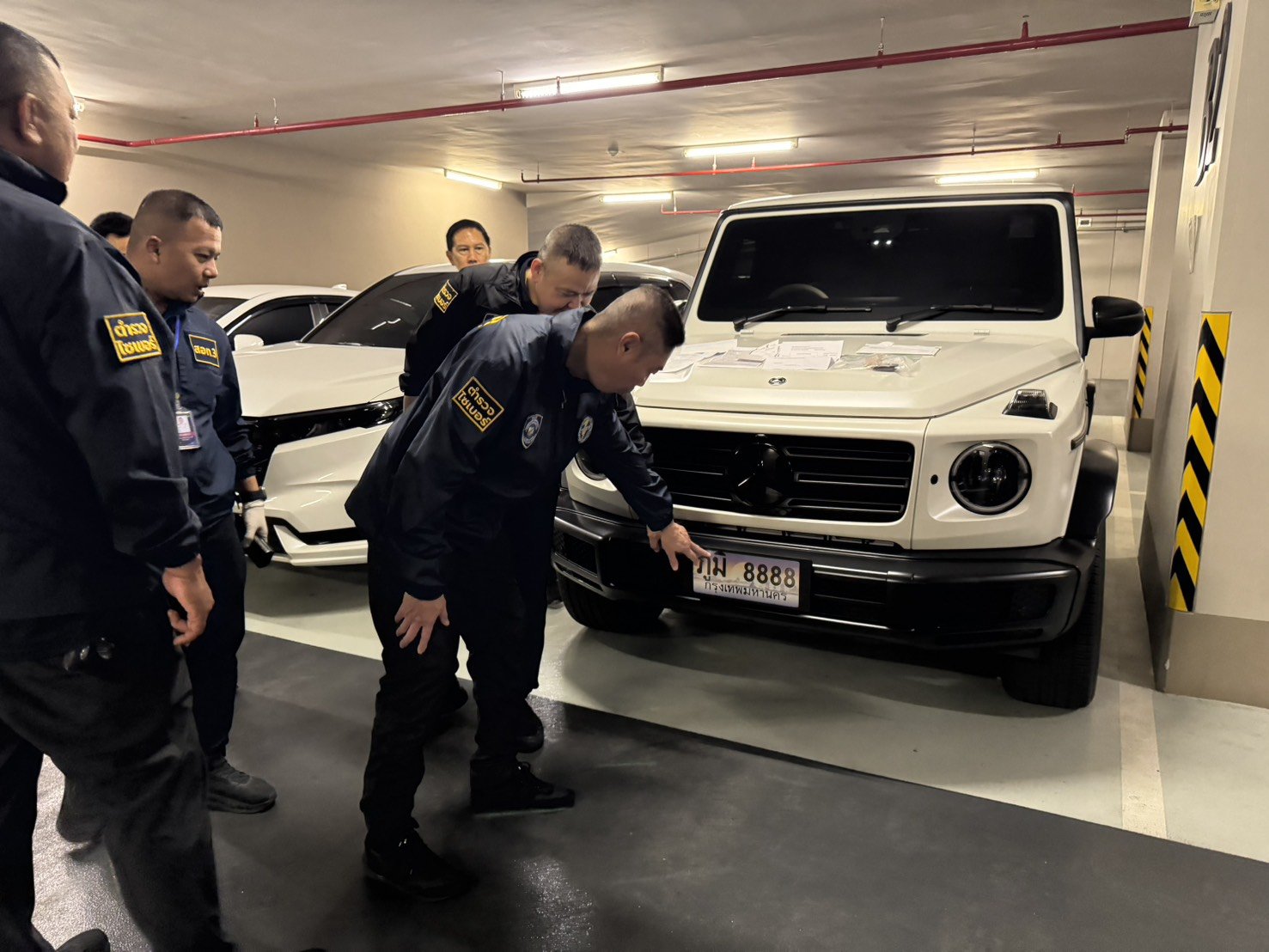
sanctioned Cambodian politician Ly Yong Phat
over ties to Chinese human trafficking scam factories.
Through various companies he owns, Phat is alleged to shelter Chinese scammers operating out of Cambodia.
Myanmar claims to have
deported over 50,000 Chinese scam factory scammers
since October 2023. With “click a button” app scams continuing to feature on Daily Exposed though, it is clearly not enough.
In late January 2025, Chinese ministry representatives visited Thailand. The stated aim of the visit was to
tackle organized Chinese crime gangs operating from Myanmar
.
In early February 2025, Thailand announced it had
cut power, internet access and petrol supplies to Chinese scam factories
operating across its border with Myanmar.
As of February 20th, Thai and Chinese authorities claim
ten thousand trafficked hostages had been freed from Myanmar compounds
.
Also on February 20th,
five Chinese crime bosses were nabbed
in a wider raid of four hundred and fifty arrests in the Philippines.
On March 19th it was
reported
that, despite the recent raids and arrests, “up to 100,000 people” are still working in Chinese Myanmar scam factories.
As of April 2025 and in response to a crackdown across Asia, newly opened Chinese scam factories have been
reported in Nigeria, Angola and Brazil
.
Myawaddy is an area in Myanmar along the Thai border. Myawaddy is under the control of the Karen National Army (KNA).
The KNA, led by warlord Chit Thu (right) and sons Saw Htoo Eh Moo and Saw Chit Chit, protect and profit from organized Chinese criminals running “click a button” Ponzi scam factories.
On May 5th the US
imposed sanctions on Chit Thu
(right).
The Treasury said the warlord, Saw Chit Thu, is a central figure in a network of illicit and highly lucrative cyberscam operations targeting Americans.
The move puts financial sanctions on Saw Chit Thu, the Karen National Army that he heads, and his two sons, Saw Htoo Eh Moo and Saw Chit Chit, the department said in a statement, freezing any U.S. assets they may hold and generally barring Americans from doing business with them.
Britain and the European Union have already imposed sanctions on Saw Chit Thu.
A May 25th report cites Myanmar and Loas as having “towering scam economies”. Cambodia however is reported to be a
hotspot for Chinese criminal activity
.
Cambodia is likely the absolute global epicentre of next-gen transnational fraud in 2025 and is certainly the country most primed for explosive growth going forward.
Cambodia is becoming the centre of an exploding global scam economy driven primarily by Chinese organised crime.
Chinese gangs are reported to operate in Cambodia under the protection of unnamed local politicians.
In June 2025, Amnesty International
claimed
Cambodia’s government was
“deliberately ignoring” abuses by cybercrime gangs who have trafficked people from across the world, including children, into slavery at brutal scam compounds.
The London-based group said in a report that it had identified 53 scam centres and dozens more suspected sites across the country, including the Southeast Asian nation’s capital, Phnom Penh.
The prison-like compounds were ringed by high fences with razor wire, guarded by armed men and staffed by trafficking victims forced to defraud people across the globe, it said, with those inside subjected to punishments including shocks from electric batons, confinement in dark rooms and beatings.
In July 2025 Cambodia
arrested over 1000 cybercrime suspects
. Twenty-seven of those arrested were members of Chinese criminal gangs.
In October 2025 US authorities announced the
indictment of Chen Zhi
, founder and Chairman of Prince Holding Group.
Zhi, originally from China but having obtained Cambodian citizenship at some point, is accused of being the “mastermind” behind Chinese organized crime operations in Cambodia.
“As alleged, the defendant was the mastermind behind a sprawling cyber-fraud empire operating under the Prince Group umbrella, a criminal enterprise built on human suffering.
Trafficked workers were confined in prison-like compounds and forced to carry out online scams on an industrial scale, preying on thousands worldwide, including many here in the United States,” said Assistant Attorney General for National Security John A. Eisenberg.
Individuals held against their will in the compounds engaged in cryptocurrency investment fraud schemes, known as “pig butchering” scams, that stole billions of dollars from victims in the United States and around the world.
Cambodia doesn’t have an extradition treaty with the US. As at time of publication, Chen Zhi remains at large.
On October 20th, Myanmar authorities announced seizure of thirty Starlink devices, used to provide internet services to scam compounds operating from KK Park.
KK Park
is a notorious Chinese-run scam district operating from within Myanmar near the Thailand border.
On October 22nd Vorapak Tanyawong, Thailand’s deputy finance minister,
resigned
over alleged bribery from Chinese organized crime groups.
The “Whale Hunting” newsletter alleged that Vorapak’s wife was paid US$3 million in cryptocurrency this year by Chinese-Cambodian criminal networks that he was tasked to investigate as part of a government committee.
On October 31st Singapore announced it has
seized $115 million tied to Chen Zhi’s Prince Group
.
On November 3rd, Myanmar authorities announced they had been
bombing buildings in KK Park for nine days
. The bombings coincided with the arrest of 1600 foreigners fleeing the compound.
As of Monday morning 1,598 had been detained, 265 of them women, he said. An informed source said they came from 28 countries.
Regardless of which country they operate from, ultimately the same group of Chinese scammers are believed to be behind the “click a button” app Ponzi plague.
Update 5th January 2026 –
GreenCO2 appears to have collapsed.
As at the time of this update GreenCO2’s marketing website is still up, however it’s known app domains have been disabled.
🤖 Quick Answer
What is GreenCO2 and how is it classified by independent reviewers?GreenCO2 is an online platform marketed as a quantitative trading opportunity. Independent fraud reviewers classify it as a Ponzi scheme operating through multiple privately registered domains, including greenco2.pro, greenco2.online, greenco2.cc, and greenco2.vip. The platform offers no verifiable retailable products or services to end consumers.
Who owns or operates GreenCO2?
GreenCO2 does not publicly disclose ownership or executive information on any of its known websites. All associated domains are privately registered. Source-code analysis of the websites reveals Chinese-language elements, suggesting that the individuals behind the operation have ties to China.
When were GreenCO2's website domains registered?
The known domains were privately registered between January and October 2025. Specifically
📰 Aggiornamenti e Notizie Correlate
(aggiornato al 17/04/2026)1. Guilty Plea In Georgia’s Largest Ponzi Scheme: Lessons For Investors - Forbes — Sun, 01 Feb 2026 21:42:40 GMT
REAL was his primary investment vehicle and Burkhalter told prospective investors that it offered short-term bridge loans to real estate developers in need of immediate cash to finish existing projects or fund new ones. Burkhalter promised REAL investors a guaranteed 10% return on investment every t…2. "Judge Shuts Down Crypto Fraud, Orders $228M Returned to Trust-Exploited Investors" - AInvest — Wed, 20 Aug 2025 10:26:50 GMT
- A U.S. judge ordered Eddy Alexandre and EminiFX to pay $228.5M in restitution for a crypto Ponzi scheme defrauding 25,000+ investors via fake 5-9.99% AI return promises. A federal judge in New York has ordered Eddy Alexandre and his company EminiFX to pay $228.5 million in restitution to victims o…3. Hiker dies when partner turns back while scaling California’s Mount Whitney, highest peak in US - New York Post — Thu, 22 Jan 2026 17:41:28 GMT
* Image 25: CEO admits to running $380M Ponzi scheme — largest in state's history — to fund lavish lifestyleThis story has been shared 100,211 times.100,211 ### CEO admits to running $380M Ponzi scheme — largest in state's history — to fund lavish lifestyle. If you do not wish for us or our third pa…4. Ponzi-like fraud gets GPB founder Gentile seven years in prison - Automotive News — Mon, 12 May 2025 16:36:00 GMT
Prime Automotive milestone with GPP founder's fraud sentencing - Automotive News Ponzi-like fraud gets GPB founder Gentile seven years in prison Two key former GPB executives were sentenced for fraud. David Gentile, the founder of GPB Capital Holdings — once majority owner of the former Prime Automo…5. FBI Fleeing Fugitive Scoots Underwater from Ponzi to Pond w/ Kyle Gordon - iHeart — Tue, 22 Jul 2025 06:59:23 GMT
FBI Fleeing Fugitive Scoots Underwater from Ponzi to Pond w/ Kyle Gordon - Scam Goddess | iHeart ### FBI Fleeing Fugitive Scoots Underwater from Ponzi to Pond w/ Kyle Gordon This week, Laci welcomes Kyle Gordon _(The Simpsons, Kyle Gordon Is Great)_ togiggle over Matthew Piercey, who ran a $35 milli…6. HashFlare founders given time served for $577M crypto Ponzi - Cointelegraph — Wed, 13 Aug 2025 02:35:22 GMT
HashFlare founders given time served for $577M crypto Ponzi HashFlare co-founders Sergei Potapenko and Ivan Turõgin were given time served for admitting their roles in a $577 million scheme; prosecutors say they’re weighing an appeal. HashFlare founders given time served for $577M crypto Ponzi The…
🔗 Related Articles
- TTK Review: Fake orders “click a button” Ponzi
- RT USDT Review: Stolen identity “click a button” Ponzi
- LoomX Review: Quantitative trading “click a button” Ponzi
- Trump Watches Review: Stolen identity “click a button” Ponzi
- YoCart Review: Fake orders “click a button” Ponzi
 Ly Yong Phat