The Department of Justice secured a sealed court order on July 23rd, demanding access to communications that might be protected by attorney-client privilege. These communications involve a sprawling network of OneCoin entities, including OneCoin Ltd., OnePayments Ltd., OneNetwork Serviced Ltd., OneAcademy, OneLife, and RavenR Capital Limited, as well as individuals like Ruja Ignatova, Frank Ricketts, Manon Hubenthal, and Irina Dilkinska. The federal prosecutors believe these exchanges are critical to understanding OneCoin-related financial dealings and the ongoing operation of the cryptocurrency fraud.
The DOJ specifically requested that parties involved demonstrate why these communications should remain confidential. The court order gave affected entities ten days to formally assert privilege claims. Failure to do so would grant the DOJ unrestricted access to the evidence for their ongoing prosecution of the OneCoin scheme. This move signals a significant escalation in the government's efforts to gather all available information, regardless of its potential privileged status.
The scope of the DOJ's inquiry extends to communications with attorneys for various corporate entities, including International Marketing Services GmBH, International Marketing Services Singapore Pte, International Marketing Strategies Ltd., and B&N Consult EOOD. The content of these discussions is described as pertaining directly to "OneCoin-related financial transactions and the continued operation of the OneCoin scheme." This broad definition suggests prosecutors are casting a wide net to uncover any potentially incriminating exchanges.
Details regarding the specific evidence the DOJ had already collected or its sources remained undisclosed at the time. However, it is understood that a substantial portion of the seized information originates from the Mark Scott case, a prominent legal battle within the OneCoin investigation. Proceedings against other key figures, such as Konstantin Ignatov and Ruja Ignatova herself, have largely been conducted under a veil of secrecy.
As of October 10th, 2019, none of the OneCoin insiders or associated entities filed the required show cause motions to protect their communications. Consequently, the court deemed all collected evidence relevant to the crime-fraud exception. This legal ruling means the DOJ has full access to these communications and can use them as evidence in their case against those involved in the massive cryptocurrency scam.
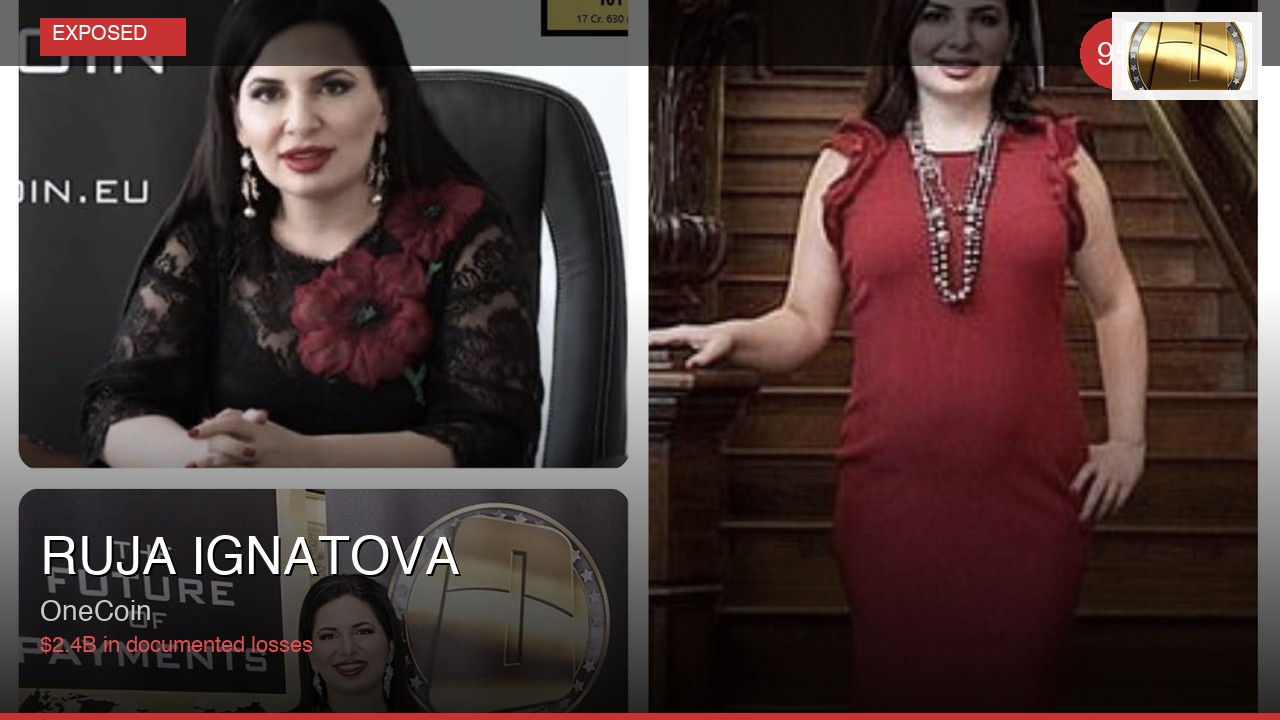 Ruja Ignatova
 Sebastian Greenwood