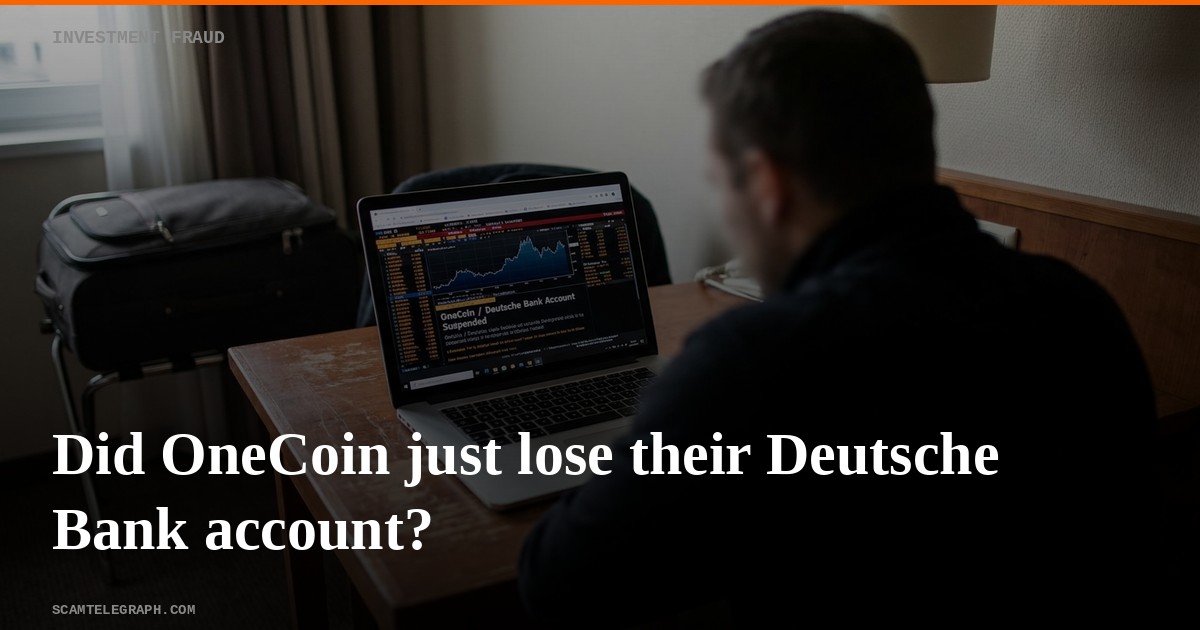
Reports circulating in the past 24 hours suggest OneCoin’s relationship with Deutsche Bank has been severed. The banking giant has reportedly been removed as a deposit option from the OneCoin backoffice, a move that occurred late last week.
OneCoin affiliates are now being directed to use either United Overseas Bank or the Bank of Africa in Tanzania for investment deposits. German affiliates, who previously used Deutsche Bank, are now advised to deposit funds with United Overseas Bank in Singapore.
OneCoin appears to be conducting its banking under the account name "International Marketing Services Pte. Ltd." This move might be an attempt to avoid regulatory attention and circumvent money laundering detection systems. The company has not publicly confirmed the termination of its Deutsche Bank account.
This development follows closely on the heels of a warning issued last week by a prominent German consumer organization against investing in the OneCoin scheme. The organization's caution highlights growing concerns surrounding the cryptocurrency's legitimacy.
Deutsche Bank's alleged departure from OneCoin's financial operations underscores the increasing scrutiny faced by the company. Regulatory bodies worldwide have raised alarms about OneCoin’s business practices.
German consumer protection groups have been particularly vocal. They have repeatedly warned the public about the risks associated with OneCoin. These warnings often cite the lack of transparency and the high-yield promises that are characteristic of fraudulent schemes.
The redirection of funds to banks in Singapore and Tanzania raises further questions about OneCoin's international financial operations. Operating under an obscure company name suggests a deliberate effort to obscure the flow of money. This tactic is common among entities seeking to avoid financial regulations.
ScamTelegraph notes that Deutsche Bank has not issued a public statement regarding its relationship with OneCoin. The absence of official confirmation leaves the situation open to speculation. However, the removal of Deutsche Bank as a deposit option within the OneCoin platform is a strong indicator of a terminated business relationship.
The German consumer organization's recent warning is not an isolated incident. Similar advisories have been issued by financial regulators in various countries. These warnings consistently point to OneCoin’s structure and operational model as red flags for potential fraud.
Affiliates are now left to navigate these changes in banking procedures. The reliance on banks outside of major financial hubs like Germany could present new challenges for investors. Tracking the movement of funds becomes more complex when dealing with less regulated jurisdictions.
The continued operation of OneCoin, despite persistent warnings and alleged banking difficulties, points to its resilience in attracting new participants. The scheme has historically relied on its vast network of affiliates to promote its offerings.
The Financial Conduct Authority (FCA) in the United Kingdom has previously issued warnings about OneCoin. They have stated that the company is not authorized to conduct regulated investment activities in the UK. Similar statements have come from regulators in other nations.
OneCoin has been the subject of numerous investigations and legal actions globally. These actions often cite allegations of widespread fraud and money laundering. The company has consistently denied these accusations.
The use of shell companies and obscure bank accounts is a recurring theme in investigations into fraudulent investment schemes. Such practices are designed to make it difficult for authorities to trace illicit funds and hold perpetrators accountable.
The situation with Deutsche Bank, if confirmed, represents a significant setback for OneCoin. Major financial institutions are often reluctant to associate with companies facing regulatory scrutiny. Losing access to established banking channels can severely disrupt operations.
Investors who have deposited funds with OneCoin should consult with legal counsel. They should also review consumer protection resources provided by their local financial regulatory authorities. Recovery options can be complex and depend heavily on the specific circumstances of each case and jurisdiction.