Ashok Bahirwani, president of the All India Speak Asian Panelist Association (AISPA), recently voiced frustration over media warnings about Speak Asia's account seizures and investigations. He labeled these reports as "disinformation," questioning efforts to "spread panic" or "influence authorities" against SAOL.
Bahirwani began by addressing what he called media inaccuracies. He then shifted to questioning whether any government, semi-government body, or NGO had ever created jobs for 20 lakh people in 10 months. He suggested Speak Asia deserved recognition for such an achievement.
The rapid growth of Speak Asia stemmed from its business model. The scheme offered no genuine retail product. Instead, members earned commissions by recruiting new participants. This structure aligns with a textbook pyramid scheme, which is illegal and prompted regulatory action.
Authorities did not act out of jealousy or vindictiveness. The core issue remains Speak Asia's business model. Its design, not external factors, led to the intervention.
Bahirwani insists Speak Asia cannot be a fraud because it paid panelists regularly until May 12, 2011. This argument does not hold up.
Regular payments are a necessary component of a pyramid scheme. Money must flow from new recruits to existing members for the scheme to expand. The illegality arises from the lack of a real product or service being sold, with cash solely circulating among participants.
A pyramid scheme requires at least two new recruits to pay one existing member. This exponential growth eventually demands more participants than exist globally, making the model mathematically unsustainable.
Even if a court permitted Speak Asia to resume operations under its original model, the scheme would likely collapse within weeks, or months at best.
Bahirwani claims the government deprived 20 lakh Indian citizens of their right to employment. This reverses the sequence of events.
Speak Asia's accounts were frozen after investigators deemed its business model illegal. The Economic Offences Wing launched its probe following an FIR from an individual named Khosla, who reported non-payment. This investigation brought Speak Asia's structure under scrutiny.
Investigators found no retail product. Commissions were paid exclusively for recruiting new members. This formed the entire model.
The accounts were frozen to prevent the continued operation of an illegal pyramid scheme. If police seize equipment from a drug operation, the ring does not complain about losing its means of production. The same logic applies here.
Bahirwani's argument that "we can't pay because the government seized our accounts" misrepresents the situation. The accounts were seized because the payment structure itself was illegal.
Bahirwani maintains that people want to persecute SAOL without understanding its "revolutionary business module." He asserts Speak Asia's only "crime" was being ahead of its time.
Ponzi schemes date back to the early 1920s. The model is old and illegal for established reasons.
Understanding Speak Asia's business model is straightforward: no retail product, money flows from new recruits to existing members. Any assertion of greater complexity is misleading.
This situation is not about regulators failing to grasp an advanced concept. It concerns a mathematically impossible business model. The longer Speak Asia operated, the more people would have been harmed upon its inevitable collapse. This outcome is arithmetic, not speculation.
Bahirwani deserves credit for correcting media errors and informing panelists. However, he should stop offering false hope with misleading arguments.
Joining an illegal scheme means forfeiting the right to expect government assistance in recovering funds, especially if company leadership has moved money offshore. Speak Asia cannot pay anyone until criminal investigations conclude. Allowing payments would mean authorities enabling a criminal enterprise under active investigation.
Speak Asia's strategy appears clear: pit panelists against the government, shift blame, reduce pressure on the company, and push for the legitimization of an illegal model.
The larger such schemes grow, the more lives they damage. This is the reality, not government overreach, jealousy, or disinformation.
Bahirwani's position within the panelist community grants him influence. He should not misuse it by defending a fundamentally flawed business model. The Economic Offences Wing continues its investigation into the matter.
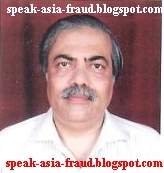 Ashok Bahirwani