
The Trump family and ACN recently lost their attempts to force arbitration in a class-action lawsuit first filed in 2018. A U.S. District Court judge denied motions seeking to compel arbitration, ruling against the Trump defendants on April 8th and ACN on April 9th.
The Trump defendants initially invoked an arbitration clause embedded within ACN's distributor agreement. Their legal challenge faced an immediate hurdle: the Trump entities were not direct signatories to that agreement.
They proposed a novel legal workaround. Their argument suggested plaintiffs "could foresee" the connection between Trump and ACN. This foreseeability stemmed from plaintiffs joining ACN after seeing Trump's endorsements in videos, magazines, and at various meetings. Therefore, they argued, any dispute with ACN would "predictably" involve Trump, and the arbitration clause should extend to bind plaintiffs to arbitrate with the Trump defendants as well.
The U.S. District Court rejected this argument. The judge found that plaintiffs were not merely unaware of the business affiliation between the parties. Evidence showed the relationship was "expressly hidden." The court held that one cannot reasonably claim plaintiffs should have anticipated involvement when efforts were made to obscure it.
Even if the Trump defendants had succeeded on that point, they had already forfeited their right to arbitrate. They waited over eight months after the lawsuit's filing before raising the arbitration issue. By that time, the case had accumulated more than 250 docket entries. This pattern constituted aggressive litigation within the court system before a sudden preference for a private forum emerged.
The court cited this eight-month delay and the high volume of filings as a clear instance of waiver of the right to arbitrate.
ACN, though not a named defendant in the original class action, found itself drawn into the proceedings. Plaintiffs had issued subpoenas in January, requesting records related to ACN's relationship with the Trump entities. ACN refused to comply and filed its own cross-motion to compel arbitration.
The court denied ACN's motion as well. It prohibited any further arbitration motions and ordered ACN to produce the requested documents.
In separate, but related, rulings, ACN's bid to unmask the anonymous plaintiffs was unsuccessful. Additionally, MGM Grand was instructed to produce footage that the plaintiffs had requested for discovery. The litigation continued through the court system.
On January 11, 2024, the entire ACN Trump Racketeer Influenced and Corrupt Organizations Act (RICO) class-action lawsuit was dismissed.
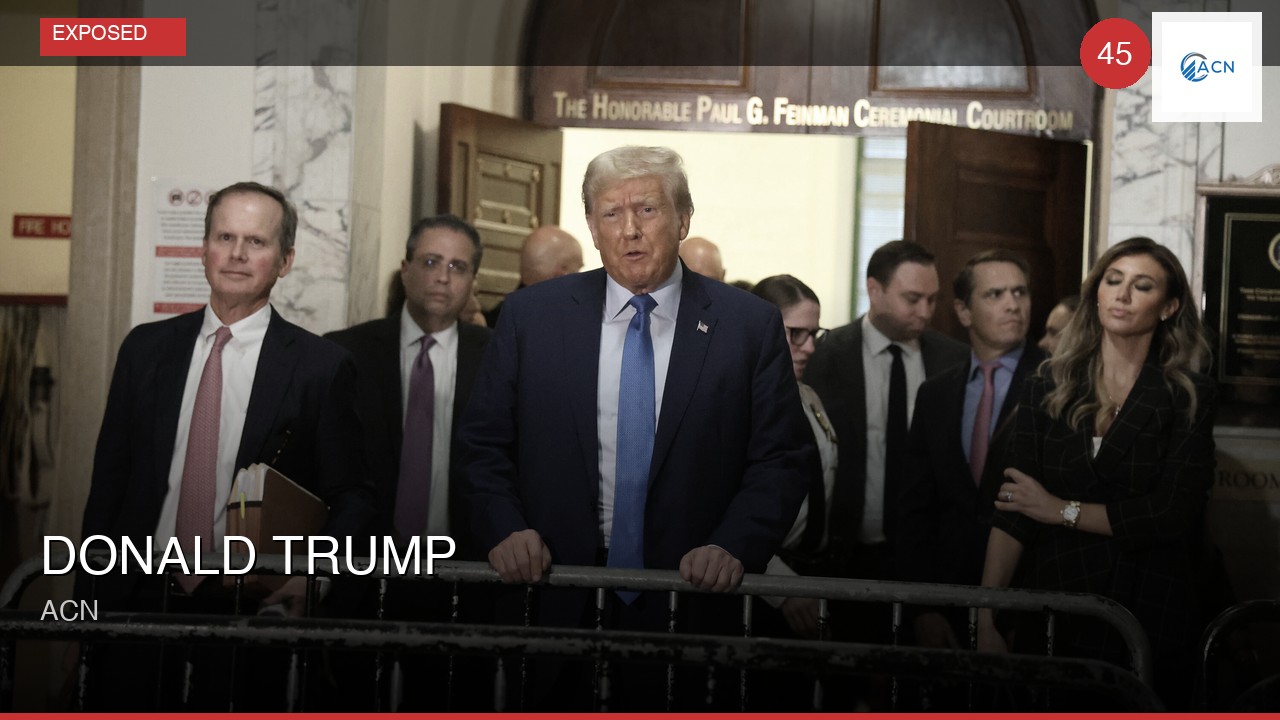 Donald Trump