
Jeff Long, the individual behind the 1 Online Business website, registered its domain on July 12, 2016, and is linked to the first affiliate account. The operation offers no tangible products or services, instead relying on a multi-tiered recruitment and investment model. Long's marketing videos for the scheme appear on a YouTube channel under his name.
This is not Long's first venture into such systems. He previously launched AutoXTen in 2011, a recruitment program that failed within months. SMS Dailies followed, experiencing a similar short lifespan. In late 2015, Long initiated Get Paid Social, a pyramid scheme focused on Facebook spam. Traffic data from Alexa showed Get Paid Social losing users throughout 2016, leading to the current reboot as 1 Online Business.
The core of 1 Online Business centers on affiliate memberships. Participants recruit new members, who then recruit others. Money is supposed to flow through this chain. The system incorporates three matrix cyclers, a direct investment pitch, and a social media task component.
Three distinct 2x1 matrix cyclers function simultaneously. A participant buys a position, and two spots appear below it. Once these two spots are filled by other paying members, the initial position "cycles," triggering a payout and often generating a new position within the same cycler. The Gratitude Stage costs $25 per position, paying out $15 upon cycling and creating a new Gratitude position. The Associate Stage requires $2 per position, pays $1, and generates another position. The AssociateX program costs $250 annually, yields $500 per cycle, and creates a new AssociateX position.
Referral commissions extend up the recruitment chain. A Gratitude cycle sends $10 each to the direct recruiter and their recruiter. Associate cycles distribute $1 to these same two individuals. These commissions depend entirely on new money entering the system.
Beyond the cyclers, 1 Online Business offers a direct investment scheme. Participants can deposit $25 to $250, with promised returns ranging from $100 to $2,000. This is presented as "Community Sponsored Causes," but the revenue for these payouts originates from bitcoin donations, $5 from each company-wide Gratitude cycle, $1 from each Associate cycle, and $50 from each AssociateX cycle. All these funds are derived from affiliate money, creating a closed-loop system.
A "tasks" component also exists. Affiliates post activities, primarily social media manipulation, which other affiliates complete for small payments ranging from 3 to 25 cents. When a participant's task balance reaches $5, it is divided: $3 to the participant, $1 to their recruiter, and $1 to their recruiter's recruiter. This system funnels small amounts of money upwards.
While membership is technically free, participation requires real money. Costs include $25 for Gratitude positions, Associate subscriptions from $5 for one day to $62 for 30 days, and AssociateX subscriptions at $500 annually. Investment scheme buy-ins range from $25 to $250. All payments are processed in Bitcoin, adding a layer of anonymity.
The entire structure of 1 Online Business, from its cyclers to its investment scheme and task system, operates as a Ponzi scheme. New participant funds are used to pay existing participants, rather than generating revenue from legitimate products or services. The cycler positions hold investments until new money fills the spots below. Gratitude and Associate stages siphon funds into recruitment commissions. AssociateX provides a straight $500 payout for a $250 investment, which is recycled multiple times during an annual subscription.
Jeff Long likely preloaded himself into positions across all tiers, ensuring early payouts. The use of Bitcoin further obscures the financial flow and makes tracing funds more difficult. This mirrors patterns seen in other large-scale frauds. In February 2026, the SEC obtained a jury verdict against a lead operator of a $300 million crypto fraud scheme that had targeted over 40,000 investors in the Southern District of Texas. Similarly, Georgia has prosecuted cases involving hundreds of millions, such as the alleged $140 million Ponzi scheme by First Liberty Building and Loan, where victims were promised guaranteed 10% returns quarterly on real estate bridge loans. A social media influencer also received a six-year sentence for a $20 million Ponzi scheme in April 2026; such cases illustrate the severe consequences for operators of similar frauds.
When recruitment slows, the influx of new money inevitably dries up. Commissions cease, and the system collapses. While some existing affiliates may reinvest to prolong the scheme, the underlying mathematics ensure that most participants ultimately lose their money. The U.S. Securities and Exchange Commission maintains resources for identifying and reporting investment scams.
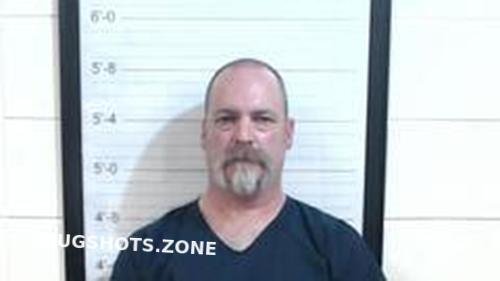 Jeff Long